Image of the day

Captured by
Michael Scherman

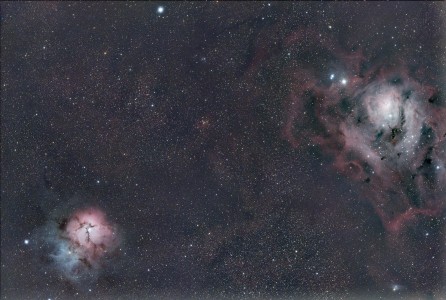
Lagoon and Triffid Celestron C6 Hyperstar4

My Account

New to Astromart?

Register an account...

Need Help?

Full moon vs nebulas and star clusters

Started by Mta472, 03/28/2007 05:56PM
Posted 03/28/2007 05:56PM | Edited 03/28/2007 05:57PM Opening Post
I have a 12 inch LX90 with UHTC.
With the nearly full moon we have to deal with in the upcoming days, I know that the skies just won't be dark enough to see details in galaxies.

My question is this: Would I be wasting my time looking at nebulas and globular clusters also?

I have a Celestron UHC filter and Astronomik UHC and OIII filters. Would these help at all or should I just wait until the moon goes back into her cave?

Enjoy the day ...........Mike

Posted 03/28/2007 07:22PM #1
....or Doubles, or Variables, or Saturn, or Jupiter, or Venus....
Posted 03/28/2007 07:41PM | Edited 03/28/2007 07:42PM #2
With the moon present the fainter galaxies will disappear and most of the detail in the brighter ones will vanish. I don't observe galaxies or nebulae if the moon is above the horizon in the period between first and third quarter. However, I occasionally show one of the brighter globulars, opern clusters or even the Orion nebula to occasional visitors. It is possible to see individual stars in M13, M3 etc. even at full moon with a 12-inch, but the objects show very little of their true splendour under such conditions. If I observe with the moon present I concentrate double stars, planets or the moon itself.
If you really can't live without deep-sky objects during the full moon phase, you may observe some of the brighter planetaries. The Eskimo nebula, the ring nebula, M27, NGC7662 and NGC6543 all have a high surface brightness to be seen well under moonlit conditions. I don't have good experience with the O-III filter under such conditions, though. The filter dims the sky background considerably, but I find the ambient light very distrubing.

Inge S