[COLOR="Purple"]HNY Everyone!
I have a very nice Photon 80mm refractor. It doesn't get used much but it's such a good performer that I haven't brought myself to part with it even though it's often just sitting in the garage.
Over this past spring and summer, we had a tremendous amount of wet weather here in S Texas, USA. Great for our water source (an aquifer) but bad in other ways. The mold has been rampant everywhere due to the prolonged period of wetness. We've had mold in our air ducts. In the garage, where the Photon resides, the was mildew on several camping items which should never have mildew on them. Kinda freaky, actually.
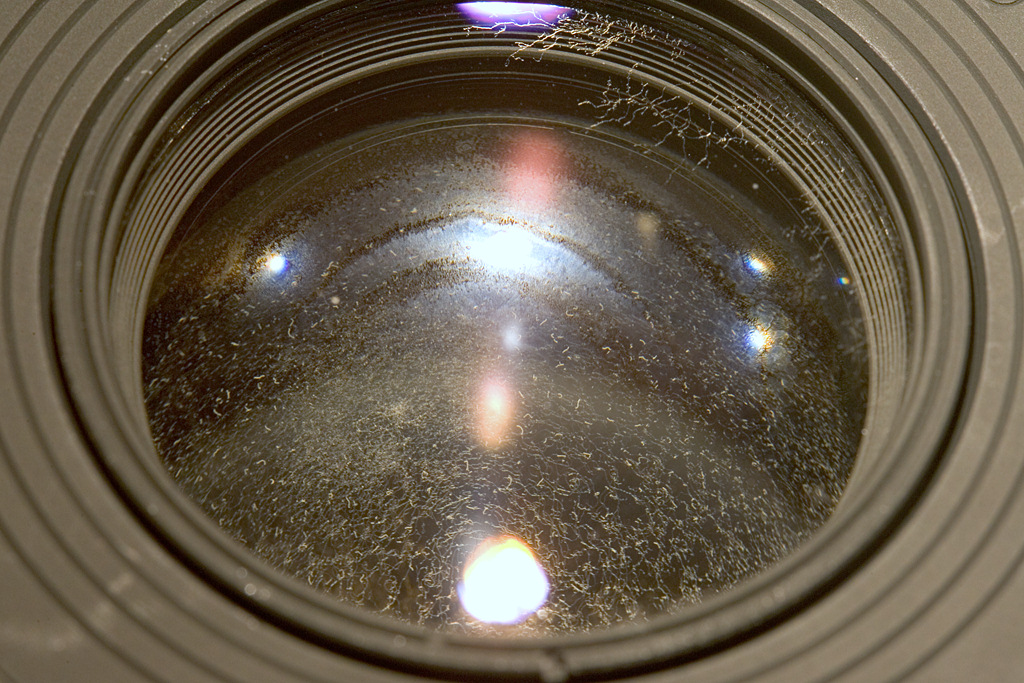
Anyway, I noticed a week ago that there were two small (<4mm) hazy spots on the objective of the Photon. Not good. I figured it was fungus. Never having been one to shy away from taking something apart, I removed the lenses from the objective cell and had a closer look.
The "crud", for lack of a better term, was on the inside surfaces of the air spaced objective. With a 12X magnifier, the spots had tendrils spreading out from their centers. They looked kinda spider-like.
Sooo...what to do?? Again, never being shy to try radical procedures when it comes to telescopes, I grabbed the acetone and some Kim-Wipes. Gently rubbing the spots with the acetone wetted Kim-Wipes removed most of the spots. So far, so good. A little breath on the lenses and soft wiping removed the last traces of anything on the glass. Success!! I re-assembled the objective and installed it back in the cell. Once that was done, I had to tweak the collimation which I knew was off. After all that, the Photon was performing splendidly again!
Now, this is an objective that is single-coated only on the front side of the first element so I was using acetone only on uncoated surfaces. Not sure if acetone is a good thing on any coated piece of glass. I'm just sharing what worked in my case.
In any case, where there is something growing in/on an objective, the goal is to take care of it ASAP so permanent damage isn't done to the glass by the "crud" etching into the surface of the lens. Once that happens, it's there forever.
Let's see, what else needs to be taken apart?
Bill[/COLOR]