Image of the day

Captured by
John Roach

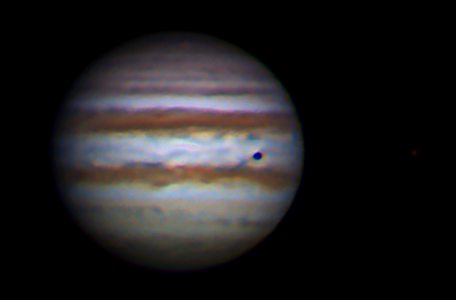
Jupiter IO Transit 12-10-26

My Account

New to Astromart?

Register an account...

Need Help?

Light from outside fov

Started by gnowell, 11/22/2007 01:00AM
Posted 11/22/2007 01:00AM Opening Post
You're looking through an eyepiece, and a very bright star is just outside the field of view. You see a ray of light from that star across your field of view (a focused ray).

Does this mean it is a no-good-for-nuttin' eyepiece?

I'm curious about it because I have seen it in a very high end eyepiece line that I consider to have excellent contrast and great light control, well baffled too; for example when you're looking directly at Jupiter, it's excellent. I have also seen the phenomenon better controlled in eyepieces I don't like as much.

So I'm curious about the correct nomenclature and whether it is "invariably bad" or just one of those tradeoff issues.

thanks
Greg N


"Scope will get you through times of no money better than money will get you through times of no scope." --Freewheelin' Franklin
Posted 11/22/2007 04:35AM #1
Greg Nowell said:
I'm curious about it because I have seen it in a very high end eyepiece line that I consider to have excellent contrast and great light control, well baffled too; for example when you're looking directly at Jupiter, it's excellent.

No, it's actually inadequate baffling. Looking directly at Jupiter the baffling of an eyepiece is irrelevant as all the bright light is well-contained on the lenses. In that case the surface polish and coating performance are important. Baffling an eyepiece is different from baffling a scope because all the light for given point in the view uses each eyepiece lens only locally. What's happening when you see this "glare" in an eyepiece is that light from outside the view hits some piece of hardware inside the eyepiece that isn't blackened or masked off properly, and it reflects back into the view.

It is not significant for planetary targets like Jupiter and Saturn, but it can affect usage around the moon and it may affect contrast for DSO usage because one unnecessarily integrates background glow from outside the view.

I, too, have seen this in many eyepieces. The B/TMB Planetaries became famous for it because the initial versions had a somewhat more pronounced problem with it and because expectations were quite high based on what had been written about them beforehand. Some may remember my exploits to remove the problem from my B/TMBs (mostly because I care a lot about lunar observation in particular). As you know, it was unfair to regard the B/TMBs as special in this regard, but there nevertheless was room for improvement.
--
Mike
