News
Let There Be Light… Next Let There Be Matter – Photon Collider Creates Matter from Pure Light

Nuclear reactions in the Sun and in nuclear power plants regularly convert matter into energy. Now, using Einstein’s famous E = mc² equation in reverse, scientists have converted light energy directly into matter. Scientists used the Relativistic Heavy Ion Collider (RHIC) at the Brookhaven National Laboratory in Upton, New York, to create matter directly from collisions of light. Gregory Breit and John A. Wheeler predicted this process in 1934, but it has never been achieved in a single direct step. The researchers accelerated two beams of heavy gold ions to close to the speed of light in opposite directions. At such speeds, each gold ion is surrounded by packets of light (that is, real photons) generated by the ion’s perpendicular magnetic and electric fields. When the ions graze past one another without colliding, the photons interact to produce electrons (matter) and positrons (antimatter). The momentum and angular distributions of the resulting electron-positron pairs indicate, within the high-precision limits of the experiment, that these particles come from real photons. This makes the experiment a direct demonstration of the Breit-Wheeler effect.
Excuse Me While I Kiss the Sky -- Month of September 2023

Welcome to the night sky report for September 2023 -- Your guide to the constellations, deep sky objects, planets, and celestial events that are observable during the month. This September, Venus returns to the early morning skies as a bright beacon in the east, the full moon at the end of the month is a Harvest Moon, and if you have access to dark skies away from urban light pollution, you might be able to glimpse the faint, glowing pillar of the zodiacal light. Pegasus becomes increasingly prominent in the southeastern sky, allowing stargazers to locate globular clusters M2 (NGC 7089), M30 (NGC 7099), as well as a nearby double star, Alpha Capricorni, which is an optical double (but not a binary pair). The night sky is truly a celestial showcase. Get outside and explore its wonders from your own backyard.
A 350 Year Old Theorem on the Mechanical Workings of Pendulums Surprisingly Also Explains the Complex Behavior of Light

Since the 17th century, when Isaac Newton and Christiaan Huygens first debated the nature of light, scientists have been puzzling over whether light is best viewed as a wave or a particle — or perhaps, at the quantum level, even both at once. Now, researchers at Stevens Institute of Technology in Hoboken, New Jersey have revealed a new connection between the two perspectives, using a 350-year-old mechanical theorem — ordinarily used to describe the movement of large, physical objects like pendulums and planets — to explain some of the most complex behaviors of light waves.
And Just Like That… All the Imaginary Dark Matter in the Universe Disappeared

A new study of the orbital motions of long-period, widely separated, binary stars (referred to as wide binaries) provides conclusive evidence that standard Newtonian gravity breaks down at extremely low acceleration. The study carried out by Kyu-Hyun Chae, Professor of Physics and Astronomy at Sejong University in Seoul, used data collected from 26,500 wide binary star systems within 650 light years, as observed by the European Space Agency (ESA) Gaia Space Telescope. Why study wide binaries? Because galactic disks and wide binaries share some similarities in their orbits, though wide binaries follow highly elongated orbits while hydrogen gas particles in a galactic disk follow nearly circular orbits. The clincher, however, is this -- Unlike galactic rotation curves, which can in principle be attributed to either dark matter or modified gravity, wide binary dynamics cannot be affected by dark matter, even if it existed. All the observed effects can only be explained by modified gravity. If these results can be confirmed as a breakdown of Newtonian Dynamics by independent analyses, and in time with even better and more precise data, then indeed we will be able to conclude that gravitation is Milgromian rather than Newtonian and there will be no further need for the fabricated concept of dark matter. The implications for astrophysics, cosmology, and for fundamental physics will be immense.
Kiss the Sky Tonight -- Month of August 2023

Welcome to the night sky report for August 2023 -- Your guide to the constellations, deep sky objects, planets, and celestial events that are observable during the month. Saturn reaches opposition this month, meaning it's at its biggest and brightest for the year, and visible all night. The "shooting stars" of the annual Perseid meteors are a must-see overnight on August 12th. And this month brings two full moons – the second of which is a "Super Blue Moon." In August, a number of star-studded figures soar overhead. Look for the constellation Lyra, shaped as a small parallelogram, which points to Epsilon Lyrae and the Ring Nebula. You can also spot three bright summer stars: Vega, Deneb, and Altair, which form the Summer Triangle. And August is a great month to learn an easy-to-spot constellation – Cygnus the swan. The night sky is truly a celestial showcase. Get outside and explore its wonders from your own backyard.
Hiding in Plain Site – Astronomers Find a New Type of Stellar Object, an Ultra-Long Period Magnetar

An international team led by astronomers from Curtin University in Australia and the International Centre for Radio Astronomy Research (ICRAR) has discovered a new type of stellar object, the ultra-long period magnetar - a rare type of star with extremely strong magnetic fields that can produce powerful bursts of energy. The discovery has important implications for our understanding of the physics of neutron stars and the behavior of magnetic fields in extreme environments. It also raises new questions about the formation and evolution of magnetars and could shed light on the origin of mysterious phenomena such as fast radio bursts.
James Webb Space Telescope Celebrates Its First Year of Operation – A Full Year Across the Full Sky
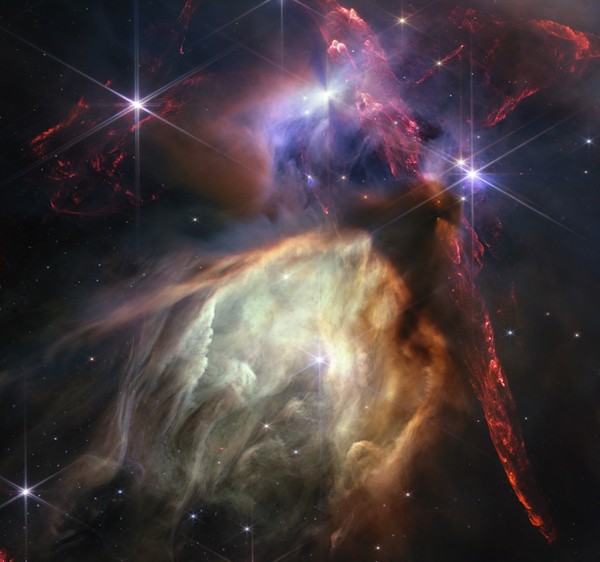
From our cosmic backyard in the solar system to distant galaxies near the dawn of time, NASA’s James Webb Space Telescope has delivered on its promise of revealing the universe like never before in its first year of science operations. “In just one year, the James Webb Space Telescope has transformed humanity’s view of the cosmos, peering into dust clouds and seeing light from faraway corners of the universe for the very first time. Every new image is a new discovery, empowering scientists around the globe to ask and answer questions they once could never dream of.” -- NASA Administrator Bill Nelson. NASA has selected an ambitious set of observations for year two as the James Webb Telescope begins its second operational orbit around the Sun.
Kiss the Sky Tonight -- Month of July 2023

Welcome to the night sky report for July 2023 -- Your guide to the constellations, deep sky objects, planets, and celestial events that are observable during the month. In July, Mars and Venus go their separate ways, Saturn cruises with Fomalhaut -- a dusty young star, and it's prime time to view the Milky Way in all its glory. Find the constellation Scorpius to identify the reddish supergiant star Antares, which will lead you to the globular star cluster M4 (NGC 6121). M22 (NGC 6656), in the constellation Sagitarius, another globular cluster, is one of the brightest clusters in the sky and is visible with the naked eye. Keep observing around the group of stars commonly known as the Teapot and you’ll be looking toward the center of the Milky Way. In that direction, you can see the Lagoon Nebula (M8, NGC 6523), the Omega Nebula (M17, NGC 6618), and the Trifid Nebula (M20, NGC 6514). Next, if you're feeling the July heat, note the origin of the phrase "the dog days" of summer, which is a reference to the bright star Sirius, also known as the “Dog Star.” The night sky is truly a celestial showcase. Get outside and explore its wonders from your own backyard.
Astrophysicists Detect an All Pervasive Gravitational Wave Background Where Oscillations are Measured in Years and Decades

The NANOGrav collaboration, a group of more than 190 scientists from the US and Canada who use pulsars to search for gravitational waves, detected evidence that our Earth and the Universe around us is awash in a vast background of gravitational waves that oscillate very slowly over years and even decades. These spacetime undulations are thought to originate primarily from pairs of supermassive black holes as they leisurely spiral together before merging. The NANOGrav Collaboration found the first evidence that these low-frequency gravitational waves permeate the cosmos by essentially using the Milky Way as a gigantic galaxy-sized gravitational-wave detector. The findings were made possible through 15 years of very precise pulsar observations.
Rare White Dwarf Pulsar Found in Our Solar System’s Back Yard – Only 773 Light Years Away

A rare type of white dwarf pulsar has been found for only the second time in history in research led by the University of Warwick in the UK and independently by the Leibniz Institute for Astrophysics Potsdam (AIP) in Germany. To the great surprise of the scientific community, this odd pulsar phenomenon in a white dwarf was only observed for the first time in 2016. Only 773 light years away from Earth and spinning 300 times faster than our planet, the white dwarf pulsar has a size similar to the Earth, but a mass at least as large as the Sun. This means that a teaspoon of white dwarf material would weigh around 15 tons. A white dwarf pulsar consists of a rapidly spinning, burnt-out stellar remnant that lashes its neighbor – a red dwarf – with powerful beams of electrical particles and radiation, causing the entire system to brighten and fade dramatically over regular intervals. This is due to strong magnetic fields, but scientists are unsure what causes them.
40 Years Ago Today – Sally Ride Becomes First American Woman in Space

Sally Kristen Ride was finishing her Ph.D. in physics at Stanford University in 1977 when she saw an article in the student newspaper saying that NASA was looking for astronaut candidates and that for the first time, women could apply. When she blasted off aboard the space shuttle Challenger 40 years ago on June 18, 1983, she became the first American woman—and, at 32, the youngest American—in space. Sally's historic flight made her a symbol of the ability of women to break barriers and a hero to generations of adventurous young girls. She flew on Challenger again in 1984 and later was the only person to serve on both panels investigating the nation's space shuttle disasters—the Challenger explosion in 1986 and the breakup of the shuttle Columbia on reentry in 2003. Sadly, Sally Ride died on July 23, 2012, after a 17-month battle with pancreatic cancer.
60 Years Ago Today – Valentina Tereshkova is the First Woman in Space

Valentina Tereshkova was born in Maslennikovo, near Yaroslavl, in Russia on March 6, 1937. Her father was a tractor driver and her mother worked in a textile factory. Interested in parachuting from a young age, Tereshkova began skydiving at a local flying club, making her first jump at the age of 22. At the time of her selection as a cosmonaut, she was working as a textile worker in a local factory. After the first human spaceflight by Yuri Gagarin, the selection of female cosmonaut trainees was authorized by the Soviet government, with the aim of ensuring the first woman in space was a Soviet citizen. On February 16, 1962, out of more than 400 applicants, five women were selected to join the cosmonaut corps. The group spent several months in training, which included weightless flights, isolation tests, centrifuge tests, 120 parachute jumps, and pilot training in jet aircraft. Sixty years ago today, on the morning of June 16, 1963, Vostok 6 lifted off without fault and Valentina Tereshkova at age 26, became the first woman in space.
Kiss the Sky Tonight -- Month of June 2023

Welcome to the night sky report for June 2023 -- Your guide to the constellations, deep sky objects, planets, and celestial events that are observable during the month. Though the nights are shorter in June, they are filled with fine sights. Throughout the month Mars and Venus draw nearer each evening in the western sky following sunset. The pair will appear a bit lower in the sky each night. Also, look for the Hercules constellation, which will lead you to a globular star cluster with hundreds of thousands of densely packed stars. Globular cluster M13 (the Hercules Cluster, NGC 6205) is best observed with a telescope, but binoculars will reveal it as a fuzzy spot. You can also spot Draco the dragon, which will point you to the Cat’s Eye Nebula (C6, NGC 6543). The night sky is truly a celestial showcase. Get outside and explore its wonders from your own backyard.
50 Years Ago – Skylab Paved the Way for the International Space Station

The International Space Station (ISS) has been in operation with research ongoing since November 2, 2000. But it was the first US space station – Skylab -- that helped pave the way for permanent operations in Low-Earth Orbit (LOE). The three man crew of Charles Conrad, Joseph Kerwin, and Paul Weitz launched aboard a Saturn IB rocket fifty years ago this week, on May 25, 1973. This followed the launch of the unmanned Skylab Space Station a week earlier by a Saturn V on May 14, 1973 – The last launch of the venerable Saturn V booster. Skylab orbited the Earth from 1973 to 1979. The 169,950-pound space station included a workshop, a solar observatory, a multiple docking adapter, and systems to allow three crews to spend up to 84 days in space. Altogether, there were three Skylab expeditions of 28, 59, and 84 days that produced a vast study of the Earth -- its crops, weather, changes in environment, as well as a revealing study of the Sun. Skylab moved the space program from the realm of the spectacular, into a new phase that could be characterized as almost businesslike and contributed to an orderly transition from the Apollo era to the Space Shuttle.

Funding Member