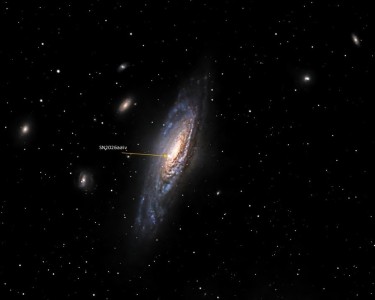
Clemson Astronomers Help Shed Light on Gamma-Ray Burst Mystery
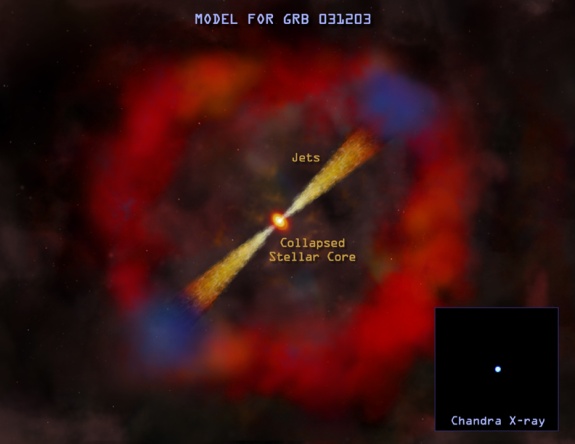
For more than a decade, scientists have puzzled over a dark mystery in distant galaxies: Why are some Gamma-Ray Bursts (GRBs) — the brightest electromagnetic events known in the universe — accompanied by visible "afterglows" of radiation while others aren't? Thirty years after discovering the first gamma-ray bursts, scientists in 1997 detected visible afterglows, emissions of radiation at longer wavelengths, from X-rays and ultraviolet to optical, infrared and radio wavelengths. However, the afterglows didn't appear to accompany about half of the detected gamma-ray bursts, and astronomers were at a loss to determine why. Astronomers offered plenty of speculation. Now they have answers.
Comments:
There are no comments yet.