Image of the day

Captured by
Gary Taylor

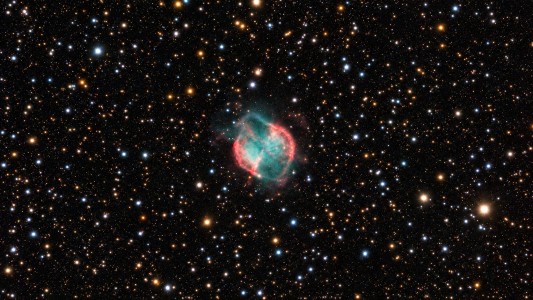
M27 - Dumbell Nebula

My Account

New to Astromart?

Register an account...

Need Help?

Posts Made By: Stephen Stoffer

June 19, 2009 04:18 AM Forum: Equipment Talk

How to use JMI Train-N-Track

Posted By Stephen Stoffer

:S
I'm new to the forum and am asking if anyone here knows where I can obtain information on how to learn to use JMI's Train-N-Track control paddle. Trying to get the right settings for both azimuth and altitude while tracking is turning out to be a challenge.

June 27, 2009 11:07 PM Forum: Eyepieces

Celestron Ultima LX 17mm - nice piece of glass

Posted By Stephen Stoffer

grin Last evening I tried out my new Celestron Ultima LX 17mm eyepiece which arrived the same day. I wanted to get a Pentax XW ocular, but the expense was too much for me. I am returning to the hobby in a big way after nearly 25 years! After buying a new Meade 12 inch Lightbridge, I needed another eyepiece. Choices were tough and I could not decide. Finally I reasoned everything carefully out, including costs, and decide on the Ultima LX line of oculars. It was hard to find very many detailed personal reviews, but what I read convinced me this is the way to go. I couldn't be more happy!
The field of view for deep sky objects is very spacious, eye relief excellant(especially for an eyeglass wearer with severe astigmatism), and it is very sharp out to the edge of the field. It certainly is better than the Meade 4000 QX 26mm wide angle ocular that came with the Lightbridge. The build quality is first rate. I would appreciate if other users of this line of eyepieces could comment on thier experiences. Mine has so far been a pleasure.
-Stephen

June 28, 2009 01:18 AM Forum: Reflectors

Collimation hell with a Meade Lightbridge

Posted By Stephen Stoffer

sad I am having trouble collimating my new Meade 12 inch Lightbridge and I can only describe the experience as a kind of hell. It began when I tried to adjust the main mirror on the rear of the optical tube assembly. It was a mistake as I didn't read the instructions and I should have been adjusting the three collimation screws on the secondary insead(not so brilliant thinking). Last evening while testing out a new eyepiece, I tried to use a Meade 1 1/4 inch laser collimator to center the image of the diagonal through the focuser. I centered it and tighten the screws, but every time the procedure is repeated the image of the secondary is still not centeredthrough the focuser. In fact if I replace the laser collimator and try again I find the point of the laser beam needs to be centered on the circle marked on the main mirrors center. No matter hows many times I repeat the process it fails to align.
The next step I loosened all three secondary adjustment screws and tried to start over, but the next thing the secondary turned on axis away from the focuser. Now I really have a mess. Can someone help me? Perhaps someone can supply me with a procedure or direct me to a website. This is collimation hell.

- Stephen

August 15, 2009 11:30 PM Forum: Deep Sky Observing

Cat's Eye first view

Posted By Stephen Stoffer

I had my first glimpse of the Cat's Eye (NGC 6543) planetary nebula in Draco last evening.The latest issue of Sky and Telescope for September, 2009 published a fascinating article about this deep space object. Through my 12 inch lightbridge it appeared as a small, but very bright turquoise hue object. The shape also appeared as in photographs, tapered at opposite ends. Unfortunately, the shortest focal length eyepiece I had was 13mm and no barlow lense. I could just barely make out some inner detail, and I am uncertain just what I had exactly seen. Through an ultrahigh contrast nebula filter, IC 4677 was the greatest challenge of all. I believed I had caught a glimpse of it around the nebula and a nearby bright star, however it did not seem to match the heavy concentrations of gas seen in time exposure photographs. I can't wait to get a barlow or a higher power eyepiece, I think I will see significant detail in this object. 8O

August 16, 2009 06:38 AM Forum: Eyepieces

New Celestron Ultima LX or a barlow?

Posted By Stephen Stoffer

:S I need more magnification to view some planetary nebulas and globular clusters. I'm building a set of Celestron Ultima LX eyepieces. So should I purchase an 8mm Ultima LX or a good quality two inch barlow? I am considering only this line of eyepieces in order to stay parfocal with my other two Ultima LX's. I hardly see any reviews on this line of oculars on this website or its competitors. I would appreciate any comments or suggestions. :S

February 11, 2010 03:48 AM Forum: Eyepieces

University Optics 2 inch oculars

Posted By Stephen Stoffer

I'm wondering if anyone on this forum can provide me some information pertaining to the current selection of 2 inch oculars offered on University Optics website. I need to know how well they perform on an f/5 optical system, eye relief, and any user reviews concerning their quality. So far I cannot find anything on the web about them. It is strange how the 70 degree eyepieces are actually more expensive than two focal lengths of the 80 degree oculars. Yet, the most expensive eyepiece they have, 70 degree 32mm, is only $90.00. I originally thought about buying another Celestron Ultima LX in 32mm focal length (Celestron is having a sale until the end of this month). I can save $60.00, but that does not compare to the deal that is offered by University Optics.
Also, if anyone on this forum knows any other deals in 2 inch oculars of about 32mm focal length please provide me some information. Key consideration is a relatively low price. I cannot afford anything like an Ethos or a Nagler at this time(although I dearly would like to have one).

- Stephen

February 23, 2010 07:15 AM Forum: Eyepieces

Celestron 32mm Ultima LX: A Test Report

Posted By Stephen Stoffer

Upon seeing the sale put on this past month by Celestron for their Axiom and Ultima LX oculars, I couldn’t resist getting another one in order to add to a partial set of three Ultimas I already had. After arrival from Fedex this past weekend, I've taken out the 12 inch F/5 Meade Lightbridge and pointed the scope at the following objects: M81/M82, M104 and an elliptical galaxy (probably a Messier object) in Virgo. The sky conditions on the first night were completely clear with no wind. Light pollution from nearby city lights seemed about average (a nice pink sky color visible from the southern horizon gradually fading to about 50 degrees above the horizon). Seeing was 2 out of 10, Transparency 4 out of 10. The second night introduced a five day old crescent moon and some high cirrus clouds that slowly grew thicker for 3 hours until I finally called it a night. Views through the Celestron 32mm Ultima LX seemed clear and very sharp from the center of the field to about two thirds of the way to the field stop. Coma and perhaps astigmatism then became an issue. I hoped it would have been better than this. The shorter focal lengths of this series of oculars do seem to have better edge of field performance, especially the 17mm (the best one of the entire Ultima LX line in my opinion). A paracorr would improve the view. Contrast was good. Lateral color chromatic aberration near the periphery was minimal. To describe, brighter objects would appear to be surrounded by a thin uneven outline of blue or purple when near the field edge which was lined in red or orange in color. Objects like planets also became out of shape slightly (Jupiter almost fission in two late last summer through my 13mm Ultima LX).
But despite these minor problems, it was exciting to observe the M81/M82 pair of galaxies together within the same field of view! I could easily see mottled structure in the core of M82 at this low power. And M82 showed hints of its spiral structure despite the low contrast due to light pollution from sodium vapor lights around a nearby church.
In comparison to the Meade 4000 QX wide angle 26mm (70 degree) it did a very good job. That eyepiece would start to blur about half out from the center of the field of view. With the 32mm Ultima LX the better optical correction and longer focal length made for a larger corrected field of view.
I collimated my optics as best I could with an inexpensive Meade laser collimator and covered the optics in between views to avoid frost from forming on the secondary mirror. I mention this because collimation is important in testing oculars, and mine was not perfect enough. I experienced some trouble focusing on the Trapezium within the Orion Nebula. I determined that when I used an 8mm Ultima LX to take a closer look at the star cluster, the same focusing pattern indicated a slight noticeable error in alignment of the secondary mirror. Nevertheless, I could see five members of the Trapezium!
I read that so many people consider this line of oculars ugly and criticize due to the rubber outer housing. I don’t seem to feel this way, in fact, I prefer this when viewing in very cold winter conditions. I hate grabbing on to anything metal when it is 10 degrees Fahrenheit or colder outside. Also, the triangular (Wankel Rotary) shape of the eyepiece barrel prevents it from rolling away. Something many of us (me included) has experienced. To compare it to a Televue 27mm Panoptic I viewed through last summer at a star party it is not quite as nice (better edge of field performance), but it feels solid and of good quality for half to two thirds the price. It is a pretty good deal. I can’t wait to use it more this spring! smile


Clear Skies! - Stephen

I'm still thinking about completing the set by getting the 5mm and 22mm, but I'm thinking it over and taking things slow.

May 18, 2010 05:51 AM Forum: Eyepieces

Help in choosing a 5mm eyepiece

Posted By Stephen Stoffer

I notice while observing planetary nebula that I need higher magnification than a 12 inch Lightbridge can provide with an 8mm ocular. As a result, I finally decided to complete an eyepiece set and get a 5mm wideview(at least 60 degrees)for it offers the maximum magnification that I can use with my telescope on most nights.
I narrowed the choice between a Baader Hyperion or a Televue Radian. But I am unable to decided between the two. I want to save money with the Hyperion, but the Radian offers superior optics. The only way to break this stalmate in deciding is to seek information comparing the on axis sharpness and contrast between the two. If it makes a significant difference between seeing something or not at all that is important to me.
I will consider new or preferably used. Anybody here on this forum have opinions on buying from eBay? The input would be helpful. :S
Clear skies! - Stephen

June 12, 2010 08:42 AM Forum: Deep Sky Observing

Two new planetaries and the Veil Nebula

Posted By Stephen Stoffer

I've had two very successful nights these past two weeks. I been challenging myself with two difficult planetary nebulae in my 12" Lightbridge. The first, NGC 6210 or otherwise known as the Turtle Nebula in southern Hercules, and second, NGC 6891, located near the constellation Delphinus.

The Turtle Nebula has been described within the pages of the current issue of Sky & Telescope (July, 2010). It was everything the author Ken Hewitt-White described in his monthly column "Going Deep", with one exception. He used a 17.5" dob and I used a 12 inch. The difference in aperture made it rather difficult to see the central star. Something I've been trying to do with every Planetary nebula I observe. A magnification of more than 300X brought into view the shape of the object which has given its name, but poor seeing rendered the image unsteady and fuzzy. Backing off the power to 200X with an 8mm Celestron Ultima LX allowed me to finally catch a momentary glimpse of the central star when the seeing momentarily settled down. It is interesting to note how many of these objects appear small, bright and often colored green or blue. However, as difficult this object was it paled in comparison to the next planetary, NGC 6891.

NGC 6891, located near epsilon Delphinus, is my hardest to locate planetary as of yet. Even harder to find than IC 3568 near the Little Dipper. At close to 10 seconds in diameter it is very small and I passed over it more than once using a 32mm finder eyepiece. It wasn't until I consulted some detail maps and star hopped very carefully (under moderate light polluted southeastern skies), than switching to a 17mm ocular, I finally located this object. I wanted to see this one in particular because some deep sky guide indicated the central star was fairly easy to see in a 150mm aperture telescope. I have to admit it was quite prominent. The nebula appeared as a classic blinker. Round, greenish blue in coloration. Not much more detail than that.

Oh yes, I observed one more planetary that night, the Saturn nebula. Very bright (brighter than the other two previously mentioned), football shaped, brilliant green in color. No central star to observe. I couldn't even pull any more detail out of this object. Sometimes it seems I'm just on the threshold of seeing many of these objects in the detail I want to see in them.

Twelve inches of aperture does not seem enough unless the skies are very dark. Perhaps it was that view I had last summer in the local astronomy clubs 17.5" dobsonian while observing the Cat's Eye nebula. In that telescope I could see the central star easily bluish white surrounded by an indescribably beautiful greenish ring crossed by zigzagging filaments! I tried on many occasions to duplicate this view on my 12" scope. I finally succeeded in my backyard two weeks ago on a dark, clear night. I could hold the central star of the Cat's Eye directly in view for the first time! I could even see some detail within the nebula. However, it still comes up short compared to the bigger scope. Perhaps even darker skies will help somewhat.

As interesting and challenging as the above planetary nebula were, I tried for a second time to see the Veil nebula in my backyard. Using a Baader UHC-S filter attached to my 32mm wide field eyepiece, I caught a faint outline of the eastern arc of this object! This is only the second time I have see this object since I viewed it many years ago in a 22 inch telescope belonging to a astronomy club member at a local star party. When I move to darker skies I expect to see a lot more detail.

Well that is the report for now, Clear Skies everyone! 8)


-Stephen

November 1, 2010 07:32 AM Forum: Solar System Observing

Finally found Neptune!

Posted By Stephen Stoffer

I believe I finally found Neptune after a few weeks of trying to locate it. It was difficult because the object is so much fainter than Uranus. Also, it is much smaller than Uranus. When I first saw it I thought it was an out of focus star!
But what really was unexpected for me was how the disk brightness per unit area of the planets disk was lower than that of Uranus. I thought it would appear just like Uranus only smaller. Not so, it has a more blue-green-gray appearance versus blue-green for Uranus .
My guess is this because the planet lies some 10 AU farther away from the sun than Uranus? I would welcome some input from this forum for I want to know other observers opinions.

-Stephen
