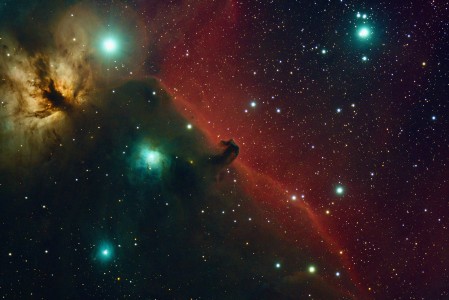
Image of the day

Captured by
Erwin Forbragd

Horsehead Nebula

My Account

New to Astromart?

Register an account...

Need Help?

Posts Made By: nick tsakoyias

August 13, 2003 08:39 PM Forum: Takahashi

1ST light TAK 130 TOA

Posted By nick tsakoyias

Here it goes, on 8-8-03.

It was a windy, and moon lit night. I just got the scope, and set it
up in my backyard, the winds were about 20 mph,and the sky was washed
in moon light. I was'nt expecting much in these conditions, yet I was
pleasntly surprised (I'll explain later).

I've been star gazing now for about 4 years, and have gone thru
several scopes, including a 10" & 15" newt.and a 7" Mead Mak. Which
since then I have sold, the only scope I've held on to is a TV102.
The reason I sold all the others, was because I eventually realized
that I did'nt like setting up heavy scopes, and that the little TV102
gave me real nice images limited only by it's appeture, and was very
portable and light weight. The only thing is that DSO. were dim, even
though the detail was impressive or at the very least more pleasant
than the 10" newt.

So my quest started for a highly portable and light weight APO.
scope 5"to6", something that would show DSO brighter,and bigger with
excellent contrast(my 1st. choice would have been an AP. 6" over the
TAK.6" only because it's shorter, and lighter weight,but the wait is
too long).

Now to 1st. light:

I set up the scope on the new Celestron EQ. CG-5 mount. This is my
first EQ. mount, and was very impressed, it moved gracefully, with no
backlash what so ever, a very good bargain at $330.00 IMHO. I rapped
on the scope and it settled down in about 2 seconds maybe 3 which was
very impressive considering the winds I had.

The EP's I used were Nagler's 22mm,13mm,and 7mm. My 1st. target was
the ring nebula, wow I've never seen it like that before, not only
was it big and bright, but the detail was very sharp. Next was the
dumbbell nebula, same as above, it had an hour glass figure to it.
M13 resolved into thousands little pinpoints, with several star
strands extending from its center. The double double in lyra split
easily at 77x. All views were very impressive cosidering the moon lit
sky,and high winds I had. I can only guess what this scope will do on
a nice night! Latter looked at Mars, saw polar cap,and some detail,
all without any filter, in all pretty good view considering it was
low on the horizon.

Well thats it for now, I'll do another report when I have a better
night, but for now 1st. impression is very promising, pretty much
what I was hoping for overall in this scope. Does anyone know if TAK
will come out with a 6" ortho?

Nick Tsakoyias

August 14, 2003 03:56 PM Forum: Takahashi

2nd light TAK 130 TOA Nick

Posted By nick tsakoyias

Here we go again,

I've read the replies on my report, thanks to all for your input.

I set up the scope last night, had no wind, and the moon did'nt come over the hills until about 10:30 pm., so I had almost 2 hours of dark skies. Frist of all I'd like to say that I strickly do visual observing, the mount I have, I know is inexpensive, that said it preforms very good, there was NO back lash. When I rapped on the scope hard it settled down in 1 second maybe 2 at the very most.

For me this set up is very portable and light weight to set up, considering I'm use to 100lbs set ups.

Anyway on to my report,EP's I used were nagler's 13mm,9mm, 7mm and 2 1/2 powermate. M92 at 277x was bright, elongated could see stars all the way to about 80% of center. M13 at 357x resovled stars all the way to the center, strands of star were very apperent. The dumbell nebula at 277x was huge and bright with hour glass figure, I easily made out 4 stars on the inner edge of the nebula, which I did'nt see the 1st. time I used the scope. Vega at 357x held up pretty good, did'nt really see any color looked blue-white , when the atmosphere was turbulent I saw a slight hint of orange. Moon looked sharp at 357x. Mars was difficult due murky atmospere.

Well thats it for now, clear skies.

Nick T.

August 27, 2003 05:34 PM Forum: Takahashi

TAK 152 question

Posted By nick tsakoyias

Hi all,

Does anyone out there own a TAK 152, if so I'd like to hear any comments about the scope, anything about the optics,contrast,mechanical,color, anything visual. How does it compare with other 6" APOS?

Thanks Nick T.

September 8, 2003 06:52 PM Forum: Celestron

C6 refactor

Posted By nick tsakoyias

Does anyone out there have a 6" celestron refractor, a friend of mine is considering buying one, and wants to know how it performs, visual only.ie. color, contrast, how crisp the views are. He has now a meade LX90 and is'nt too happy with the views too mushy.

Thanks Nick T.

September 15, 2003 07:43 PM Forum: Takahashi

New TAK FS series

Posted By nick tsakoyias

Hi all,

Just heard that TAK will be coming out with new FS series, and will discontinue the old FS series. Anyone else heard this, if so what will be different from the old series.

Thanks Nick T

September 26, 2003 07:24 PM Forum: Refractors

Collimating a refractor?

Posted By nick tsakoyias

I just got a new 152TAK, and was wondering is there an easy way to check if it is collimated properly? And if it is'nt how can I collimate it?

Nick T

September 29, 2003 08:28 PM Forum: Takahashi

2nd Light 152 TAK

Posted By nick tsakoyias

Hi all,

Went to my clubs star party this past sat. This was my 2nd. time out with this scope. 1st. time out the seeing was terrible, so could'nt star test the scope very good, nor could I look for false color.

This time was different. Seeing was about 8 out of 10. I had a seasoned observer there that star tested the scope for me, and showed me what to look for. He said the star test was excelent, both on inside and outside of focus. Finest optics he has seen.(he has a TAK FS 102). We split a double star in cygnus cleanly it was a 2 arch second double! Scope was in perfect collimation.

The only false color I saw was on the star test at 240x, the inner rings were slightly purple, the outer ring a light lime green color. However I saw NO color when in focus on vega at the same power or even at 300x! Cresent moon was up looked great very high contrast very crisp views no color, with bino-viewer even better, outstanding!

Mars had alot of detail, looked like pictures I've seen in magazines from amatures. The lagoon nebula was very nice with 22mm nagler, alot of detail, then I put in a OIII filter and WOW! Not as bright as the 15" reflector that was next to me, but detail really jumped out at me, and held a more pleasing image than the 15".

For the 1st. time I was able to see M110 without averted vision. It might have been dim, but it was clearly there it was an incredible sight!
Ditto on everything else that I viewed that night, everything was very crisp, with a high amount of contrast that I have'nt see in any scope!

Everything snapped into focus, something that I have'nt in any scope!
The only negative about the scope that I have is that the focuser is quite stiff when drawing the tube inward, drawing it out was very smooth. I'd like if it was smooth on both occasions. Yet either way stars always snapped into focus, with no problem. If any one knows how I can adjust the focuser to be smoother let me know.

Any way I look at it, this may be the only scope I'll ever need, really an excelent scope, it's a keeper! Thank you Takahashi!

Nick T.

May 23, 2006 07:04 PM Forum: Refractors

Np127 vs Tmb 130 f/6 vs TOA 130

Posted By nick tsakoyias

And the winner for visual use is in your humble opinion is?

August 25, 2006 05:11 PM Forum: Refractors

What a difference a dark site makes

Posted By nick tsakoyias

Hi all,

just got back from Yosemite this past weekend. Went up there with my
astro club for a 2 day ( FRI. and SAT.) public star party that we put
on for Yosmite National Park every year, up at Glacier Point, which
is about 7000ft. elevation. I actually stayed thru Mon. so I had an
extra night for observing without the crowds.

I brought up with me my NP127 it was the first time in a year and a
half that I've had this scope that I was able to take it to a truly
dark site of 6.5+ mag. skies. The Milky way is so bright and clear up
there that it casts a shadow where you can almost read a newspaper
from its light.

I brought up with me also the new S&T pocket sky atlas that I picked
up a couple of months ago, DSO shown on the atlas down to about 13
mag. With my 11" Starmaster all DSO in that sky atlas can be seen
fairly clearly from my 4.5+ mag. backyard skies, but not so with the
smaller NP127.

WOW! What a difference a truly dark site makes! Up there the NP127
preformed like my 11" Starmaster does from my backyard, with the only
difference being that I had a very wide flat field that was tack
sharp from edge to edge and slightly brighter, I can really get used
to that. There was nothing that was up that was in the atlas that I
couldn't see with the NP127. All the major M galaxies that were up,
you could see their shapes, spiral arms and quite a bit of detail
with direct vision. Same could be said with globular clusters, and
nebulas, it was simply amazing at what I could see with direct
vision! Minor galaxies, globular clusters, and nebulas were also
seen, though just a little better than just a fuzzy spot with a touch
of detail. Just being able to see them was a treat where as in my
backyard with the NP127 you can't see them at all due to light
pollution. Several club members commented at how surprised they were,
at how bright the DSO appeared in that little 5" APO. they were'nt
expecting those kind of veiws at all.

One interesting note is during the night when the Milky way is up
its so bright that you can see Nevada falls from Glacier point, which
is about 2 miles away, and as the night goes on and the Milky way
sets it gets really dark where you really can't see in front of you.
It was at this time where this scope surprised me the most. I turn
the scope to NGC 7331 in Pegasus looked in the 22mm Nagler EP, and
saw something very, very dim at the far end of the field, like a
cluster of something, maybe like molten shadows? I called a few of
the more seasoned DS members over to tell me what I might be looking
at if anything at all, one had an 18" obsession the other 12"
reflector. Both were like "Oh my lord" you can actually see Stephans
Quintet! It was extremly dim but still with averted vision you could
count the 5 little galaxies they were there! We confrimed the
sighting by comparing the view thru the larger scopes, boy was that a
treat!

Over the course of three nights I observed about 100 DSO's and was
delighted at how bright and how much detail was seen with this little
5" NP127 APO. Like I said earlier " Wow what a difference a truly
dark site makes".

Here is a partial list of DSO's that I observed this past weekend
from Yosemite. On the nebulas I tried out the 2" Tele Vue filters I
recently got the Bandmate UHC amd the OIII, both worked well where
some detail would be a little more evident than without it, depending
on the paticular nebula that you were looking at, but most if not all
did not really need it under those conditions.

Draco: UGC10822, NGC:6140, 5985, 6015, 5879, 5907, 5866.
Hercules: M13,M92, NGC6229, 6207.
Scorpius: M7, M6, M4, M62, M19, NGC6139, 6397, 6441, 6541, 6496,
6352, 6397, 6304, 6293, 6355, 6284, 6325, 6401, 6302, 6337.
Cygnus: Veil, Cresent, N. America Nebulas M27.
Lyra: M57, Double Double.
Sagittarius: M70, M69, M8, M20, M17, M16, NGC6652, 6624 6569, 6558,
6528, 6522, 6638, 6559.
Sagitta: M71
Andromeda: M31, M32, M110
Pegasus: NGC7457, 7331, Stephan's Quintet.
Capricornis: M7, NGC7009, 7293, 7293.
Ursa Major: M101, M51, M97, M108, NGC3898, 3780, 3998, 3982,3690.

There were more but not listed.

Nick T.


August 25, 2006 07:08 PM Forum: TeleVue

NP127 at Yosemite

Posted By nick tsakoyias

Hi all,

just got back from Yosemite this past weekend. Went up there with my
astro club for a 2 day ( FRI. and SAT.) public star party that we put
on for Yosmite National Park every year, up at Glacier Point, which
is about 7000ft. elevation. I actually stayed thru Mon. so I had an
extra night for observing without the crowds.

I brought up with me my NP127 it was the first time in a year and a
half that I've had this scope that I was able to take it to a truly
dark site of 6.5+ mag. skies. The Milky way is so bright and clear up
there that it casts a shadow where you can almost read a newspaper
from its light.

I brought up with me also the new S&T pocket sky atlas that I picked
up a couple of months ago, DSO shown on the atlas down to about 13
mag. With my 11" Starmaster all DSO in that sky atlas can be seen
fairly clearly from my 4.5+ mag. backyard skies, but not so with the
smaller NP127.

WOW! What a difference a truly dark site makes! Up there the NP127
preformed like my 11" Starmaster does from my backyard, with the only
difference being that I had a very wide flat field that was tack
sharp from edge to edge and slightly brighter, I can really get used
to that. There was nothing that was up that was in the atlas that I
couldn't see with the NP127. All the major M galaxies that were up,
you could see their shapes, spiral arms and quite a bit of detail
with direct vision. Same could be said with globular clusters, and
nebulas, it was simply amazing at what I could see with direct
vision! Minor galaxies, globular clusters, and nebulas were also
seen, though just a little better than just a fuzzy spot with a touch
of detail. Just being able to see them was a treat where as in my
backyard with the NP127 you can't see them at all due to light
pollution. Several club members commented at how surprised they were,
at how bright the DSO appeared in that little 5" APO. they were'nt
expecting those kind of veiws at all.

One interesting note is during the night when the Milky way is up
its so bright that you can see Nevada falls from Glacier point, which
is about 2 miles away, and as the night goes on and the Milky way
sets it gets really dark where you really can't see in front of you.
It was at this time where this scope surprised me the most. I turn
the scope to NGC 7331 in Pegasus looked in the 22mm Nagler EP, and
saw something very, very dim at the far end of the field, like a
cluster of something, maybe like molten shadows? I called a few of
the more seasoned DS members over to tell me what I might be looking
at if anything at all, one had an 18" obsession the other 12"
reflector. Both were like "Oh my lord" you can actually see Stephans
Quintet! It was extremly dim but still with averted vision you could
count the 5 little galaxies they were there! We confrimed the
sighting by comparing the view thru the larger scopes, boy was that a
treat!

Over the course of three nights I observed about 100 DSO's and was
delighted at how bright and how much detail was seen with this little
5" NP127 APO. Like I said earlier " Wow what a difference a truly
dark site makes".

Here is a partial list of DSO's that I observed this past weekend
from Yosemite. On the nebulas I tried out the 2" Tele Vue filters I
recently got the Bandmate UHC amd the OIII, both worked well where
some detail would be a little more evident than without it, depending
on the paticular nebula that you were looking at, but most if not all
did not really need it under those conditions.

Draco: UGC10822, NGC:6140, 5985, 6015, 5879, 5907, 5866.
Hercules: M13,M92, NGC6229, 6207.
Scorpius: M7, M6, M4, M62, M19, NGC6139, 6397, 6441, 6541, 6496,
6352, 6397, 6304, 6293, 6355, 6284, 6325, 6401, 6302, 6337.
Cygnus: Veil, Cresent, N. America Nebulas M27.
Lyra: M57, Double Double.
Sagittarius: M70, M69, M8, M20, M17, M16, NGC6652, 6624 6569, 6558,
6528, 6522, 6638, 6559.
Sagitta: M71
Andromeda: M31, M32, M110
Pegasus: NGC7457, 7331, Stephan's Quintet.
Capricornis: M7, NGC7009, 7293, 7293.
Ursa Major: M101, M51, M97, M108, NGC3898, 3780, 3998, 3982,3690.

There were more but not listed.

Nick T.