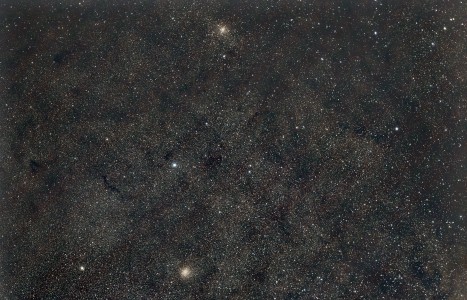
Image of the day

Captured by
Michael Scherman

Dual Clusters near Antares

My Account

New to Astromart?

Register an account...

Need Help?

Posts Made By: Bill Meyers

February 6, 2008 04:48 PM Forum: Equipment Talk

Lightweight Dobsonians

Posted By Bill Meyers

Inge Skauvik said:

Easily transportable Dobsonians are very attractive scopes for persons living in areas with light pollution and unstable weather conditions. With my increasing interest for astro tourism, I'm even interested in something that can be transported as checked luggage with the airlines. Presently I'm using a 12.5-inch Portaball which I have brought with me to the Canary Islands on two occasions. In these cases I have brought along the mirror in its cell as hand luggage. The trips has given me many great views, but I have to admit that even the Portaball is a bit large and heavy as air luggage.
In Europe it is possible to get Dobsonians with larger aperture (up to 16") which are considerably lighter than the Portaball and can be collapsed to much smaller volumes for transportation. The trade-off is (probably) less stability and (definitely) a higher price. Optically they are said to be very good even though the thickness of the mirrors are much smaller than the old standard.
My question is: Is ther anything similar presently available on the American market? Is there anyone willing to take the challenge of constructing an ultralight scope in the 15 - 18-inch range? I have seen photos of the new 18-inch Obsession. Definitely a step in the right direction, but still too heavy for me.

Inge S
Inge,
To me there are several issues. Compactness. Total weight. Weight of the heaviest component.

For air travel compactness and weight are important issues. For travel in a car, compactness is an issue but many designs have solved this. Starmaster for example, stacks up the components for travel. The Compact Precion Telescope OTA collapses (slides together) for transportation.

But the weight of heaviest component is the key issue if yone wishes to avoid back problems. One needs a telescope that easily disassembles into several pieces, and the key is the weight of the heaviest piece.

A telescope that is compact, like the new Obsessions, does not address the problem of keeping the weight of the heaviest component low. This is a problem for the Portaballs and the Teleports as well: they don't disassemble much so all the weight remains in the combination mirror box and rocker box, which is one heavy unit when you go above 10 inches.

The new Plettstone 16 inch has a low total weight but and I believe the weight of the heavist component is less than 40 pounds but you could ask Michelle Stone.

I envy your situation in Europe with regard to lightweight Dobsonians.

Bill Meyers


August 25, 2008 04:10 AM Forum: Beginning Astronomy?

Andromeda and . . . . .

Posted By Bill Meyers

Mark,
Absolutely the easiest atlas to use for an absolute beginner; Edmund's Mag 5 Atlas.

Best advanced beginner's star atlas: Bright Star Atlas, by Brian Skiff.

Best folding star map showing 600 best objects and giving brief data: Orion's Deep Map 600. Objects selected by Steve Gottlieb. Great, easy to use. Everyone should have it.

Best advanced beginner to intermediate star atlas: Sky & Telescope's Pocket Sky Atlas. Superb. A tour de force. No data are given though.

Best guide to actually finding deep sky objects,(also describing them, and showing what they look like): Illustrated Guide to Deep Sky Wonders, by Thompson and Thompson. If you can't find an object, this is the book to use.

Best brief inspiring descriptions of 300 deep sky objects: James Mullaney's Celestial Splendors.

Best lengthy inspiring descriptions with data: Robert Burnham Jr.'s Burnham's Celestial Handbook. A gem.

I have zillions of books and atlases, and I don't have any doubt that the ones I list above are the best and easiest to use for a beginner.

Bill Meyers
Observing since 1947.


Mark Aguirre said:

The newbie here again. I have found the andromeda galaxy through my 8" dob. Unreal. Can anybody suggest something else 'awesome' that I might be able to find? Like another galaxy or . . . .??

August 25, 2008 01:57 PM Forum: Beginning Astronomy?

Andromeda and . . . . .

Posted By Bill Meyers


Mark,

Some further thoughts:

Turn Left at Orion is also very good.

The Cambridge Star Atlas is very like the Bright Star Atlas but is prettier. I like the vertical format of BSA better than the horizontal format of CSA, though.

To answer your question more specifically, at this time of year,
Messier 13 and Messier 22 and Messier 24 and Messier 17 and Messier 57 are all outstanding and easy to find.

In the winter Messiers 42, 35, and 45 are outstanding and very easy to find.

What helped me a lot was joining my local astronomy club. The members were very generous in showing me how to find things in my scope. I highly recommend this.

Bill Meyers


Mark Aguirre said:

The newbie here again. I have found the andromeda galaxy through my 8" dob. Unreal. Can anybody suggest something else 'awesome' that I might be able to find? Like another galaxy or . . . .??

December 15, 2008 07:53 PM Forum: Pictures of Me and My Telescope and........

South Florida Missile Defense System

Posted By Bill Meyers

Angel Gomez said:

Who said folks in Alaska are the only ones getting their very own ICBM interceptors?

With the help of my daughters we decided to assemble our very own missile defense. I'm happy to report South Florida is much safer now. The ladder in the back leads to the super secret command post made to look like a tree house / tiki hut.

The axil of evil will never know what hit them!


Amusing! I laughed out loud when I saw the photo!
Bill Meyers

February 11, 2009 01:13 AM Forum: Equipment Talk

Newtonian telescopes - collimation

Posted By Bill Meyers

Enrique Barrio said:

What is it about the design and execution of newts that makes them so sensitive to collimation. I understand that all telescopes require proper alignment; but, once that is achieved why isn't the mounting system designed to hold the correct collimation indefinitely? Is there a need for the variable mirror cell, or can the mirror simply be mounted in a more riggid and durable cell and tube assembly?

Three small points:

Roland Christen has pointed out that Tak Netonians were made permanently collimated at the factory, and he recommneded that Newtonians in general should be made that way.

We are told that collimation of Newtonians is relatively simple; no doubt that is why threads on CN explaining collimation rarely exceed 250 posts.

To learn collimation, get an experienced amateur to teach you hnads on. Failing that, consult Nils Olaf Carlson's S & T article, and his web page on myths of collimation.

Bill Meyers

March 9, 2009 11:36 PM Forum: Reflectors

Collimation Question/Issue

Posted By Bill Meyers

Michael Garretson said:

I have an 8" Celestron Star Hopper that I've been happy with for over 10 years. It's the second generation "white rocker box" type that I believe were made for Celestron by Discovery.

While I've enjoyed the scope, I have a nagging suspicion that I have never been able to accurately achieve proper collimation.

Some background:

The secondary is held in place by a single post. This post is in turn mounted to the inside of the OTA and held in place by one of the screws that are used to mount the focuser.

Looking down the focus tube without an eyepiece, I can swear that it appears that the secondary looks like it's mounted too far "down" the OTA, and should be moved "up" closer to the "front" of the OTA.

I say this because it "looks" like the secondary isn't centered under the focus tube. I can clearly see the leading edge of the secondary as well as it's "back".

When I try to collimate the scope I go through the following process:

I marked the center of the primary years ago.

I use the Celestron supplied Collimation Tool that came with scope for the initial "rough" collimation.

This is followed up by a "fine" collimation using an Orion Laser Mate Deluxe.

Everything appears to go smoothly up to this point, but when I go out and do a star test, the shadow of the secondary and post is always off center, and the location of this off centered shadow is consistently in the same location, no matter how many times I repeat the process.

The diffraction rings are concentric and consistent – both in and out of focus – around this off center shadow, and the images from the scope are on par with that found on my other scopes.

If I move the primary to try and center the shadow when performing a star test, the resulting images are no better - or in fact may be a hair worse.

While I'm basically happy with the scope, I always have this nagging feeling that if I moved the secondary to a more "centered" position underneath the focus tube I could improve the situation.

Since I'm afraid to start "hacking away" at the scope, I wonder if anyone else has had the same issue, and what did they do about it?

Any help would be appreciated.

Thanks.

Mike Garretson

Mike,
I agree with Jon Isaac's advice.
Have you looked at the collimation threads on "that other site?"
Bill Meyers

March 26, 2009 08:03 PM Forum: Equipment Talk

Collimating Orion Skyview Deluxe 8" Newtonian

Posted By Bill Meyers

Theodore Goodman said:

Hi - I am new to this forums and need some assistance.
I just had my scope (Orion 8" Newtonian) collimated by a "professional". When I brought it home, I sky tested it on a normal dry evening. The results were good using a 20mm eyepiece, but not good when using a 12.5mm eyepiece. I wrote back to the professional and the response was that the result of using a 20mm meant that the scope was collimated, but the night was not a good night for viewing with the 12.5mm.

I leave in the NY Long Island area.

The scope now does not work well with the 20mm on one of the best nights of viewing.
Here are my questions.
1. How can I collimate this scope so I do not have to bring it a professional?
2. If the primary mirror does not have a center spot or line, is there a way to collimate?
3. I purchased a Orion LaserMate Collimator, but I am not really sure how to use it. Can any one assist?

Thanks in advance.

A word to the wise:
Google: "collimation" plus "forum," and "Pensack" or "Menard" or "Carlson."
Then ask your question.

Bill Meyers

May 8, 2009 01:01 AM Forum: Reflectors

Do I owe it to myself?

Posted By Bill Meyers

[QUOTE]Kurt Endres said:

first off, let me say, that I am a...Gulp... refractor person. I love everything about them, but lately, I've been wondering if I should consider a premium Dob.

Next year I should be in a financial position where I can afford another nice scope and was considering a SV145,but at over $8,000, I could get a nice 12 to 14 inch Portaball or Starstructure with cash left over.

Right now my equipment list is as follows.

SV102ABV APO, It's a phenomenal scope.

SV NH, great grab and go.

C8, Mixed feelings on this scope.

Having no experience with dobs. What can I expect with the two dobs listed compared to the scopes on my list.

Please excuse my ignorance!

For $8,000 you might want to consider the jpastrocraft Sweet Sixteen f/4.. I have been very pleased with mine.
Or the Starmaster 16.5 FX, F/3.7- in the same price range.
Bill Meyers

May 27, 2009 11:12 PM Forum: Pictures of Me and My Telescope and........

Homebuilt reflector

Posted By Bill Meyers

Linton Rohr said:

Okay...I'm cheating...it's not my scope...it's my architects.
He just recently took it out to test the tracking.
I was pretty impressed...
I hope our house turns out that nice! smile
Linton

Linton,
What is the aperture? What is the focal ratio?
Thanks,
Bill Meyers

May 29, 2009 01:09 AM Forum: Pictures of Me and My Telescope and........

Homebuilt reflector

Posted By Bill Meyers

Linton Rohr said:

Okay...I'm cheating...it's not my scope...it's my architects.
He just recently took it out to test the tracking.
I was pretty impressed...
I hope our house turns out that nice! smile
Linton

Linton,
This is a gorgeous scope. Thanks for showing it to us.
The design strikes me precisely orthogonal to that of the Normand Fullum scopes (Normand was interviewed during the NEAF 2009 coveragea by that other forum). Interesting contrast of design concepts.
Bill Meyers
