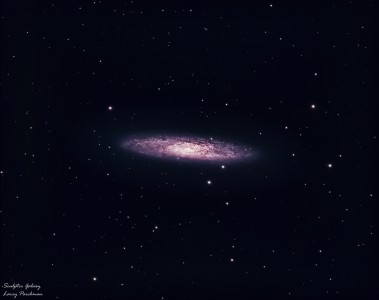
Thanks for the compliments--
Since it is unguided, explain how this is done, many short "clicks"
It is a combination of things that allow me to take the photo unguided. (By the way--and forgive me if I am saying what you already know--it was tracked, just not guided. "Tracking" follows the stars, but little imperfections mean that no tracking is perfect. "Guiding" helps one correct what mistakes are made by the "tracking"
mount.)
In the first place, if you really blow it up to full size you can see that the stars are not exactly round. SO, simply sizing down helps.
Secondly, I am using relatively short focal length. (700 mm I think) Therefore, the demands are not as great as they would be in a longer focal length with more magnification.
Next, I did have a good polar alignment on a solid pier. (However, I did not do a drift alignment, I just set up and used the polar alignment scope--which on the Losmandy is very good.) I also had a good balance, and the mount was running well. The G11 is a good mount.
But mostly, you are right, the longest exposure was 90 seconds, and there was not enough time to have real obvious drift. As you will note from the original posting, the photo was a composite of some 36 exposures, with the longest at 90 seconds.
It should be noted that the final composite would have been easier to make had I guided. There was some drift from one exposure to the next. It took more than an hour to gather all the exposures, and in that time, the whole setup had drifted more than fifty pixels--a bit too much for the software to do the aligning. So, I had to align by eyeball instead.
Had I been guiding, the photo would have been better, but I could not find a guidestar for the ST-4 to work with. I think the ST-4 was acting up and giving me spurious readings. Since the scope was tracking well anyway, and I was going for short exposures, I just figured I'd capture what I could without guiding.
Alex