Image of the day

Captured by
Gerald Elkin

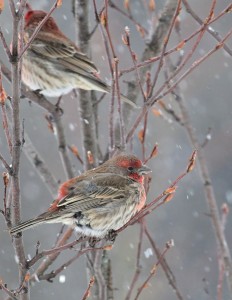
House Finch

My Account

New to Astromart?

Register an account...

Need Help?

Posts Made By: Gerald Kuchera

January 8, 2004 10:19 PM Forum: Eyepieces

Epics and Vixens and X-cels, oh my!

Posted By Gerald Kuchera

My 10mm X-Cel is a disappointment in my f8.8 refractor for planets. It is not sharp and contrasty, IMHO. I've gone to using a 40year old 18mm Orthoscopic, and with a barlow, I can get high mag and sharp views while wearing eyeglasses.

Just picked up a 2" Siebert 10mm Ultra, but haven't had enough clear skies yet to give it a fair try...I'd look at the Vixens and others for ER at this point.

January 21, 2004 03:28 AM Forum: Equipment Talk

I know you all love newbies.

Posted By Gerald Kuchera

I'd save up for one or both of the scopes you mentioned, and go online on UH network to Hawaii's telescopes and get a vitual tour of the heavens. I would think the UH's astronomy department's got a direct link to one or more of the biggies!;-)

Maybe you can find a used setup here on Astromart' classifieds...maybe Orion's got a refractor or Mak-Cass w/mount you could use. My cheap scope is a Celestron 114GT. The OTA might be airline portable(never felt the need to jet my scopes around), optics, eh, ok. As I remember it was a couple hundred bucks. Good luck.

January 28, 2004 04:43 AM Forum: Equipment Talk

use of telescope in cold weather??

Posted By Gerald Kuchera

Dale,

This topic has been covered before as I recall, but the best way to prevent moisture from building up after a cold night out among the stars is to:
1)Seal the scope up in it's case and bring it in sealed or enclosed.

2)Wait some hours to allow scope to come to near room temperature.

3)Unseal (or crack open the case a bit) and allow scope to 'breathe', that is, to allow excess moisture to disperse. Inspect scope as needed.

Some of us also put a dessicant in the focuser to make sure excess moisture inside scope is removed as much as practical.

January 28, 2004 07:37 PM Forum: Equipment Talk

Extreme cold and telescopes

Posted By Gerald Kuchera

When the optics are 'cold-soaked' at ambient temperature, nothing basically happens to the telescopes.

They can frost up, but so far, I haven't had frost on the optics, other than by breathing on the eyepieces. A hair dryer works for me there.

The stressful stuff occurs when bringing them out from a warm building to the outside and vice versa.

April 1, 2004 10:09 PM Forum: Equipment Talk

French astronomer :o)

Posted By Gerald Kuchera

May you enjoy the forums! Everyone here is terrific, few get cranky at all, and the assistance and opinions are great!

September 2, 2004 04:48 PM Forum: Equipment Talk

Advice on a good 50mm corrected finder

Posted By Gerald Kuchera

I use the Antares finder with the quick release mounting rings from Scope Stuff. Easy to adjust, and nylon screws don't chip paint.

Gerald Kuchera

October 2, 2004 03:58 AM Forum: Equipment Talk

Planetarium Program for Mac

Posted By Gerald Kuchera

Steve,

I'm running Starry Nights Pro, and find it excellent. Don't notice any severe pixelation on my old Powerbook G3, very nice graphics, and it runs very well on the 'ole 400Mhz machine. I recommend it!

Jerry Kuchera

November 15, 2004 03:10 AM Forum: Equipment Talk

Staying warm

Posted By Gerald Kuchera

Mike,

I don't have any problems staying warm without spending a fortune on Goretex down insulated suits. I can go 4hours easy without a warmup break or warm drink. Layering is key. Each layer adds another dead air space. This is what keeps you warm.

For unreasonably cold nights-
First layer-polyester mesh t-shirt, light stretch polyester long johns, thick synthetic thermal socks, or smart wool. Tuck everything in to seal out drafts.

Second layer, sized slightly larger than the first, stretch polyester thermals, mid weight, or expedition weight to pull an all nighter. The thermal tops sometimes will have a zip turtle neck. These are the best to get. I prefer polyester to most others as they resist damage in the dryer.

Then, chamios shirt or sweater, no cotton. Cotton absorbs moisture, and moisture conducts heat. Then, head band, synthetic stretch cap. If need be, all that will go under the final layer's hood.

Final layer-$100 Down Parka, $40snowmobile bib leggings. Or $149snowmobile suit. Snowmobile gear is designed for folks with windchill up the ying yang, and plenty of inactivity (sitting on a snowmobile)
Insulated boots. I've got an old pair with wool felt liners. There are better ones out there. But mine do fine. Oh yeah, I have a stretch Goretex sock over my thick thermal socks. Also avoid standing on bare ground, use a carpet, or plastic welcome mat or similar.

Gloves, fleece mittens with removable thumb and fingers. Got it mail order from Bikenashbar or Performance bicycle. Some models have windblock fabric sewn in. Light and flexible.

I set up in front of evergreen trees in the north, which block the wind. Perfect. You may need a windscreen of some kind.

If I want to sit down, I followed Floyd's lead on a cover for my Stardust chair. Thanks Floyd!

Jerry Kuchera
December 11, 2004 04:55 AM Forum: Equipment Talk

Your Newts and SCTs will be Obsolete!!

Posted By Gerald Kuchera

Here's a nice summary:

The most common are Cassegrain and Gregorian telescopes. The main difference between Cassegrain and Gregorian optical systems is that Gregorian telescopes employ a concave secondary mirror located beyond the focus of the primary mirror. This results in longer tube lengths, as the distance between mirrors is slightly more than the sum of their focal lengths, which is the reason Cassegrain systems are the most common. In addition, Gregorian telescopes produce an upright image, while Cassegrain telescopes produce an inverted image. FSONA is presenting a new compact optical system, which can be described as a modified Gregorian telescope. This telescope is ideally suited for free space optical communications but also has many other applications. The compact telescope is created from a standard Gregorian system by flipping the secondary mirror over a folding mirror installed approximately in the middle of the optical path between primary and secondary mirrors. In this manner, the primary mirror is constructed with a concentric "double curved" geometry, and a central obscuring folding mirror which matches the diameter of the smaller curve of the primary is mounted a short distance in front. This "double curved" geometry is easily produced using diamond turning technology, and the result is a compact telescope approximately 1/2 the length of a regular Gregorian telescope and roughly 2/3 the length of a Cassegrain telescope.There are several advantages to using this type of telescope:1. The system is very compact. Telescope can be as short as 1/7 of the focal length of the system.2. For Cassegrain and Gregorian systems it is very critical to keep tight tolerances on the centration between primary and secondary mirrors. The modified Gregorian telescope will always have perfect centration because both curved surfaces are machined at the same time on a diamond turning lathe. The folding mirror is flat so no centration is required3. The modified Gregorian system is inexpensive. Instead of two curved mirrors, there is one mirror with two curves, and one inexpensive flat folding mirror.4. The folding mirror can be used as a steering mirror for a tracking system.5. If the modified Gregorian telescope is constructed out of one material (ie. aluminum), it is completely a-thermal and insensitive to changes in temperataure.

Jerry

January 15, 2005 07:02 PM Forum: Equipment Talk

Dew Advice

Posted By Gerald Kuchera

You want to keep the cold lens or mirror or other optical surface from contacting the warmer, and therefore moister air. Absolutely put the lens cap on at the very least! Some wrap the OTA in plastic bags but the main thing is to keep moist warm air from contacting the optical surfaces!

After the equipment has nearly reached indoor ambient temperature, take the cap off to assure complete drying, add a desicant pack in the eyepiece diagonal to suck any residual moisture out of the tube for complete piece of mind.

Enjoy those cold clear nights with no worrys!!
