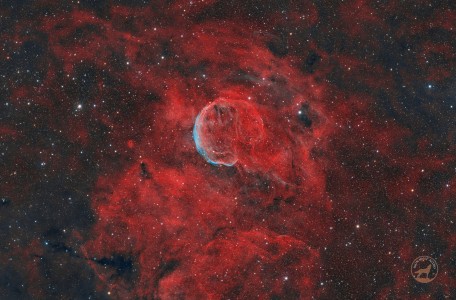
Image of the day

Captured by
Douglas Rollain

LBN 576 - The Garlic Nebula

My Account

New to Astromart?

Register an account...

Need Help?

Posts Made By: Alan French

March 23, 2009 05:26 PM Forum: Astro-Physics

155 EDT vs APQ 150

Posted By Alan French

Here is one test of a Zeiss APQ 150/1200. Unfortunately, it was tested at 632.3 nm (red, Helium-Neon laser line)

http://www.soldati.org/soldati.org/APQ_150_1200.html

I suspect there would be no advantage to the APQ, and you'd be giving up 5mm of aperture - admittedly a minor amount - and the cost would likely be substantial.

Another thing to look at is accessories. Can you get a field flattener for the APQ, for instance (if you ever consider photography).

Clear skies, Alan

April 4, 2009 02:38 PM Forum: Beginning Astronomy?

Do binoculars EVER die?

Posted By Alan French

I think you'd find a marked improvement comparing modern binoculars with those from the WWII era.

The one thing I really appreciate in modern binoculars is good eye relief. I loved my old circa 1977 B&L 9x36s, but they had no eye relief. Once I gave up contacts I decided I needed something with enough eye relief to use with my glasses on.

Clear skies, Alan

April 5, 2009 09:06 PM Forum: Birding Optics and Photos

Binocular tricks

Posted By Alan French

I think most optics are optimized for maximum transmission across the visual wavelengths. Indeed the bragging about new models often includes "better light transmission," although all the high end binoculars are already quite good.

I view unusual coating choices as mainly marketing tools to differentiate them from the rest of the folks. The extreme example are the "ruby red" coatings.

Actually, I am not sure that better transmission in the red is "anti-astronomy," although I'd consider reduced transmission a bad idea. Many nebulae emit in the red (H-alpha).

Clear skies, Alan

April 6, 2009 03:41 PM Forum: Global Warming - REAL or NOT

Greenhouse Effect a Ficticious Physical Mechanism

Posted By Alan French

Please explain this to the Venusians. Oh, wait, they melted!

Clear skies, Alan

April 11, 2009 12:42 AM Forum: LUNATICS

Moon Filter

Posted By Alan French

I've never found Moon filters either necessary or desirable. With some experience, you get used to the brightness level. Also, the Moon has nice black shadows and very bright white albedo features. Any type of Moon or polarizing filter seems to make the whites a bit muddy and the blacks a bit gray.

Clear skies, Alan

April 13, 2009 01:44 AM Forum: Refractors

Taylor Cooke Triplet

Posted By Alan French

Do you have any more information about it? Age? Markings? Original use?

Clear skies, Alan

April 20, 2009 02:03 PM Forum: Beginning Astronomy?

Aperture and Seeing Conditions

Posted By Alan French

Michael Tencza said:

Can anyone explain why large aperture telescopes are so sensitive to the prevailing seeing conditions? I was at a recent star party and Saturn actually looked better through the smaller telescopes even though the sky seemed transparent.

First, keep in mind that transparency and seeing are two different animals. Transparency is a measure of how clear the sky is. Seeing is a measure of how "steady" the sky is. You can have very clear skies and turbulent, unsteady views of the planets. You can also have very hazy skies and very steady, detailed views of the planets - a night of good seeing.

Aperture determines potential resolution, and larger telescopes are capable of seeing finer detail. This also means that seeing more often limits the capabilities of larger scopes. While a quality 4" telescope may be able to perform to its ability on many nights, a 10" telescope might be limited by the steadiness of the air.

You have to be careful because there are other issues that can impede the performance of larger instruments. Their optics have more mass and hold more heat, so it takes them longer to cool down. On nights of dropping temperatures large telescopes are often playing catch up. Active cooling methods can help.

In my experience here in the northeastern U.S., at least in the 3.5" to 10" range, a larger telescope always seems to hold some advantage for planetary viewing. With patience the larger always shows moments to minutes where it reveals more detail. In addition, when using the same magnifications, a larger instrument provides a larger exit pupil, reducing the effect of floaters, and provides better color rendition.

I did an experiment with my wife's 14.5" f/6 equatorial on several nights when Saturn and Jupiter were well placed, using it with a 6.5" off-axis mask and at full aperture. While I was certainly not seeing all the detail a 14.5" would be capable of showing at full aperture, the views were always better than they were with the off-axis mask. The mask went in the trash.

Clear skies, Alan

April 26, 2009 06:55 PM Forum: Eyepieces

Ethos clone on the horizon

Posted By Alan French

When I see the sudden appearance of an eyepiece "clone," I have to wonder. Did the manufacturer short circuit the development process by dissecting and essentially copying the original? If so, doesn't this amount to theft of intellectual property? Perhaps nothing that can be taken to court, but something that I find bothersome.

Clear skies, Alan

May 3, 2009 05:56 PM Forum: Eyepieces

Powermate AFOV

Posted By Alan French

The Powermate will not change the AFOV of the eyepiece.

Clear skies, Alan

June 16, 2009 11:34 AM Forum: Astro-Physics

Inexpensive Starfire Lens

Posted By Alan French

Jeff Blazey said:

A genuine Starfire lens at a VERY attractive price:

http://www.vampfangs.com/Starfire-Lenses-p/fxstarfire.htm

Roland, are they FPL-53?

Jeff

Wow! What a deal, and you didn't mention there were two, so a binoscope is easy.

Clear skies, Alan