Image of the day

Captured by
Gary Taylor

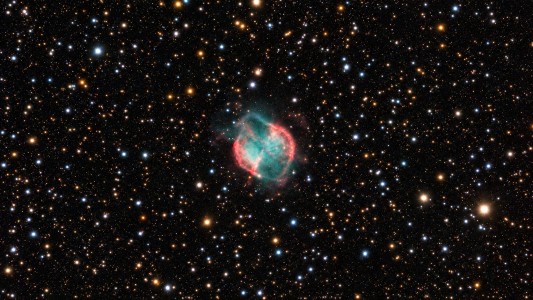
M27 - Dumbell Nebula

My Account

New to Astromart?

Register an account...

Need Help?

Posts Made By: Alan French

June 14, 2008 07:44 PM Forum: Solar System Observing

ISS Observing

Posted By Alan French

I've tracked the ISS with my little Stowaway on a altazimuth mount. Sometimes I use 41x (11mm Nagler) and sometimes 64x (7mm Nagler or Pentax XW). Detail seems easier to see if you let the ISS get a bit behind and watch it go through the field.

Clear skies, Alan

June 15, 2008 08:51 PM Forum: Birding Optics and Photos

Indigo Bunting

Posted By Alan French

Augie,

Very nice. I have not seen many good shots of Indigo Buntings, and your first one is one of the best I've seen.

One of my favorite "surprises" when I am out and about birding. A pair nested along the driveway to one of our club's observing sites long ago, and I always enjoyed seeing mister bunting sitting on top of an old phone pole singing.

We usually enjoy a few visits to our feeders in the spring, but must have missed him this year - or he found better dining elsewhere.

Clear skies, Alan

July 13, 2008 01:13 PM Forum: Refractors

Large Aperture Refractors for Visual

Posted By Alan French

I've always thought Henry Paul's suggestion for folding a large achromat had some big advantages. He recommended folding it "Newtonian style," with a large flat at the bottom of the tube. This sent the light back to the top of the tube, where a small flat sent it back across the tube to the eyepiece.

This approach shortens the tube by about one-half, reducing the moment arm substantially, and allowing mounting on a much shorter pier. A 12" f/15 would wind up something like a 12" f/7.5 Newt - still requiring a good, large mount, of course.

One advantage I believe gets overlooked with long refractors is having the entrance pupil well off the ground and well away from the observer. This is one thing that would be given up by folding the instrument.

Clear skies, Alan

July 23, 2008 12:52 AM Forum: Astro-Physics

AP Stowaway Value

Posted By Alan French

Just to put things in perspective, someone just paid $328,000 for a hat once worn by Babe Ruth. I got a free hat from Uncle Al for buying an eyepiece, and can order a nice new, sweat free Dog River Police Department hat for $18 (plus shipping). Oh, I also got a free hat from AP - maybe two.

If you want to talk foolish ways to spend absurd amounts of money, you are in the wrong arena. wink

Of course, the Babe Ruth hat is a "collectible," and, in at least some cases, particular telescopes have become collectible too. Odd, but that's the way it is.

Clear skies, Alan

July 25, 2008 10:00 PM Forum: Solar System Observing

Observing mercury in daylight

Posted By Alan French

I've often observed Venus during the day, but have not tried Mercury (at least that I recall wink ). I'll add it to my "to-do" list.

At WSP one year Roland Christen found Saturn during the day with his prototype 9.25" f/4.3 Fastmax (Maksutov-Newtonian). It was very ghostly, and would seem to fade from view from time to time, at least to my eyes.

Clear skies, Alan

August 12, 2008 11:19 PM Forum: After Dark

Are Radians and Pentax XLs ALWAYS first in performance

Posted By Alan French

The Pentax XLs and newer XWs are nice eyepieces. They are, however, subject to glare from bright objects just outside the field. Usually, this is not an issue, but it has caused me to change eyepieces when observing near the Moon or an occultation on the dark limb of the Moon.

Clear skies, Alan

August 17, 2008 08:04 PM Forum: Equipment Talk

Only One Scope

Posted By Alan French

jeff yonker said:

If you were a visual astronomer with lets say a $1000-$2500 budget and could only have ONE scope,what would it be and why?Dob,Sct??????

I would say it depends a lot on what the visual astronomer likes to observe.

Clear skies, Alan

August 20, 2008 09:54 PM Forum: Beginning Astronomy?

Question from Newbie regarding cleaning mirror

Posted By Alan French

Mark Aguirre said:

I recently purchased used an Orion 8" Dob. The mirror looks like it could use a cleaning. I wanted to ask before trying to take anything apart. It looks like it comes out of the back fairly easily. Are there any tricks I need to know? Thanks for all your help!

You can get rid of a lot of dirt without much fear of damaging the mirror. Place it in the sink on a towel (face up, of course). Make up a dilute solution of water and a mild detergent. At this point, tap water is fine, but you can use distilled water if it worries you. Pour the solution over the mirror and then let it sit for a few minutes.

Rinse thoroughly with tap water, and then with distilled water. If you tilt the mirror, most of the water will flow off, leaving just a few drops or steaks. You can use the edge of a Kleenix or other tissue to get rid of the remaining drops.

In my experience, anything dragged, no matter how lightly, across the surface will create minor scratches or sleeks. The mirror has some gritty stuff on it, and it gets dragged along with cotton balls, old undershirts, or whatever anyone recommends.

Clear skies, Alan
August 21, 2008 01:16 AM Forum: Telescope Making

26 inch F8 or higher

Posted By Alan French

No matter what the f/ratio, the telescope still has the same light grasp and the same potential resolution. What changes is the image scale, and a slower scope may not allow as wide a field as a faster one, depending on the eyepieces available.

Of course, the central obstruction you have will play a small role here, but with 26" aperture to start with I wouldn't be too concerned if it is kept reasonable. The trick would be to have it where the skies are steady enough to really strut its stuff. Dark would be nice too.

Clear skies, Alan

August 23, 2008 10:22 PM Forum: Beginning Astronomy?

Visible Central Obstruction

Posted By Alan French

Michael Tencza said:

I have a Celestron 130 mm f/5 Newtonian that works pretty well as a light, quick look telescope from my garage. I notice though that the secondary mirror is visible in the plane of focus when using long focal length eyepieces (40 and 32 mm). This is especially annoying in daylight. 1) What is causing this, and 2) aside from looking around this obstacle to see what I want is there anything else that can be done to deal with this that is not costly.

In the daytime, your eye is only open up to 2 or 3mm, so when you use a large exit pupil, you are stopping down the telescope. For example, the 40mm gives you an 8mm exit pupil. If your eye is only open to 3mm, you are only using 49mm of your aperture, and the central obstruction takes up a large percentage of that and becomes visible.

Clear skies, Alan
