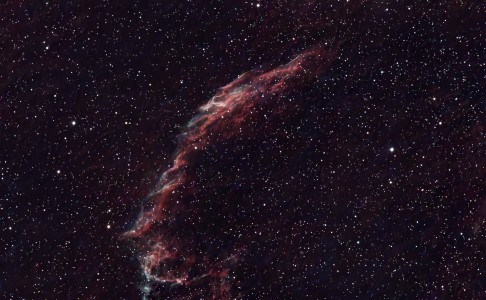
Image of the day

Captured by
GERALD KREITZBURG

Eastern Veil Nebula

My Account

New to Astromart?

Register an account...

Need Help?

Posts Made By: Bob Schnitzer

September 20, 2005 02:59 PM Forum: CCD Imaging and Processing/Solar System

DMK firewire 1024x768 rocks like none!

Posted By Bob Schnitzer

Very impressive image. I will be looking onto the DMK for sure.

Thanks for posing.

Bob Schnitzer
Grenville Base Observatory

October 3, 2005 05:03 PM Forum: CCD Imaging and Processing/Solar System

Longomontanus

Posted By Bob Schnitzer

Breathtaking image, Wes. The smaller craterlets must be less than a half a kilometer wide. amazing work. Keep 'em coming.

Bob

October 3, 2005 05:44 PM Forum: CCD Imaging and Processing/Solar System

One of "Those" weekends

Posted By Bob Schnitzer

Jim,

Your report of Friday and Saturday weather was identical to my experience here in Northern Virginia.
It looked promising Friday afternoon, but fizzled as the high clouds and breeze rolled in at dusk.

We keeps on trying.

Cheers


October 3, 2005 08:06 PM Forum: CCD Imaging and Processing/Solar System

Mars October 3, 2005

Posted By Bob Schnitzer

Ed,

This is a great image. Excellent scale as well. I only hope I can get one this good the entire season.
Congrats.

Bob

October 18, 2005 01:01 PM Forum: CCD Imaging and Processing/Solar System

Dust Storm on Mars

Posted By Bob Schnitzer

Jim,

Great image! Perhaps this dust storm in the 'big one' everybody's been waiting for. It looks like it was right on the equator at the time of your image. It will be interesting to track growth and movement. My worst-case-scenario: the atmosphere in Northern VA finally clears up only to reveal a totally obscured atmosphere on Mars! Oh well.

Bob


October 21, 2005 03:17 PM Forum: CCD Imaging and Processing/Solar System

Mars 10/18/05

Posted By Bob Schnitzer

Simply amazing level of detail, Wes.
You continually are able to achieve resolutions that astound me. May I ask what you attribute this ability to? Obviously everything is coming together - optics, collimation, atmoshpheric, camera, processing. Did you hand pick the 500 frames? Do you have a favorite focussing technique? Is your 18" mirror 1/20th wave? How do you 'nail' collimation?
I wouldn't be so nosey, but your images are almost in the magic category - around 1/4 arcsecond.

Keep 'em coming. They're a treat and an inspiration.

November 4, 2005 08:08 PM Forum: CCD Imaging and Processing/Solar System

Mars last night

Posted By Bob Schnitzer

Splendid image, Jim. You captured Elysium exactly the way it looked in my scope at that hour.

Bob


November 9, 2005 08:11 PM Forum: CCD Imaging and Processing/Solar System

Mars 2005/11/5 ATK-2HS Richard Bosman

Posted By Bob Schnitzer

Richard,

Superb images - among the best I've seen here to date. You certainly couldn't tell that these were taken under poor seeing and processed to the max.
I can see that you turned your PC upside down after the top pic. wink

December 2, 2005 06:49 PM Forum: CCD Imaging and Processing/Solar System

Even the pros are into fast imaging

Posted By Bob Schnitzer

Once again, amateurs blaze the trail for the pros. I don't think we will ever see an awkward public acknowledgment that a $150 webcam/freeware system on an 18" scope can compete with a million-dollar adaptive optics systems on a 4 meter scope. Don Parker had NASA knocking on his door years ago when he was producing sub-arcsecond planetary images by stacking multiple CCD images.

Very interesting article - thanks for posting, Wes.

December 22, 2005 09:33 PM Forum: CCD Imaging and Processing/Solar System

Well beyond diffraction limit?

Posted By Bob Schnitzer

Joseph,

Several interesting topics are raised by your question.

Should there be a distinction between the highest achievable 'visual' image resolution (retina recording/brain filtering) and the highest achievable 'instrument' image resolution (camera recording/digital filtering)? Based on some of the best images posted to this forum, I would say that the question has merit.

Can an imager's prior knowledge of the detail on a planetary disk cause him to "steer" the processing of an image without regard to whether the convolutions are enhancing real detail or just noise and artifacts of previous filters? We all know the answer to this one. A corollary to the issue is: given that we are applying a mixed bag of mathematical convolutions on the same matrix of pixels, shouldn't there be a mathematically correct sequence of filter application in order to maximize resolution? Has anyone worked this out?

Thanks for posting.

Bob
