Image of the day

Captured by
GERALD KREITZBURG

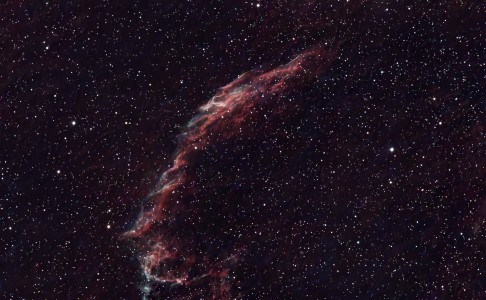
Eastern Veil Nebula

My Account

New to Astromart?

Register an account...

Need Help?

Posts Made By: Curt Renz

August 18, 2007 03:27 PM Forum: Solar System Observing

Mars to be its brightest on 8/27!!

Posted By Curt Renz

The 2003 Moon/Mars article gets recirculated every August because the author neglected to mention the year. Then one of those who passed it along left out mention of the need for a 75 power telescope for Mars to appear as large as a Full Moon. The entire episode reminds me of the children's telephone game in which a story mutates with each retelling. The lesson to be learned is to not believe mass e-mailings without confirmation. This particular example is relatively harmless, but that may not always be the case. More importantly, do not forward e-mails to friends before thoroughly checking them out. Your reputation could be in jeopardy. wink

August 24, 2007 05:08 AM Forum: Solar System Observing

Who Inhabits Venus?

Posted By Curt Renz

My astronomy professor used the term Cytherean in honor of the mythical home of Aphrodite (Venus to the Romans). I chose Venusian due to the likelihood it would be quickly understood by most English readers. Venerian or Cytherean might have left people wondering. English is a most provocative language! wink

August 25, 2007 03:49 PM Forum: Solar System Observing

Culmination dates for planets

Posted By Curt Renz

As explained in the similar thread you initiated at Cloudy Nights, culminations occur daily. Maximum culminations occur at the times of maximum declinations. For the superior planets the cycles are much greater than a year. Here is the link to the discussion at Cloudy Nights where my nickname is Centaur: http://www.cloudynights.com/ubbthreads/showflat.php/Cat/0/Number/1797778/page/0/view/collapsed/sb/5/o/all/fpart/1

August 27, 2007 05:13 PM Forum: Solar System Observing

Total Lunar Eclipse - 2007 AUG 28

Posted By Curt Renz

Here are the timings I’ve calculated for the various stages of the eclipse in Universal (Greenwich) Time. I use the French Rule for shadow sizes; most sources use the classic rule which is less accurate. And I know of no one else who takes into account the oblate shape of the Earth. The eclipse will occur at the same real time for all observers experiencing nighttime.

Total Lunar Eclipse
2007 AUG 28

07:54 UT – Moon enters Earth’s penumbra (outer fringe shadow)
08:52 UT – Moon enters Earth’s umbra (inner dark shadow)
09:21 UT – Moon 50% immersed in umbra
09:53 UT – Totality begins
10:37 UT – Maximum eclipse at magnitude 1.470
11:22 UT – Totality ends
11:53 UT – Moon 50% immersed in umbra
12:23 UT – Moon exits umbra
13:21 UT – Moon exits penumbra

The penumbral phase of the eclipse will only be noticeable when the Moon comes fairly close to the umbra and some light shadowing appears along a portion of the Moon’s limb. An observer standing on the Moon within the Earth’s penumbra would be witnessing a partial eclipse (technically, an occultation) of the Sun by the Earth. That means only a portion of the Sun’s apparent disk would be visible. An observer standing on the Moon within the Earth’s umbra would be witnessing a total eclipse of the Sun by the Earth. That means the Sun would be totally obscured by the Earth, although the Earth’s atmosphere would appear as a reddish band. That’s the reason we often perceive a reddish hue of the Moon during the total phase of the eclipse. wink

September 14, 2007 01:42 AM Forum: Solar System Observing

Moon, Mercury & Spica - Sep 13

Posted By Curt Renz

I captured the 2.5-day-old crescent Moon on 2007 SEP 13 at 19:36 CDT from Arlington Heights, Illinois. That may be too old to call it a New Moon, but it's the best I could do when near the Autumnal Equinox. In fact, it was almost Diana's Bow (3-day-old Moon). 8)


October 14, 2007 03:11 PM Forum: Solar System Observing

Full Hunter's Moon at Perigee - Oct 25/26

Posted By Curt Renz

I’ve created a graphic that demonstrates the variations in the declinations, distances and angular diameters among the 15 Full Moons from 2007 APR 02 to 2008 MAY 20. It can be seen at http://www.curtrenz.com/astronomical.html

Full Moons (or any particular phases) go through a complete cycle of distances from Earth every 14 lunar (synodic) months or 1.13 years. The coming Full Moon on OCT 25/26 will be near perigee and the closest of the current cycle. The most extreme perigees coincide with Full Moons. The first and last Full Moons shown on the chart were near apogees.

The top portion of the chart shows the variation in declination of the Full Moons. To determine each Full Moon’s altitude at meridian transit for your location, add the declination (south is negative) to your co-latitude (90° - latitude). This variation goes through an annual cycle than is opposite to that of the Sun: The Full Moon is higher in winter and lower in summer. Additionally, there is an 18.6-year cycle in which the amplitude of the declinations varies: most extreme in 2006 and least in 2015.

Across the lower center of the chart is shown the Earth and Moon in proper scale with the distances noted in thousands of kilometers (Mm or megameters).

At the bottom of the chart is shown the differing angular sizes of the Moon resulting from the changes in distance. wink

October 23, 2007 03:47 AM Forum: Solar System Observing

Conjunctions of moon and Venus

Posted By Curt Renz

Rick Wiseman said:

The conjunction of the moon with Venus earlier this month brought a question to mind. Since the moon and Venus were the same angular distance from the sun, but showed different phases, could this observation, or perhaps observations over a number of months, be used to determine the distance to Venus? This assumes a known distance to the moon, which was found using parallax. Perhaps one of the old time astronomers used this measurement technique. This makes me wonder about all the fuss over transits of Venus to determine its distance. Thanks for all comments.

Rick W

That’s an astute observation, Rick. However, for determining the distance to Venus, the illumination phase of the Moon is not very helpful. The same can be said regarding the illumination of Venus, since it is certain to be very close to dichotomy (50% illumination) around the times of its greatest elongations from the Sun. That’s when the angle Earth-Venus-Sun is 90°, and the distance to Venus in astronomical units can be easily calculated. Although Galileo found the illumination of Venus to be solid evidence that Venus orbits the Sun.

My two diagrams seen below may be useful for what follows. For simplicity let’s assume non-eccentric co-planar orbits. At the time of greatest elongation, the angle Venus-Earth-Sun can be easily measured from Earth based observations as about 46°. Since that is one angle of a right triangle, the Earth-Venus distance in astronomical units would be the Cosine of 46° degrees or 0.69 AU. The Venus-Sun distance would be the Sine of 46° or 0.72 AU. We can then deduce that at inferior conjunction the Earth-Venus distance is (1 – 0.72 = 0.28) AU and (1 + 0.72 = 1.72) AU at superior conjunction.

The problem is obtaining the length of an astronomical unit (Earth-Sun distance) in familiar measures such as kilometers or miles. More than two millennia ago Aristotle and his contemporaries determined the size of the Earth and distance and size of the Moon with decent accuracy through trigonometric means. They tried to determine the distance to the Sun by taking note of the fraction of the lunar disk that was illuminated at the time of quadrature, i.e. the angle Moon-Earth-Sun equal to 90° at first or last quarter position. The actual moment of Half Moon (50% illumination) occurs when the angle Earth-Moon-Sun is 90°. Half Moon and quadrature are separated in time by about 17 minutes. That is geocentrically. On the moving surface of the Earth the determination is more complicated. Also, the Moon’s terminator is not sharp since the Sun is much larger than a point. In any event, the ancient measurements were so imprecise that they came up with a figure for the distance to the Sun that was far short of the truth.

During the 18th and 19th centuries, transits of Venus were helpful in determining the length of an astronomical unit by noting the parallax effect. Timings of the events from different locations on Earth allowed for trigonometric calculations of good approximations for the distance to the Sun. More recently, radar settled the question. wink


October 25, 2007 11:56 PM Forum: Solar System Observing

Full Hunter's Moon at Perigee - Oct 25/26

Posted By Curt Renz

Here's a picture I took from Arlington Heights, Illinois of the full Hunter’s Moon near perigee on 2007 OCT 25 at 17:46 CDT. That was 25 minutes after moonrise and 10 minutes before sunset.

Also in the picture are three airplanes and a flock of geese headed south for the winter.

It was taken with my Sony Cyber-shot DSC F717 at full 5x zoom, ISO 100, F/2.4 and 1/1000 sec. The original was cropped and then reduced to 52% of the linear dimensions.


October 26, 2007 03:43 PM Forum: Solar System Observing

Graze of Pleiades Star - Chicagoland - Oct 27

Posted By Curt Renz

Below are formulae I’ve developed for determining data at points along the graze path that passes through Chicagoland on 2007 OCT 27. They are only valid between western longitudes 87.6° and 88.4°. The latitude is northern. The time is CDT. The zenith angle is the position of the grazed star measured counterclockwise from the zenith along the lunar limb. The altitude is the number of degrees the star will be above the horizon at the time of the graze. The star’s coordinates are for the date of the event, not 2000.0. The input and output are all decimal. The only input is the decimal longitude. In some cases conversions will have to be made between base 60 (hours/degrees – minutes – seconds) and decimal. The graze path is about three kilometers wide. grin

Atlas
Magnitude +3.6
381 Light Years
RA 03:49:39.4
Dec N 24°04’48”

W = Western longitude as a positive decimal number (the only input)

M = W - 88 (M could be positive or negative, but M² is always positive)

N Latitude = 41.74382 - 0.537683 M + 0.009128 M²
Hour CDT = 19.02167 - 0.0019 M
Zenith Angle = 207.156 + 0.162 M - 0.011 M²
Altitude = 3.017 - 0.888 M + 0.013 M²


Here's my graze map for Atlas.


And here's my preview with data for a point at the south end of Belmont Harbor in Chicago.


November 21, 2007 07:10 PM Forum: Solar System Observing

Moon Occults Pleiades - Nov 24

Posted By Curt Renz

Here are my predictions for the occultations of five Pleiads as they would be viewed from Chicago’s Adler Planetarium during the predawn hours of 2007 NOV 24. The timings are CST. The first timing for each star is the immersion and the second is the emersion. Some of the emersions will occur after sunrise in Chicagoland, but before the star sets.

W 87°36’24” – N 41°51’59” - CST

Mag 3.9 – Maia
06:08:43
06:56:10 (after sunrise)

Mag 4.3 – Taygete
05:56:11
06:45:27

Mag 5.4 – Celaeno
05:48:44
06:33:34

Mag 5.8 – Asterope
06:13:15
06:58:00 (after sunrise)

Mag 6.4 – 22 Tauri
06:14:53
07:01:27 (after sunrise)