Image of the day

Captured by
Michael Scherman

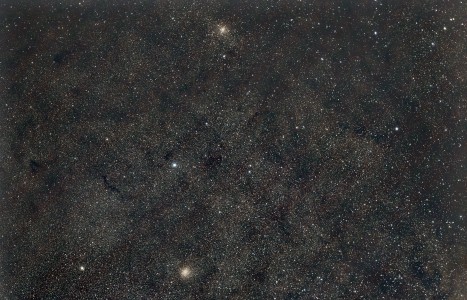
Dual Clusters near Antares

My Account

New to Astromart?

Register an account...

Need Help?

Posts Made By: Curt Renz

January 11, 2005 03:28 PM Forum: Solar System Observing

January New Moon Spotting Contest

Posted By Curt Renz

We have a January winner with a new record time (24:51) for the contest that I began in March and have been announcing on several websites. He is Navneeth (SN1987A) of Madras, India. This is his third victory month, although he has an advantage living in the tropics which provides a more advantageous celestial geometry for this event.

Nevertheless, I encourage American observers to look for the Moon tonight and attempt to set this month's Western Hemisphere record. It will be good practice for May when Mother Nature will arrange the geometry to give us the advantage. wink

Pasted below is the report that Navneeth posted on astronomy.com:

Hi,
After a few months of bad skies, I'm back at it again!

Here are the details...

Date & Time: 2005/01/11, 1824 IST (UTC + 0530 Hrs)

Location: Madras, India

Age of the Moon: 24:51

There was a beautiful colour display in the sky, by the sun, and some clouds too. I was waiting for the light to fade as the colours changed. A mixture of cloud and light wasn't very favourable, but when a small patch cleared up near the south west, the new moon was clearly visible. I think spotting (and confirming) the new moon hasn't been this easy in the past.

January 29, 2005 03:42 AM Forum: Beginning Astronomy?

Don't Buy a Star Name for Valentine's Day

Posted By Curt Renz

One small firm has sold over a million of these so-called registrations at about $50 each (usually more than $100 with options.) Their only significant expense is radio advertising, making their accomplices a tidy sum for putting their stamp of approval on this deceptive practice. wink

April 11, 2005 11:40 PM Forum: Solar System Observing

Diana's Bow Meets the Pleiades

Posted By Curt Renz

Did you know that Subaru is the Japanese name for the Pleiades? The auto company's logo is a stylized representation of Venus passing through the famous star cluster. wink

April 12, 2005 04:01 PM Forum: Solar System Observing

24.5 hr. new moon

Posted By Curt Renz

Nice Pic, Vince. But at that time the moon would have been aged 29:20. Check out my thread in this forum titled "April New Moon Spotting Contest". There you will find a link to a photo from an observer in New Brunswick who spotted the Moon aged 26:53. wink

April 15, 2005 05:57 PM Forum: Solar System Observing

Venus Spotting Contest

Posted By Curt Renz

A couple of observers at Cloudy Nights have reported telescope and binocular sightings of Venus. They accomplished these feats during daylight, which was not my expectation. Next time I'll be more specific. At least there's still time to insist that attempts to view Venus by naked-eye be made after sunset. I don't want anyone to get blinded. 8)

Click below for the reports at Cloudy Nights:
http://www.cloudynights.com/ubbthreads/showflat.php/Cat/0/Number/403609/page/0/view/collapsed/sb/5/o/all/fpart/1

April 21, 2005 03:34 PM Forum: Solar System Observing

Venus Spotting Contest

Posted By Curt Renz

We have a winner in the main category: Naked-Eye. Navneeth (SN1987A) in Madras, India reported his sighting at the astronomy.com forum. The sighting came on 2005 APR 21 at 12:58 UT. Venus was elongated only 5.6 degrees from the Sun, which is about the minimum possible for observation by naked-eye after sunset. It was only 2.7 degrees above his horizon while the Sun was just 2.6 degrees beneath the horizon. Below is Navneeth's report:

"I spotted Venus (naked-eye) a few minutes back - 18:28 IST (GMT + 5.5 hrs) from Madras. I doubted my chances for this event because Venus was positioned pretty close to the west and there are many closeby trees and a far-off building that obstructs my view to a few degrees above the horizon. Thankfully ,from a gap between all this, I could see a tiny white dot. This was similar to the first time I spotted the crescent of the new moon. Therefore I checked several times before making sure that I was not hallucinating."

Navneeth is also the record holder and three time winner of my New Moon spotting contests. His tropical location gives him an advantage, but perseverance may be the larger factor.

For the entire Venus Spotting thread at astronomy.com, where I am known as Jovian Moon, click:
http://www.astronomy.com/asy/community/forum/topic.asp?TOPIC_ID=14637

April 25, 2005 12:01 AM Forum: Solar System Observing

Penumbral Lunar Eclipse - April 24

Posted By Curt Renz

An observer in Hawaii took photos of the event and posted them at Cloudy Nights. Click:
http://www.cloudynights.com/ubbthreads/showflat.php?Cat=0&Number=417443&page=0&view=collapsed&sb=5&o=all&fpart=&vc=1&PHPSESSID=

April 29, 2005 11:36 PM Forum: Solar System Observing

Lunar Trivia Questions - Answers Revealed

Posted By Curt Renz

OK, it's been more than two days and no one has attempted to provide answers. So here are the correct ones. :S


Correct Answers:


1) What is "the Old Moon in the New Moon's Arms"?
-- C. The portion of a waxing crescent Moon lit by earthshine

This is an old term that is best demonstrated with a 2 or 3-day-old Moon, in which a slender crescent (New Moon) partially circles the rest of the side facing us (Old Moon) which is made visible by earthshine.


2) What is "Diana's Bow"?
-- A. The Moon aged 3 days

Diana was an ancient Roman goddess of hunting and the Moon. The 3-day-old evening crescent Moon was imagined as a bow for her arrow. She can be seen in this pose in Disney's 1940 animated classic, Fantasia.


3) A Half Moon (semicircular disk - first or last quarter of a circle from the Sun) is on average what percentage of the photometric brightness of a Full Moon?
-- E. 8%

Around the time of a Full Moon we witness its oppositional flash. This is a brightening due to the Moon being opposite the Sun from our vantage point, which means a lack of shadows and a direct reflection of much sunlight back to our eyes. At the time of a Half Moon, the Sun is 90 degrees off to the Moon's side and long shadows are cast due to everything from mountains to rock granules. The difference may not seem so great because the pupils of our eyes adjust to different lighting conditions.


4) What is meant by a magnitude of 1.5 for a lunar eclipse?
-- D. A totally eclipsed Moon with a distance equal to half its diameter separating its limb from the edge of the umbra

The (umbral) magnitude of a lunar eclipse is the fraction of the Moon's diameter which is covered by the umbra (dark shadow.) In the case of a partial eclipse with half of the Moon's diameter in the umbra, the magnitude would be 0.5. If a totally eclipsed Moon has just moved into the umbra with nothing to spare, the magnitude is 1.0. If it has moved more deeply into the umbra, with a space equal to half of its diameter separating its limb from the edge of the umbra, then the magnitude is 1.5.


5) When was the last time that from any location on Earth the Moon occulted Pollux, the first magnitude star in Gemini?
-- E. 117 BC SEP 30

Due to the star's proper motion (real motion is space relative to Earth and background stars) and the slow rotation of the ecliptic, Pollux can no longer be occulted by the Moon. But thousands of years ago it was in a position to be occasionally occulted. This last occurred in 117 BC (-116 using the astronomical date format.) I first learned of this in a book by Jean Meeus and verified it with my self-written software. wink

May 10, 2005 09:26 PM Forum: Solar System Observing

May New Moon Spotting Contest

Posted By Curt Renz

Below is the report posted at astronomy.com from the usual winner of my New Moon spotting contests, Navneeth (SN1987A) from Madras, India. His time was 28:34 hours after conjunction. Congratulations to Navneeth once again. 8)

___________

Well, this was tougher than I thought. I had a hard time spotting Venus (I was looking at the wrong set of "guide-leaves" over the canopy of a tree ). I finally could make out Venus at 18:43 IST and even then it wasn't easy keeping it in sight...a little thin-cloud trouble. Then, at 18:45, I saw something that looked like a segment of the crescent, but I wasn't satisfied. I went back to looking for Venus and just as I my eyes went up I could see the crescent clearly (well, sort of). But this time I could confirm it and it was in a totally different spot from where I had seen the impostor . So, the "official" time of spotting the cresecnt : 18:49 IST.

Location : Madras, India
Time zone : UT + 5.5 hrs
******************************************

Clear Skies,
Navneeth

May 13, 2005 04:42 AM Forum: Solar System Observing

Lunar Trivia Quiz #2

Posted By Curt Renz

Apparently, all we have here are lurkers - no one brave enough to take the test. At two other sites where I presented the same quiz we now have Lunatics for the Night. Very well, here are the correct answers with comments. :S


1) What is the average number of days between successive Full Moons?
-- C. 29.53

A synodic month can actually vary between 29.28 and 29.83 days due principally to the Moon’s variable speed along its eccentric orbit.

2) On average the Moon rises how many minutes later each day?
-- D. 50.47

Divide 1440 (minutes in a day) by 28.53 to get the answer. The latter figure is the average number of times the Moon rises during a synodic month. It is one less than 29.53 because the Moon laps the Sun every synodic month.

3) What phase is the Moon if it rises about sunset and sets about sunrise?
-- C. Full Moon

The Full Moon is on the opposite side of the sky from the Sun.

4) The phases of the Moon recur on approximately the same dates after what number of years?
-- E. 19

This is the famous Metonic cycle mentioned by the Greek astronomer Meton around 430 BC. 235 synodic months very nearly equal 19 tropical years.

5) Over the long run (586-year cycle), what percentage of Full Moons are totally eclipsed?
-- D. 5.6%

This figure varies quite a bit from century to century. From 1650 through 1749 it was 4.8%. From 1950 through 2049 it is 7.0%. So we’re living during a relatively rich period for total lunar eclipses.