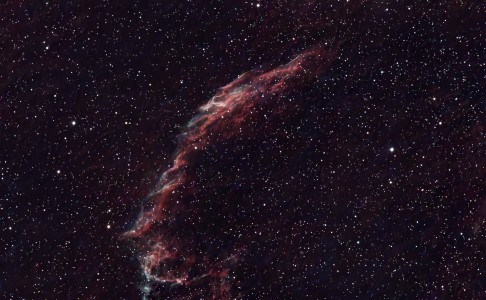
Image of the day

Captured by
GERALD KREITZBURG

Eastern Veil Nebula

My Account

New to Astromart?

Register an account...

Need Help?

Posts Made By: Curt Renz

January 19, 2010 07:23 PM Forum: LUNATICS

Unusually Large Full Moon with Mars at Opposition

Posted By Curt Renz


The Full Moon during the night of 2010 JAN 29/30 will be at perigee and at the Moon’s closest distance from Earth for 2009-2010 with 356,593 km separating their centers. Oceanic tidal effects will be extreme. The tightest perigees occur around the times of Full Moons with Dark Moons producing very close runners up. Perigee Full Moons are separated by 14 lunar months.

The factors of the Earth being relatively near the Sun, and the Moon being at modest ecliptical latitude will both add to the Moon’s brilliance. The Moon’s significantly northern declination will be helpful to northern hemisphere observers, and its greatest fullness will occur during the late evening while it’s well above the horizon for North Americans.

Not only will the Moon be in opposition to the Sun, but so will Mars. That night the especially bright Full Moon will pass about 6° or 7° south of magnitude -1.3 Mars, depending on your location. Sorry, Mars fanatics, but at least we “lunatics” will appreciate the situation. In any event, it should prove to the credulous multitude that Mars at opposition does not appear as large as a Full Moon, LOL.

Big bright Full Moons are especially fascinating for all of us. Interestingly, due to light and shadow effects, a Full Moon is about twelve times brighter than a Half Moon (first/last quarter position). It’s not mere imagination that some months a Full Moon appears larger than at other times. And their altitudes at local meridian transit can vary considerably over the course of a year and the 18.6-year nodal cycle.

I’ve created a diagram with data that demonstrates the variability of the next 15 Full Moons. At the top are the changing declinations which affect the Moon’s altitude at local meridian transit. Across the center are illustrated the distances between the Earth and Moon. At the bottom can be seen the changes in the Moon’s apparent angular size due to changes in distance. Another chart plots the oceanic tidal effect. Both graphics can be viewed by clicking: http://www.curtrenz.com/astronomical then going to the Moon page.

Enjoy the spectacle! Descriptions and photos of the brilliant Full Moon passing by bright Mars would be welcome additions to this thread.


February 9, 2010 01:43 AM Forum: Solar System Observing

Venus as 2010 Evening Star

Posted By Curt Renz

Our nearest planetary neighbor Venus will once again be lighting up our western skies as an evening star following its superior conjunction behind the Sun on 2010 JAN 11. At first it will only be seen while the twilight is still quite obvious, but Venus is far and away the brightest celestial object other than the Sun and Moon, so alert observers may start spotting her this month soon after sunset.

Unfortunately for those of us north of the tropics, Venus won’t be getting nearly as far above the horizon during the evening as it does during some of its other apparitions. For Chicagoland observers it will achieve its greatest altitude at 30 minutes after sunset on JUN 03 at 20.9°. It’s expected to reach dichotomy around AUG 17, i.e. 50% illuminated like a Half Moon. Before that date it will telescopically appear gibbous and afterward as a crescent. The planet will achieve its greatest eastern elongation from the Sun of 46.0° on AUG 20. Greatest brilliance at magnitude -4.6 is expected around SEP 23. Apparent retrograde motion will commence on OCT 08. It will then fall to inferior conjunction between Earth and Sun on OCT 28.

The Moon will occult Venus for observers in lands surrounding the Indian Ocean on MAY 16. A similar occultation will occur for observers in places surrounding the South Atlantic Ocean on SEP 11. Other dates that the waxing crescent Moon will appear in the vicinity of Venus are FEB 14, MAR 16, APR 15, JUN 14, AUG 12 and OCT 09.

During the evening of FEB 16 Venus will pass about 0.5° south of Jupiter, but the Sun’s glare may make observation challenging. On APR 03 Mercury will appear to travel about 3° north of his big sister. Venus will be moving about 2° south of Mars on AUG 19, and then about 7° south of Mars on SEP 30.

Brightly shining Venus will pass about 4° south of the Pleiades cluster on APR 24. It will traverse 6° north of Aldebaran on MAY 02, and 4° south of Elnath (Beta Tauri) on MAY 13. The planet will be seen about 1° north of Regulus on JUL 09, and 1° south of Spica on AUG 31.

I’ve created several graphics related to the motions of Venus, including one illustrating its position in the western sky throughout the entire current evening apparition. They can be seen by going to http://www.curtrenz.com/astronomical and then clicking the link to the inferior planets.

Photos and descriptions of brilliant Venus during its current apparition would be welcome additions to this thread.


February 10, 2010 07:45 PM Forum: LUNATICS

Lunar Boat - February New Moon Spotting

Posted By Curt Renz

Have you ever seen the Lunar Boat? That’s how astronomical author Jean Meeus has described a crescent Moon appearing to hang downward in a U-shape. It’s not seen often by those of us well removed from the tropics. But observers at the latitude of Chicago or Boston lucky enough to catch sight of the less than one-day-old Moon on February 14th will have an opportunity.

Who will be the first to spot the February New Moon with naked eyes after sunset that evening? The Dark Moon will be in geocentric longitudinal conjunction with the Sun on 2010 FEB 14 at 02:51 UT (13 at 20:51 CST). On the 14th many North Americans will set personal records. Jupiter and Venus will serve as guides. Jupiter will appear about 4.5° to the left of the Moon, while Venus will be 2° below Jupiter.

I’ve created a graphic previewing the western sky from Chicagoland 25 minutes after sunset on February 14th. It should well serve most North American observers. It can be seen by clicking: http://www.curtrenz.com/astronomical then going to the Moon page.

Photos and descriptions of the February New Moon would be welcome additions to this thread. Please include the date, time, time zone and location. Good Luck!

Below is a Lunar Boat photo I took last spring from Arlington Heights, Illinois of the Moon aged 31:46 hours on 2009 MAR 27.


February 12, 2010 04:56 PM Forum: Solar System Observing

Venus meets Jupiter under smiling Diana's Bow

Posted By Curt Renz

On 2010 FEB 16, Venus will appear to pass 0.5° south of Jupiter. That’s about the width of a Full Moon. They will be less than 9° from the Sun, but the celestial geometry at this time of year is such that northern hemisphere observers may be able to sight both of those bright planets shortly after sunset. The pair will be about 25° below a smiling Diana’s Bow, i.e. a 3-day-old crescent Moon named for the ancient Roman goddess of hunting and the Moon.

I’ve created a graphic illustrating the event from Chicagoland 30 minutes after sunset. It should well serve most North American observers. It can be seen at: http://www.curtrenz.com/astronomical

Photos and descriptions of the grouping would be welcome additions to this thread.

February 15, 2010 03:18 AM Forum: Solar System Observing

Saturn 2010

Posted By Curt Renz

Saturn has reentered our evening skies in the constellation Virgo, having risen this Valentine’s evening at 20:24 CST here in Chicagoland and about four minutes earlier each night thereafter. This after passing western quadrature (90° from Sun) on 2009 DEC 25, and commencing apparent retrograde motion on 2010 JAN 13.

Saturn will achieve opposition from the Sun in ecliptical longitude on MAR 21 along with its closest approach to Earth of this apparition at 8.50380 AU. On that date the tilt of its ring plane will be only 3.2° due to Earth’s recent passage through that plane on 2009 SEP 04. The tilt will decrease a bit while the planet remains in apparent retrograde motion. The modest tilt makes this one of the poorer apparitions for ring watchers. At least oppositions are slowly moving into a warmer time of the year for observers north of the tropics. However, that also means its declination will soon begin dipping into the southern celestial hemisphere where it will remain until 2026.

Apparent direct motion will resume on 2010 MAY 30, and eastern quadrature will be reached on JUN 19. Eventually Saturn will move to conjunction behind the Sun on SEP 30.

I’ve created several graphics related to Saturn and the changes in the tilt of its rings. They can be seen by clicking: http://www.curtrenz.com/astronomical and then going to the page for superior planets.

Photos and descriptions of Saturn and its rings would be welcome additions to this thread.

March 10, 2010 11:59 PM Forum: LUNATICS

March New Moon Spotting - Another Lunar Boat

Posted By Curt Renz

Who will be the first to spot the March New Moon with naked eyes after sunset? Similar to last month this will present an opportunity for those of us north of the tropics to witness an unusual Lunar Boat, i.e. a crescent Moon in a U-shape. Some call it a Cheshire Cat smile. The Dark Moon will be in geocentric longitudinal conjunction with the Sun on 2010 MAR 15 at 21:01 UT (16:01 CDT). North Americans should have a good chance of sighting in the western sky a Moon just a little more than a day old shortly after sunset on March 16th. Bright Venus will serve as a guide about 7° to the left of the Moon.

I’ve created a graphic previewing the western sky from Chicagoland 25 minutes after sunset on March 16th. It should well serve most North American observers. It can be seen by clicking: http://www.curtrenz.com/astronomical then going to the Moon page.

Photos and descriptions of the March New Moon would be welcome additions to this thread. Please include the date, time, time zone and location. Good Luck!

Below is a Lunar Boat photo I took nearly a year ago from Arlington Heights, Illinois of the Moon aged 31:46 hrs on 2009 MAR 27.


March 21, 2010 02:52 AM Forum: Solar System Observing

Mercury as Springtime Evening Star

Posted By Curt Renz

The elusive little planet Mercury has begun its apparition as an evening star following its superior conjunction behind the Sun on 2010 MAR 14. This will be a fine apparition for observers in the northern hemisphere, and extremely difficult for those south of the tropics.

I’ve created two graphics illustrating Mercury’s evening apparition as viewed from Chicagoland and Sydney. They should well serve observers in the respective hemispheres. They can be seen by clicking http://www.curtrenz.com/astronomical then going to the inferior planets.

All dates given here are based on CDT (UT-5). Mercury will achieve dichotomy (50% illuminated like a Half Moon) on APR 05. Before that date it will appear gibbous and afterward a crescent. It will achieve its greatest eastern elongation of 19.3° from the Sun on APR 08. It will reach its greatest altitude at 30 minutes after sunset from Chicagoland also on APR 08 at 12.6°. While decreasing in brightness, it will then fall to inferior conjunction between Earth and Sun on APR 28.

Mercury will be separated by only 3° from Venus early in the morning of APR 04, making APR 03 the better evening for North Americans with APR 04 almost as good. However, there will be no official conjunction between the two in either celestial longitude or right ascension. Instead it will appear as though Mercury is chasing toward Venus for several weeks, and then falling back exhausted shortly before success is achieved.

The 2% illuminated waxing crescent Moon will appear to pass about 1° north of Mercury on APR 15. Mercury will not appear to pass near any first magnitude stars during this apparition.

Photos and descriptions of Mercury during the current evening apparition would be welcome additions to this thread.

April 3, 2010 02:28 AM Forum: Solar System Observing

Bye Bye Mutual Galilean Satellite Events

Posted By Curt Renz

The series of mutual transits and shadow transits involving only the four great satellites of Jupiter which began on 2009 JAN 13 will end soon. The last two remaining events are both partial shadow transits (like partial lunar eclipses) involving Io becoming partially immersed in Europa’s shadow. I calculate that the moments of greatest obscuration for those two events will occur on 2010 APR 04 at 09:31:32 UT and 2010 APR 07 at 19:56:13 UT. Each event will last well under an hour. Since Jupiter is just beginning to emerge from the Sun’s glare, only someone extremely well located will have Jupiter above his horizon while the Sun is beneath it as the shadow transits are occurring. The next series of mutual Galilean satellite events will commence on 2014 JUL 23.

EDIT: Note that mutual satellite events do not involve Jupiter itself.

May 29, 2004 05:29 AM Forum: Solar System Observing

Venus Transit 2012

Posted By Curt Renz

Click links below to see the regions of visiblity for both upcoming Venus transits. 8)

2004 JUN 08:


http://sunearth.gsfc.nasa.gov/eclipse/transit/venus/Map2004-2.GIF

2012 JUN 06:


http://sunearth.gsfc.nasa.gov/eclipse/transit/venus/Map2012-2.GIF

May 29, 2004 05:28 PM Forum: Solar System Observing

Venus Transit - See Graphics

Posted By Curt Renz

It there is strong demand from other locations, I'll make more charts. 8)