Fans in cold weather - part 1Posted By Gary Weber |
Continued from part 1...
After an hour we came out and hooked up the battery and it powered the fans at their low setting just fine. Once again, it took about 15 minutes or so to get to 450x, but it worked and the image was very steady. After about 20 minutes the battery gave out and the fans quit. This was noticeable as the image deteriorated and at 450x was not sharp at all. We commented on this and placed the battery on charge again and went in for more tea.
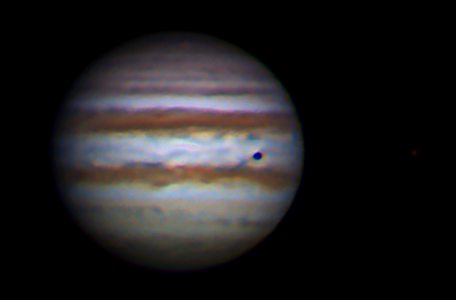
About an hour later, my brother went to bed and I went out for more observing. Jupiter was high enough to try viewing at this point. The pattern repeated itself – about 15 minutes to get to high power while running the fans. Saturn was rock steady at 450x and Jupiter was steady only about 25% of the time. In the first 5 minutes of this session, Jupiter was not sharp at all at 310x. I could only focus a sharp image at 450x after running the fans for 15 minutes or so. After viewing both planets for about 20 minutes, I was chilled so I packed up and went to bed.
My preliminary conclusions are that running the fans indeed makes quite a difference in the ability to use high power. What would normally be considered limits due to seeing conditions can be mitigated by running fans in this configuration. Without the fans, 310x was effective part of the time. After running the fans for 15 minutes, 450x was rock steady on Saturn and moderately effective on Jupiter. The part that still confuses me is that there was no change in the ambient temperature during our observing session – it may have dropped a degree C during the two hours prior to our observing. The telescope had been outside all day and was fully cooled when we began observing.
Although this is not a comprehensive test, it certainly has sold me on the value of operating fans to get the most out of high power viewing.
Gary Weber
