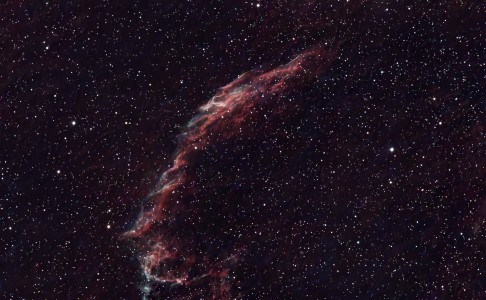
Image of the day

Captured by
GERALD KREITZBURG

Eastern Veil Nebula

My Account

New to Astromart?

Register an account...

Need Help?

Posts Made By: Curt Renz

July 4, 2009 04:25 PM Forum: LUNATICS

Full Moons

Posted By Curt Renz

Big bright Full Moons are especially fascinating for all of us. Amazingly, due to light and shadow effects, a Full Moon is actually twelve times brighter than a Half Moon (first/last quarter position).

It’s not mere imagination that some months a Full Moon appears larger than at other times. And their altitudes at transit can vary considerably over the course of a year and the 18.6-year nodal cycle.

Unfortunately the upcoming Full Moon on 2009 JUL 07 will occur near apogee and appear smaller than average. However, it can just barely be classified as a penumbral lunar eclipse. 16% of the Moon’s diameter will be immersed in the Earth’s penumbra (outer fringe shadow). An astronaut on that portion of the Moon would witness a partial eclipse of the Sun. That event will peak at 09:39 UT. At that time the lunar limb will be separated from the Earth’s umbra (dark inner shadow) by 92% of the Moon’s diameter. Any change in brightness should go unnoticed. The following Full Moon on 2009 AUG 05/06 will also present a penumbral eclipse.

I’ve created a diagram with data that demonstrates the variability of the next 15 Full Moons. At the top are the changing declinations which affect the Moon’s altitude at meridian transit. Across the center are seen the relative distances between the Earth and Moon. At the bottom can be seen the changes in the Moon’s apparent angular size due to changes in distance. The graphic can be seen by clicking: http://www.curtrenz.com/astronomical

July 8, 2009 05:57 PM Forum: LUNATICS

Moon Occults Pleiades - Europe - July 18

Posted By Curt Renz

The 22% illuminated waning crescent Moon will occult the Pleiades (M45) cluster during the predawn hours of 2009 JUL 18 for observers in Europe, North Africa and the Near East. Immersions will occur on the lunar bright limb and emersions on the dark limb.

The northern graze path for the brightest Pleiad, Alcyone, will enter England at its southwest tip, then move through Wales before reentering the sea near Bridington on the east coast. Lesser lights 24 Tauri and HD 23923 have graze paths traversing the far southeast of England. The northern graze path for Electra, third brightest Pleiad, will pass through Sicily, southern Italy, the Balkans and on into Russia.

Observers on a graze path will be able to see a star winking on and off as lunar hills and valleys pass by. Those watching from between graze paths will see full occultations.

I’ve created a general graze map, a close-up graze map for the UK, and a preview image of the event as seen from London. They can be seen by clicking: http://www.curtrenz.com/astronomical

Photos and descriptions of this event would be welcome additions to this thread.

July 20, 2009 04:25 AM Forum: Solar System Observing

Mercury as Summer Evening Star

Posted By Curt Renz

The elusive little planet Mercury has begun its apparition as an evening star following its superior conjunction behind the Sun on 2009 JUL 13. This should be a fine apparition for observers in the southern hemisphere, but a challenge for those of us in the north.

I’ve created two graphics illustrating Mercury’s evening apparition as viewed from Chicagoland and Sydney. They should well serve observers in the two respective hemispheres. They can be seen at: http://www.curtrenz.com/astronomical

All dates given here are based on CST. Mercury will reach its greatest altitude at 30 minutes after sunset from Chicagoland on AUG 11 at 4.7°. It will achieve its greatest eastern elongation of 27.4° from the Sun on AUG 24. The planet will achieve dichotomy (50% illuminated like a Half Moon) on AUG 25. Before that date it will appear gibbous and afterward a crescent. While decreasing in brightness, it will then fall to inferior conjunction between Earth and Sun on SEP 20.

Mercury will appear to pass 0.6° north of the first magnitude star Regulus on AUG 02. The waxing crescent Moon will pass 3° south of Mercury on JUL 22 and again on AUG 22.

Photos and descriptions of Mercury during the current evening apparition would be welcome additions to this thread.

July 31, 2009 05:37 PM Forum: Solar System Observing

Saturn's Rings Disappearing

Posted By Curt Renz

Saturn’s rings are about to disappear! As that planet orbits the Sun we view its rings from changing perspectives. The rings remain virtually parallel to an invariant plane, but they appear to wobble due to the changing direction from which we view them. The entire wobble cycle matches Saturn’s orbital period of 29.5 years, although there is an annual sub-cycle due to the Earth’s movement. The apparent tilt achieved a maximum of 27.0° on 2003 APR 07. That will reach zero when we pass through the ring plane on 2009 SEP 04, although the Sun will pass through the plane a little earlier on 2009 AUG 10.

Between the dates of the Sun’s and the Earth’s passages through the ring plane, we will be viewing the unlit side of the rings thus making them virtually invisible. Even though the rings would normally return to visibility after we pass through the ring plane, that event will occur so close to conjunction with the Sun that Saturn will be hard to detect. That will be especially true for northern hemisphere observers due to the celestial geometry near the time of the autumnal equinox.

On my website are two graphics I’ve created to illustrate the appearance of Saturn and its rings both this summer and over a period of thirty years. They can be seen by clicking: http://www.curtrenz.com/astronomical

Photos and descriptions of Saturn and its rings would be welcome additions to this thread.

August 1, 2009 07:02 PM Forum: Solar System Observing

Jupiter Approaches Opposition

Posted By Curt Renz

Jupiter is now becoming more prominent in our evening skies and will reach this year’s opposition from the Sun on August 14. On that date it will be 4.0278 AU from Earth at magnitude -2.9. Other than the Moon, it easily will be the brightest object in the evening sky.

The giant planet will transit a little higher than in recent years for northern hemisphere observers, but still far from ideal. Observing will get easier each of the next few oppositions.

In April the Earth passed through Jupiter’s equatorial plane. It is similar to the orbital plane of the Galilean satellites, so we are in a period in which they can mutually occult, transit or place their shadows upon each other.

Jupiter is currently in apparent retrograde motion and will resume direct motion on October 12. It will reach eastern quadrature (90° from Sun) on November 10. Then it move into conjunction behind the Sun on February 28.

On my astronomical webpage I’ll frequently post graphics previewing Galilean satellite shadow transits across Jupiter and mutual events among the satellites. Right now I show a diagram of Jupiter’s movement against the sky. It can be seen by clicking: http://www.curtrenz.com/astronomical

Photos and descriptions of Jupiter and its satellites near opposition would be welcome additions to this thread.

August 6, 2009 01:50 AM Forum: LUNATICS

August Full Moon

Posted By Curt Renz

Here’s a picture I took this evening of the August Full Moon on 2009 AUG 05 at 20:17:18 CDT from Arlington Heights, Illinois. That was 22 minutes after moonrise and 11 minutes after sunset. The Moon was 3.2° above the horizon, and the Sun was 2.2° beneath the horizon.

Actually at that time the Moon was in a partial penumbral eclipse, but you can’t really tell that the lower portion of the Moon was in the fringe of the Earth’s shadow. It was taken with my Sony Cyber-shot DSC-F717 at 5x telephoto, ISO 100, f/2.4 & 1/50 sec.


August 19, 2009 04:07 PM Forum: LUNATICS

August New Moon Spotting

Posted By Curt Renz

Who will be the first to spot the August New Moon with naked eyes after sunset? The Dark Moon will be in geocentric longitudinal conjunction with the Sun on 2009 AUG 20 at 10:02 UT (05:02 CDT).

We’re now in the half of the year centered by the autumnal equinox in which really young Moon spotting becomes difficult for northern hemisphere observers. The first realistic opportunity for those of us in the north will come during the early evening of August 22, when Mercury and Saturn will appear to the right of the Moon.

I’ve created a graphic previewing the western sky from Chicagoland 25 minutes after sunset on August 22, although it should well serve most North American observers. It can be seen by clicking: http://www.curtrenz.com/astronomical

Photos and descriptions of the August New Moon would be welcome additions to this thread. Please include the date, time, time zone and location. Good Luck!

Below is a photo I took from Arlington Heights, Illinois of the Moon aged 1.6 days on 2007 JUL 15.


September 23, 2009 05:50 AM Forum: Solar System Observing

Mercury as Autumn Morning Star

Posted By Curt Renz

The elusive little planet Mercury has begun its apparition as a morning star following its inferior conjunction between Earth and Sun on 2009 SEP 20. The celestial geometry is ideal at this time of year for northern hemisphere observers.

I’ve created a diagram illustrating Mercury’s morning apparition as observed from Chicagoland. However, it should well serve most northern hemisphere observers. It can be seen at: http://www.curtrenz.com/astronomical

All dates given here are based on CDT. Mercury will reach its greatest western elongation of 17.9° from the Sun on OCT 05. It will achieve dichotomy (50% illuminated like a Half Moon) on that same date. Before that date it will be a crescent and afterward gibbous. It will reach its greatest altitude at 30 minutes before sunrise from Chicagoland on OCT 06 at 11.0°. While increasing in brightness, it will then fall to superior conjunction behind the Sun on NOV 05.

Photos and descriptions of Mercury’s morning apparition would be welcome additions to this thread.

September 23, 2009 07:52 PM Forum: Solar System Observing

Europa Annularly Transits Ganymede - Sep 27

Posted By Curt Renz

The Galilean satellite Europa will be in annular transit (eclipse) of Ganymede during the evening of 2009 SEP 27. At the same time Europa’s shadow will be transiting Jupiter.

I’ve created two graphics to illustrate the events. One is a view from above Jupiter’s north pole. The other is a view from Earth. They can be seen by clicking: http://www.curtrenz.com/astronomical

Here are my predicted timings of the Europa/Ganymede transit:

Europa Annularly Transits Ganymede
2009 SEP 27 CDT (UT-5)

22:37:05 CDT Partial Transit Begins
22:39:31 CDT Annular Transit Begins
22:39:51 CDT Closest Approach between Satellite Centers
22:40:11 CDT Annular Transit Ends
22:42:37 CDT Partial Transit Ends

Photos and descriptions of this event would be welcome additions to this thread.

September 28, 2009 07:27 PM Forum: Solar System Observing

Europa Annularly Transits Ganymede - OCT 04/05

Posted By Curt Renz

For those who missed the Jovian events of 2009 SEP 27, they will essentially repeat on OCT 04/05.

The Galilean satellite Europa will be in annular transit (eclipse) of Ganymede for many North Americans during the night of 2009 OCT 04/05. At the same time Europa’s shadow will be transiting Jupiter.

I’ve created two graphics to illustrate the events. One is a view from above Jupiter’s north pole. The other is a view from Earth. They can be seen by clicking: http://www.curtrenz.com/astronomical

Here are my predicted timings of the Europa/Ganymede transit:

Europa Annularly Transits Ganymede
2009 OCT 05 CDT (UT-5)

01:31:56 CDT Partial Transit Begins
01:34:05 CDT Annular Transit Begins
01:34:46 CDT Closest Approach between Satellite Centers
01:35:29 CDT Annular Transit Ends
01:37:38 CDT Partial Transit Ends

Photos and descriptions of this event would be welcome additions to this thread.