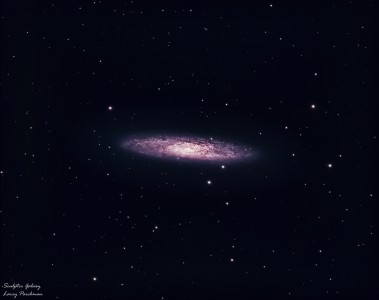
Image of the day

Captured by
Lawrence Parchman

Eastern Veil Nebula

My Account

New to Astromart?

Register an account...

Need Help?

Posts Made By: Curt Renz

January 28, 2009 07:10 AM Forum: LUNATICS

Moon Occults Pleiades - North America - Feb 03

Posted By Curt Renz

The 63% illuminated waxing gibbous Moon will occult stars of the Pleiades cluster (M45) during the evening of 2009 FEB 03. Immersions will occur on the dark limb and emersions on the bright limb. Observers located on a star’s graze path will be able to see it winking on and off as lunar hills and valleys pass by. Folks between a star’s two graze paths will witness a full occultation. Note that many of the northern graze paths are in space above the North Pole.

Observers in the southeastern US are too far south to see any of the six brightest Pleiades stars being occulted. In that group only Maia and Taygete will be occulted for anyone in the contiguous US. For us Chicagoans it will be only Taygete. Maia will be grazed for folks near San Francisco, Toronto and Boston. Any Eskimos in the far northern islands of Canada will see all six occulted. However, there are lesser lights within the cluster whose occultations will be visible to almost all North Americans, weather permitting.

I’ve created a graze map for North Americans and a preview graphic for Chicagoans. They can be seen at http://www.curtrenz.com/astronomical.html

Photos and descriptions of the event would be welcome additions to this thread.

February 5, 2009 10:11 PM Forum: Solar System Observing

Venus as Winter Evening Star

Posted By Curt Renz

It’s hard for anyone to miss the brilliant evening star Venus during its current apparition in the western sky after sunset. It takes 1.6 years for Venus to lap Earth in their race around the Sun (synodic cycle). It was at its greatest eastern elongation of 46° from the Sun on January 14th. It will achieve its greatest brilliance for this apparition at magnitude -4.6 around February 19th. Later it will drop toward inferior conjunction between Earth and Sun on March 27th.

I’ve created a panorama of Venus in the western sky during its current evening apparition. It can be seen at http://www.curtrenz.com/astronomical.html

The first chart below is one I made to demonstrate the relative positions of Venus, Earth and Sun during a synodic cycle.

The second chart is one I drew to illustrate the mean elongation of Venus from the Sun relative to the number of days from inferior conjunction. “Mean” refers to averaged values that assume coplanar orbits with zero eccentricity. Reality during any particular apparition does not deviate much from the mean.


February 16, 2009 04:04 AM Forum: Solar System Observing

Dance of the Moon & Planets

Posted By Curt Renz

A dance among three planets and the Moon will be displayed low in the southeastern sky before sunrise during the coming mornings.

Mars will appear to pass 0.6° south of Jupiter on FEB 17. Late on FEB 23 Mercury will pass 0.6° south of Jupiter. Then Mercury will pass 0.6° south of Mars late on MAR 01. The tightest grouping of the three planets will involve a separation of 3.7° on FEB 23. The waning crescent Moon will pass nearest Mercury and Jupiter on FEB 22 and nearest Mars on FEB 23.

I’ve created three graphics illustrating the eastern sky 30 minutes before sunrise on FEB 22, 23 & 24. I also made an animation of the dance among the Moon and planets from FEB 15 through MAR 04. They can be seen by clicking: http://www.curtrenz.com/astronomical.html

Photos and descriptions of these conjunctions would be welcome additions to this thread.


February 25, 2009 01:29 AM Forum: Solar System Observing

Saturn at Opposition - March 8

Posted By Curt Renz

The beautiful ringed planet Saturn will appear in opposition to the Sun on 2009 MAR 08 at a distance of 8.394 AU from the Earth. At that time its celestial magnitude will be +0.5, and it will have an equatorial angular diameter of 19.7 arcseconds. Its rings will appear tilted 2.6° to our line of sight.

Saturn is currently in apparent retrograde motion; apparent direct motion will resume on MAY 16. Eastern quadrature (90° from Sun) will come on JUN 06, before conjunction with the Sun on SEP 17.

As Saturn orbits the Sun we view its rings from changing perspectives. The rings remain virtually parallel to an invariant plane, but they appear to wobble due to the changing direction from which we view them. The entire wobble cycle matches Saturn’s orbital period of 29.5 years, although there is an annual sub-cycle due to the Earth’s movement. The apparent tilt achieved a maximum of 27.0° on 2003 APR 07. That will reach zero when we pass through the ring plane on 2009 SEP 04, although the Sun will pass through the plane a little earlier on AUG 10.

The rings appear rather narrow right now, but will widen a bit while the planet remains in retrograde motion and then resume narrowing afterward. Between the dates of the Sun’s and the Earth’s passages through the ring plane, we will be viewing the unlit side of the rings thus making them virtually invisible. Even though the rings would normally return to visibility after we pass through the ring plane, that event will occur so close to conjunction that Saturn will be hard to detect. That will be especially true for northern hemisphere observers due to the celestial geometry near the time of the autumnal equinox.

On my website are two graphics I’ve created to illustrate the appearance of Saturn and its rings both this year and over a period of thirty years. They can be seen by clicking: http://www.curtrenz.com/astronomical.html

Photos and descriptions of Saturn and its rings would be welcome additions to this thread.

March 8, 2009 11:24 PM Forum: Solar System Observing

Mutual Events Among Jupiter's Satellites

Posted By Curt Renz

The Earth passes through Jupiter’s equatorial plane approximately once every six years and will next do so on 2009 APR 16. The orbital planes of Jupiter’s four great Galilean satellites lie close to the planet’s equatorial plane. That means now we’re in a period that allows for the mutual occultation/transits and shadow occultation/transits among the satellites, i.e. satellite to satellite and not necessarily involving Jupiter.

Below is my calculated list of mutual satellite events for March; none involve shadows. In universal time they occur only on the 27th and 28th. There will be many more in April, and I’ll present them later this month.

A transit occurs when a body passes in front of one with a larger angular diameter.
An occultation occurs when a body passes in front of one with a smaller angular diameter.

#1 Io
#2 Europa
#3 Ganymede
#4 Callisto

2009 MAR 27
05:42:58 UT #4 begins partial transit of #3
05:46:15 UT #4 transits northern 17% of diameter of #3
05:49:32 UT #4 ends partial transit of #3

2009 MAR 28
03:04:46 UT #4 begins partial occultation of #1
03:06:48 UT #4 occults northern 29% of diameter of #1
03:08:50 UT #4 ends partial occultation of #1

Photos and descriptions of these events would be welcome additions to this thread.


March 9, 2009 08:15 AM Forum: Solar System Observing

The Pentagram of Venus

Posted By Curt Renz

Connecting the positions of Venus in its orbit at each successive inferior conjunction produces a pentagram. A pentagram is a five pointed star shape drawn with five strokes.

Draw a circle to represent the orbit of Venus with the Sun at the center. Mark a point on the circle as the position of Venus at its next inferior conjunction. Then mark Venus’ position at the following inferior conjunction, which will be clockwise with a mean value of about 144°. Connect those two positions with a straight line. Continue this five times and you will have drawn a pentagram. In reality, the result is not exact but close. After 8 years Venus has orbited the Sun 13 times and lapped the Earth 5 times. That lapping occurs about every 1.6 years and is the synodic period of Venus.

Over longer periods of time the pattern gets out of sync, causing the pentagram to slowly rotate. After 243 years the pentagram rotates by about 72° and appears near its original orientation. That’s also the period of time for the repeat of pairs of transits of Venus across the Sun during the same month of the year. Another pair of transits occurs approximately in the middle of that period at the opposite time of the year.

Below is a diagram I created to demonstrate the pentagram of Venus. The orbits are drawn with their true eccentricities. It begins with the transit of 2004 and connects Venus at each inferior conjunction until the transit of 2012. Inferior conjunctions occur each 1.6 years during which time the Earth has circled the Sun 1.6 times and Venus has done so 2.6 times.


March 24, 2009 03:45 PM Forum: LUNATICS

March New Moon Spotting

Posted By Curt Renz

Who will be the first to spot the March New Moon with naked eyes after sunset? The Dark Moon will be in geocentric longitudinal conjunction with the Sun on 2009 MAR 26 at 16:06 UT (11:06 CDT).

We’re now in the midst of that portion of the year which is favorable for spotting a really young Moon from the northern hemisphere. It’s remotely possible that some keen eyed observers (especially on the North American west coast) may spot the Moon when aged less than eleven hours on the 26th. For most of us our first opportunity will likely come on the 27th.

I’ve created a graphic previewing the western sky as viewed from San Francisco 14 minutes after sunset on March 26th. It displays the 0.3% illuminated crescent Moon just 2° above the horizon with Venus about to set 5° to its right. A second graphic is for 25 minutes after sunset on the 27th from Chicagoland. Both should serve most North American observers and can be seen by clicking: http://www.curtrenz.com/astronomical.html

Photos or descriptions of the March New Moon would be welcome additions to this thread. Please include the date, time, time zone and location. Good Luck!

Below is a photo I took from Arlington Heights, Illinois on 2007 MAR 19 of the Moon aged 21:45 hours, which is the youngest I’ve seen it.


March 26, 2009 05:16 AM Forum: Solar System Observing

Venus as 2009 Morning Star

Posted By Curt Renz

Venus has begun its apparition as a morning star for northern hemisphere observers, despite the fact that inferior conjunction between Earth and Sun in celestial longitude won’t occur until 2009 MAR 27. This early emergence is because of its current far northern ecliptical latitude.

Venus is currently in apparent retrograde motion and will resume direct motion on APR 17. Its greatest brilliance for this apparition at magnitude -4.5 is expected around MAY 02. Its greatest western elongation of 45.9° is will occur on JUN 05, which will be near the time of dichotomy (50% illumination like a Half Moon). Before that time it will appear as a waxing crescent and afterward as a waxing gibbous. Its greatest altitude for Chicagoland observers at 30 minutes before sunrise will be 25.8° on AUG 05. It will then descend toward superior conjunction behind the Sun on 2010 JAN 11.

The Moon will occult Venus on APR 22. Venus will appear to pass 27 arcminutes north of Regulus on SEP 20. It will appear to pass 31 arcminutes south of Saturn on OCT 13.

I’ve created panoramic graphics to illustrate Venus’ position in the eastern sky 30 minutes before sunrise for both northern and southern hemisphere observers. The Moon is included. They can be seen by clicking: http://www.curtrenz.com/astronomical.html

Photos and descriptions of Venus during this apparition would be welcome additions to this thread.

April 5, 2009 04:56 PM Forum: Solar System Observing

Mercury as Springtime Evening Star

Posted By Curt Renz

The elusive little planet Mercury has begun its apparition as an evening star following its superior conjunction behind the Sun on 2009 MAR 30. This should be a fine one for observers in the northern hemisphere.

I’ve created two graphics illustrating Mercury’s evening apparition as viewed from Chicagoland and Sydney. They should well serve observers in the two respective hemispheres. They can be seen at: http://www.curtrenz.com/astronomical.html

All dates given here are based on CST. Mercury will achieve dichotomy (50% illuminated like a Half Moon) on APR 22. Before that date it will be gibbous and afterward a crescent. It will reach its greatest altitude at 30 minutes after sunset from Chicagoland on APR 25 at 13.3°. The planet will achieve its greatest eastern elongation of 20.4° from the Sun on APR 26. While decreasing in brightness, it will then fall to inferior conjunction between Earth and Sun on MAY 18.

Mercury will appear to pass near the Pleiades cluster on APR 30 while 1.4° south of Alcyone. Mercury will not appear in the vicinity of any other planets during this apparition. For North American observers, the waxing crescent Moon will appear to the west of Mercury on APR 25 and east of it on APR 26.

Photos and descriptions of Mercury during the current evening apparition would be welcome additions to this thread.

April 6, 2009 04:03 PM Forum: Solar System Observing

Moon Occults Venus - North America - April 22

Posted By Curt Renz

Venus will become occulted by the 8% illuminated waning crescent Moon for many North Americans during the morning of 2009 APR 22. The planet will appear as a 17% illuminated crescent at magnitude -4.4.

Observers out west will witness the event before sunrise. Those of us in the center of the continent will be able to watch it, but during daytime (avoid looking at Sun!). Those in the east will be shut out.

The southern graze path includes the Texas gulf coast, Toronto and points in between. Observers on the graze path will see the landscape of the Moon’s southern polar region sweeping across the disk of Venus. Those of us north and west of that path will be able to observe a full occultation. The northern graze path will be in space above the Earth’s North Pole.

I’ve created a map illustrating the graze path and area of visibility north and west of it in North America. I’ve also made a graphic including data specifically for observers at Chicago’s Adler Planetarium. Both charts can be seen by clicking: http://www.curtrenz.com/astronomical.html

Photos and descriptions of the occultation would be welcome additions to this thread.