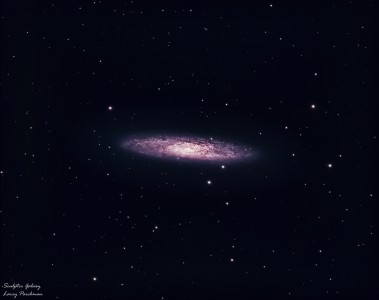
Image of the day

Captured by
Lawrence Parchman

Eastern Veil Nebula

My Account

New to Astromart?

Register an account...

Need Help?

Posts Made By: Curt Renz

March 6, 2008 08:35 PM Forum: Solar System Observing

Re: Where did the Sun Spots Go!?

Posted By Curt Renz

We’re in the period of a minimum of the roughly eleven-year sunspot cycles. A new cycle was proclaimed by some in January when a sunspot was found with polarity reversed compared with those of the previous cycle. Of course, if the number of spots does not pick up significantly as the cycle progresses, some are concerned that we may witness a repeat of the Maunder minimum experienced from 1615 through 1745 which coincided with cold climatic conditions. Click the links below.

http://wattsupwiththat.wordpress.com/2007/10/15/all-quiet-alert/
http://space.newscientist.com/article/dn13153-maverick-sunspot-heralds-new-solar-cycle.html

March 13, 2008 05:23 PM Forum: Beginning Astronomy?

Easy to use Star Maps for Beginners

Posted By Curt Renz

Below is an easy to read star chart from Star Maps for Beginners which is more than sixty years old yet remains the best and simplest introduction to the skies. It is uncluttered and with no need to understand celestial coordinates. I got my copy in early 1959 when I was on an eighth grade field trip to the Adler Planetarium. It was put to plenty of good use. Seen here is the map for March evenings at mid-northern latitudes.

For information on a revised edition of the set of twelve monthly charts, go to: http://www.amazon.com/exec/obidos/ASIN/0671791877/crastro-20


March 15, 2008 05:35 PM Forum: Solar System Observing

The Next 15 Full Moons

Posted By Curt Renz

Big bright Full Moons are especially fascinating for all of us. Amazingly, due to light and shadow effects, a Full Moon is actually twelve times brighter than a Half Moon (first/last quarter position).

Right now the Moon is a waxing gibbous and will achieve fullness on March 21st. A Full Moon is opposite the Sun in the sky, rising at sunset, crossing the local meridian at local midnight, and setting at sunrise.

It’s not mere imagination that some months a Full Moon appears larger than at other times. And their altitudes at transit can vary considerably over the course of a year and the 18.6-year nodal cycle.

I’ve created a graphic with data that demonstrates the variability of the next fifteen Full Moons. At the top are the changing declinations which affect the Moon’s altitude at meridian transit. Across the center are seen the relative distances between the Earth and Moon. At the bottom can be seen the changes in the Moon’s apparent angular size due to changes in distance. The graphic can be seen by clicking: http://www.curtrenz.com/astronomical.html

March 20, 2008 05:48 PM Forum: LUNATICS

The Next 15 Full Moons

Posted By Curt Renz

Big bright Full Moons are especially fascinating for all of us. Amazingly, due to light and shadow effects, a Full Moon is actually twelve times brighter than a Half Moon (first/last quarter position).

The Moon will next be its fullest during midday on March 21st for those in the Americas. That means that tonight (March 20/21) and tomorrow evening will bring us Moons that are essentially full. A Full Moon is opposite the Sun in the sky, rising at sunset, crossing the local meridian at local midnight, and setting at sunrise.

It’s not mere imagination that some months a Full Moon appears larger than at other times. And their altitudes at transit can vary considerably over the course of a year and the 18.6-year nodal cycle.

I’ve created a graphic with data that demonstrates the variability of the next fifteen Full Moons. At the top are the changing declinations which affect the Moon’s altitude at meridian transit. Across the center are seen the relative distances between the Earth and Moon. At the bottom can be seen the changes in the Moon’s apparent angular size due to changes in distance. The graphic can be seen by clicking: http://www.curtrenz.com/astronomical.html


March 26, 2008 09:56 PM Forum: LUNATICS

Spot Moon Aged Under 1 Day - Cheshire Cat Smile

Posted By Curt Renz

Who will be the first to spot the April New Moon with naked eyes after sunset? A combination of circumstances will make it possible for North Americans to spot the Moon aged less than 24 hours. For those at mid-northern latitudes it will appear in an unusual U-shape like the smiling Cheshire Cat.

The Dark Moon will be in geocentric longitudinal conjunction with the Sun on 2008 APR 06 at 03:56 UT. We’re in the months of the year surrounding the vernal equinox during which New Moon spotting is ideal for northern hemisphere observers. The current point in the Moon’s 18.6-year nodal cycle is also helpful. And being near perigee helps the Moon to separate from the Sun more quickly.

I’ve created a graphic previewing the western sky as viewed from Chicagoland 25 minutes after sunset on Sunday April 6, although it should well serve most North Americans. There will be no other planets or bright stars to serve as guides. Therefore the azimuth and altitude markings on the diagram will be particularly helpful. The graphic can be seen by clicking: http://www.curtrenz.com/astronomical.html

Photos or descriptions of the April New Moon would be welcome additions to this thread. Please include the date, time, time zone and location. Good Luck!

Below is a photo I took on 2007 MAR 19 of the Moon aged 21:45 hours, which is my personal best. I hope to beat that this month.


March 26, 2008 09:56 PM Forum: LUNATICS

Moon Occults Pleiades - 2008 APR 08

Posted By Curt Renz

The 12% illuminated waxing crescent Moon will occult stars of the Pleiades (M45) cluster for North Americans during the evening of Tuesday 2008 APR 08. Immersions will occur on the dark limb and emersions on the bright limb.

I’ve created a graze map for North America. Observers on a star’s graze path will be able to see that star winking on and off as lunar hills and valleys pass by. Those between a star’s northern and southern paths will witness a full occultation. I also made a preview graphic for the location of Chicago’s Adler Planetarium. To see both the map and the graphic, click: http://www.curtrenz.com/astronomical.html

Photos and descriptions of the event would be welcome additions to this thread. If you would like occultation or graze data for a specific location, please reply to this post with a longitude, latitude, time zone and approximate altitude above sea level.

March 26, 2008 10:31 PM Forum: Solar System Observing

New LUNATICS Forum at Astromart for Moon

Posted By Curt Renz

For those who may not be aware, there is a new forum here for matters related to the Moon. It's called LUNATICS and is located two spaces above this one for Solar System Observing. From now on I'll place all of my lunar threads in that forum. I have two new ones there now related to the April New Moon and the upcoming Pleiades occultation by the Moon.

March 31, 2008 04:41 AM Forum: Off Topic Discussions

Chicago Cubs April Calendar - Computer Wallpaper

Posted By Curt Renz

I’ve created a Chicago Cubs schedule calendar for April that can be downloaded for free as your computer’s desktop background wallpaper or printed to paper. It includes game times and TV stations. Both standard and widescreen versions are available. The ivy background allows space on the left for your desktop icons. I’ve also designed a wallpaper from a photo I took of the Wrigley Field marquee sign proclaiming the Cubs as division champions. You can see the items by clicking: http://www.curtrenz.com/cubs.html

April 13, 2008 11:19 PM Forum: LUNATICS

Moon Occults Antares - Australia/NZ - 2008 APR 24

Posted By Curt Renz

The 90% illuminated waning gibbous Moon will occult Antares (mag 1.1) in Scorpius for observers in western and southern Australia and New Zealand during the predawn hours of 2008 APR 24. Folks between the northern and southern graze paths can witness a full occultation. Those on a graze path will see the star winking on and off as lunar hills and valleys pass by.

I’ve created a graze map that can be seen at: http://www.CurtRenz.com/astronomical.html

For data specific to a certain location, please reply here with a longitude, latitude, time zone and approximate altitude above sea level.

Photos or descriptions of the event would be welcome additions to this thread.

April 21, 2008 03:30 AM Forum: Solar System Observing

Mercury as Springtime Evening Star

Posted By Curt Renz

Elusive little Mercury is commencing a fine apparition as an evening star following its superior conjunction behind the Sun on 2008 APR 16. The springtime celestial geometry favors northern hemisphere observers. From Chicagoland at 30 minutes after sunset Mercury will achieve its greatest altitude of 13.7° on MAY 12. The next day it will reach its greatest eastern elongation of 21.8° before tumbling toward inferior conjunction between Earth and Sun on JUN 07. In a telescope Mercury will appear 50% illuminated like a Half Moon on MAY 08. Before that date it will be gibbous and afterward a crescent. Mercury is currently at magnitude -1.7 (brighter than Sirius) but will dim to magnitude +3.6 by June.

I’ve created a panoramic graphic demonstrating Mercury’s position in the west-northwestern sky as viewed from Chicagoland 30 minutes after sunset from now through JUN 01. Although it should well serve most northern hemisphere observers. To see it, click: http://www.curtrenz.com/astronomical.html

A slender crescent Moon aged about a day and a half will appear to pass near Mercury on MAY 06. That may present a fine photo opportunity. Below is a photo I took from Arlington Heights, Illinois of a similar conjunction during the evening of 2007 MAY 17.
