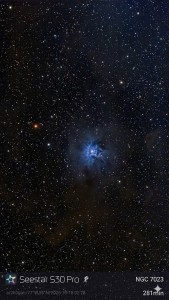
Image of the day

Captured by
Arthur Hogan

Iris Nebula

My Account

New to Astromart?

Register an account...

Need Help?

Posts Made By: Gary Caldwell

June 22, 2008 07:10 PM Forum: Equipment Talk

Re: Dead LX-200 ( classic)

Posted By Gary Caldwell

Sonya Ward said:

Hi Ivan, I did replace ir but I was just messing around with the power supply and it powered up. I think I am going to radio shack and get a new power supply. I hope that will fix it.
Thanks !
Sonya

Sonya,

I hope a new power supply fixes the problem.

I had to send my LX200 Classic back to Meade for repair. Costs:

Shipping via UPS ground: $300 (85 lbs scope and cartons)
Meade's minimum charge: $550 (includes return shipping)
Turnaround time : 6 weeks
Repairs made: Replaced motherboard in base of mount.

Back story: I had the scope plugged into a surge protecter
to defend against nearby lightening strikes. Unbeknownst to me, the surge protector must be turned on for it to work properly. They are of no use unless it is on so that the circuitry can detect the surge and do its thing.


It does not sound like you have had any damage of that nature but you could still have a problem with the motherboard. Mine would turn on, go through its self-test routine and seem OK except that none on the slewing controls worked. I would think that the problem is with the power supply since it came back on line. Did the scope operate normally after that?

I hope everything turns out OK.
[email protected]



October 26, 2008 06:51 PM Forum: CCD Imaging and Processing/Deep Sky

Advice on buying a CCD

Posted By Gary Caldwell

Kelsey,

There are some good buys on Astromart. For use in the field get something easy to set up. A CCD that can plug directly into a USB 2.0 would work well. Follow the KISS principle. The ones that come to mind are the Orion Star Shoot series. I have experience with them as well as the SBIG 237. The SS series are very easy to set up and use, especially the One Shot Color (OSC). I have seen them both in the classifieds in Astromart. The have decent sized chips and have good light response.
Remember K.I.S.S.

Gary Caldwell
[email protected]

November 9, 2008 03:58 PM Forum: CCD Imaging and Processing/Deep Sky

Orion Starshoot Pro 6.1MP Color DSI

Posted By Gary Caldwell

James,

I, too, have had problems with getting everything too load properly on both XP and Vista systems. The solution seemed to be to use the "Remove Programs" utility found on the XP Control Panel and the Computer page(I think) in Vista. Reload following the instructions EXACTLY usually produced result. I am no novice at installations but it is easy to overlook a minor detail or obscure instruction.

I seemed easier to get a good installation on the Vista system but it has some other iaaues. More on that later if you like.

Gary Caldwell
[email protected]

November 23, 2008 06:18 PM Forum: CCD Imaging and Processing/Deep Sky

focus reducers

Posted By Gary Caldwell

Doug Waller said:

hi all,

I'm new to CCD, so Igot questions. I was taking shots of the moon the other night and only getting a small section of the moon. according to the book I need a focus reducer. my question is will this work on a 10" reflector OTA? I'm using a Orion StarShoot Deep Space Imaging Camera II

Doug,

thanks


Doug,
I have used the Orion DSI II with the .5 focal reducer they offer in the catalog. It works very well with the f/4 Newtonian Starblast (4.5in). It is relatively inexpensive. I now have the new StarShoot Pro with the larger imaging chip. I haven't used it with this imager but I suspect it will cause some vignetting because of its 1.25" barrel diameter. I would like to get my hands on a .5X reducer in a 2" barrel.

Try it. You might like it!

Gary Caldwell
[email protected]

December 2, 2008 12:54 AM Forum: CCD Imaging and Processing/Deep Sky

4 new shots from the weekend

Posted By Gary Caldwell

Ivan Gastaldo said:

Using my venerable Orion Starshoot I, I was able to get these 4 shots on Friday night. It was cool, crisp & clear, with almost no mosquitoes at all... (a great thing here, in the S.Fla Everglades)

Taken with a William Optics SD66. 12x5min exposures.
Captured & stacked with Nebulosity 2 & processed with Adobe Photoshoip CS2.

Objects are: The Horsehead, The Cocoon, The Pacman Nebula and the Triangulum Galaxy.

Clear skies to all, 8)

Ivan,
Here are a couple of images done the weekend before Thanksgiving.

Both are stacks of six ten minute exposures in MaxIm DL Essentials and finished in Photoshop Elements v6.0.
Equipment: Meade 10" LX200, Vixen ED80SF, Orion SS Pro and Orion SS Autoguider (Best bargain of all).

Gary Caldwell
[email protected]

December 2, 2008 02:27 AM Forum: Digital SLR AstroPhotography

M42/43 New scope

Posted By Gary Caldwell

WOWWEE!!!!!!

Gary Caldwell
[email protected]

December 4, 2008 03:30 AM Forum: CCD Imaging and Processing/Deep Sky

Orion StarShoot II DeepSpace and remote focusing

Posted By Gary Caldwell

Danny,

Yes, the signal will degrade seriously over a 50' cable run. In fact, your computer will not recognize the presence of the camera. I needed a 16' cable run and the computer would not recognize the camera without going through a powered USB hub. The SS II is powered from the USB port. The SS Pro must have a separate dedicated 12V power supply, either battery or appropriate 120AC/12VDC power supply. In the manual for the SS II there is a warning about the length of the cable run.

No, the SS II does not have its own focuser. You will need an electric focuser capable of remote control via the computer. There are several versions of focusers and software for that purpose.
Most electric focusers will not accomodate the full focusing range of a SCT. It will require close focusing initially. for the temperature conditions. The electric focuser is mainly for "fine tuning" your initial focus. On a SCT an extension tube is not usually necessary.

There is a way of using two (I think) wireless routers to connect a computer in the house and one in the observatory or at the telescope. It was published in Sky & Telescope about 2 yrs. ago.

I hope this has answered someof you question.

Gary Caldwell
[email protected]

December 23, 2008 01:58 AM Forum: Digital SLR AstroPhotography

here we go...

Posted By Gary Caldwell

Tony Aguire said:

Hello, all. I just purchased a used Canon EOS Xt from a fellow Amarter, so I am wondering what y'all would consider to be the best accesories to get in aiding astrophotography. I have already ordered a WO 2' adapter with t-ring from ATWB to hook it up to my scope (Ultima 8 w/ WO 2 speed focuser, Starizona counterweights). I was looking at the remote switch (RS60E3) but I am wondering as to what other software/hardware would be suitable that may help me get started.I purchased this camera for deep sky, as well as terrestrial stuff. This is the begining of my journey into DSLR astrophotography...Any suggestions would be greatly appreciated.

Clear skies..
Tony,
You didn't mention any kind of processing software. I highly recommend MaximDL/DSLR. It will control your DSLR and autoguiding if you are equipped for such. I have really enjoyed the versitility of it. I am imaging with a Nikon D50 and an Orion StarShoot Pro, guiding with the Starshoot Autoguider. I would be happy to answer any questions you might have.

Gary Caldwell
[email protected]

February 5, 2009 06:05 PM Forum: Equipment Talk

Orion's Starshoot Autoguider

Posted By Gary Caldwell

I have been using one for about 8 mo. Never a problem. I worked just as it is supposed to right out of the box. I have always had an acceptable guide star at the shortest exposure (0.2 sec), however I usually guide at 0.5 sec. Always nice round stars. I switch between using a Vixen ED80SF and the Meade 10in. LX200 it is piggybacked on.

Gary Caldwell
[email protected]

July 27, 2009 08:41 PM Forum: Meade

Polar alignment

Posted By Gary Caldwell

Charles Seaman said:

I recently purchased a 12" lx200 classic. Until recently I used it in alt/az mode, however I did latch onto a meade super wedge which I installed and now I'm confused as to the polar alignment procedure.After mounting the wedge, and putting the fork on it, which way should north be? in other words should the face panel of the controller face north, or should the back of the wedge, the highest part, face north. Thanks for any help

Chuck

Lets see if I can 'splain this: The face of the wedge where the telescope mount attaches should face north. With the angle of the wedge set for your latitude this should place the RA axis pretty close to parallel with the Earth' axis. Refer to the manual for precise polar alignment to further refine the alignment. When the scope is positioned between the fork arms the front of the scope should be pointing at Polaris.

Hope I didn't confuse you. There should be some illustrations in the manual.

Gary Caldwell
[email protected]


Hope