Image of the day

Captured by
GERALD KREITZBURG

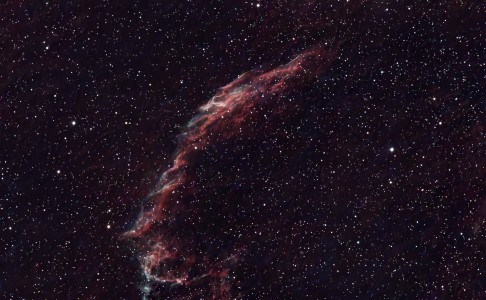
Eastern Veil Nebula

My Account

New to Astromart?

Register an account...

Need Help?

Posts Made By: Curt Renz

September 19, 2007 08:10 PM Forum: Solar System Observing

Mars Apparition - 2007-08

Posted By Curt Renz

The red planet Mars is becoming more prominent in our late evening eastern sky. It reached its western quadrature 90° from the Sun on 2007 SEP 17 and will be rising before 23:00 beginning SEP 23 for Chicagoland observers and many others. Today (SEP 19) it is at a distance of 1.03596 AU with a diameter of 9.0 arcseconds and 86% of its apparent disk illuminated at magnitude +0.1. It’s similar in brightness to Capella.

On NOV 15 Mars will begin its apparent retrograde motion as Earth begins sweeping past it. The loop that will be formed is demonstrated in my graphic of the Mars apparition at http://www.curtrenz.com/astronomical.html

Mars closest approach for this apparition will occur on DEC 18 at 0.58933 AU, which is considerably further than the extremely favorable approach in 2003 of 0.37272 AU. Its angular diameter on DEC 18 will be 15.9 arcseconds compared with 25.1 in 2003. Mars’ opposition from the Sun will occur on DEC 24 in longitude, right ascension and elongation. It will then be rising around sunset and setting around sunrise. Its magnitude during this period will be -1.6, which is slightly brighter than Sirius.

Mars will end its retrograde movement on 2008 JAN 30 and reach eastern quadrature on MAR 30. Eventually it will move into conjunction behind the Sun on 2008 DEC 05.

This year Mars may become less bright than in 2003, but its declination of N 26.8° at opposition will be much more favorable for northern hemisphere observers. Enjoy your hunt for Martians! wink

September 26, 2007 07:39 PM Forum: Beginning Astronomy?

Phases of Venus

Posted By Curt Renz

Venus is currently blazing brilliantly in the pre-dawn eastern sky. For my graphic demonstrating Venus' change of position, shape and brightness between now and April, go to: http://www.curtrenz.com/astronomical.html

Below is a diagram I've created showing the Sun, Earth and Venus as viewed from a point far into the northern side of the solar system. It is bipolar, meaning both the Sun and Earth are kept still. So you as the observer are turning in pace with the Earth as it orbits the Sun. Thus you see the relative positions of Venus as it laps the Earth over its 1.6-year synodic cycle. The sizes of the bodies in the top portion of the graphic are not to scale. Views from Earth are shown at the bottom. wink


September 29, 2007 05:05 PM Forum: Off Topic Discussions

Chicago Cubs Division Title - Computer Wallpaper

Posted By Curt Renz

Hooray! Hooray! smile

At my website you can download a picture of the Wrigley Field marquee sign proclaiming the Cubs as 2007 NL Central champions! It could serve as your computer’s desktop background wallpaper. You can see it at http://www.curtrenz.com/cubs.html

It’s actually a doctored version of the photo I took after attending the division clinching game in 2003. But the image could look really nice on our computers until the Cubs win the 2007 NL pennant.

Go, Cubs, Go! grin

October 4, 2007 05:15 PM Forum: Solar System Observing

Full Hunter's Moon at Perigee - Oct 25/26

Posted By Curt Renz

Look for a huge Full Hunter’s Moon during the night of 2007 OCT 25/26! Coincidentally, it will be near the time of the Moon’s closest perigee distance of the period from 2005 FEB to 2008 NOV. This month’s greatest fraction of illumination (99.90%) of the Moon’s apparent disk as viewed from Chicagoland will occur on the 25th at 21:54 CDT. Geocentric perigee of 356,753 km will occur on the 26th at 06:53 CDT with the Moon’s geocentric angular diameter at 33.5 arcminutes. Too bad this fortunate combination of events will not be happening six evenings later for the Trick or Treaters on Halloween! 8)

October 9, 2007 09:53 PM Forum: Beginning Astronomy?

Oppositions of Mars - Diagram

Posted By Curt Renz

Below is a diagram I’ve created to illustrate the oppositions of Mars from 2003 through 2018. An opposition occurs when as viewed from Earth another planet appears to be located opposite from the Sun.

Seen are the orbits of Earth and Mars with indications of the perihelion and aphelion points. The sizes of the bodies are not to scale, although the orbits are. The compass indicates directions in ecliptical longitude. AU refers to the distances between Earth and Mars in astronomical units (1 AU is the average distance between Earth and Sun).

The synodic period for Earth to lap Mars in their race around the Sun averages 2.135 years. That means that the Earth orbits the Sun an average of 2.135 times for each 1.135 times that Mars does so. So oppositions of Mars from the Sun are separated by an average of 2.135 years. In actual cases these figures can vary significantly from the averages.

The orbit of Mars is considerably more eccentric than that of Earth. Perihelic oppositions (when Mars is near its perihelion) are the ideal ones and occur at intervals of 15 or 17 years. The opposition of 2003 was especially close: the best in more than 50,000 years and until 2287. The next perihelic opposition will occur in 2018, although Mars will be 3% further away than in 2003.

The next opposition of any type will occur on 2007 DEC 24. Mars will be 53% further away than at the perihelic opposition of 2003, but 13% closer than at the aphelic opposition of 2012. wink


October 11, 2007 03:37 AM Forum: Solar System Observing

October New Moon Spotting or Perhaps Diana's Bow

Posted By Curt Renz

We're in the period of the Dark Moon or Change of the Moon (which modern calendar makers insist on marking as the New Moon). On 2007 OCT 11 at 05:01 UT the Moon will reach geocentric longitudinal conjunction with the Sun. Over the following couple of days we would normally be in the period of what was traditionally called the New Moon by our ancestors, when a slim crescent Moon would appear low in the western sky at dusk. However, during the months surrounding the Autumnal Equinox, observers north of the tropics have a hard time spotting a really young Moon due to the ecliptic's sharp angle with the horizon after sunset. Compounding that this year are other problems. The Moon is at the point in its 18.6-year nodal cycle that has it moving rapidly south of the ecliptic early in the lunation, and that's at the same time that it's near a portion of the ecliptic that deviates rapidly south from the equator. The Moon is also near apogee (in fact the farthest point for several years on either side) which slows it down making it even tougher to spot it soon after conjunction.

That being said, only observers in the tropics or the southern hemisphere are going to spot the Moon when it is less than a day old this month. In fact, it would be a huge challenge for us northerners to sight the Moon aged less than two days. With luck and knowing where to look we may spot Diana's Bow (three-day old Moon) on Saturday evening. The "bow" refers to the piece of archery equipment used by the ancient Roman goddess of hunting and the Moon.

I've created a graphic that previews the southwestern sky 25 minutes after sunset on OCT 13 as seen from northwest suburban Chicago. Although it should well serve most observers in North America. It can be seen at: http://www.curtrenz.com/astronomical.html . At that time Mercury will be setting about 12° to the right of Diana's Bow (the Moon). Jupiter will be nearly 30° to the Moon's upper left with Antares between them.

Good luck in your attempts to spot the New Moon, or at least Diana's Bow. Your descriptions and photos of the October crescent Moon would be welcome additions to this thread. wink

October 12, 2007 02:31 PM Forum: Beginning Astronomy?

The Cause of the Moon's Shape Changes

Posted By Curt Renz

Here’s a diagram I’ve created for those who need to understand the cause of the different phases of the Moon, or have the mistaken belief that the dark portion of the Moon’s face is due to the Earth’s shadow. That is only true during a lunar eclipse. Normally the dark portion is actually on the night side of the Moon, which is out of sight of the Sun. It is daytime for the light portion, which is receiving direct sunlight.

Imagine you are viewing the diagram from outer space well above the Earth’s arctic region. The Sun is far away in the direction of the arrows. The Moon is moving counterclockwise in its nearly circular orbit, which is colored orange in the diagram. After an average of 29.53 days the Moon is back to its original relationship with the Earth and Sun.

The images in the inner ring show how the Moon appears to a person standing on Earth when looking at the Moon in that direction. The sizes of the images in the diagram are not to actual scale. wink


October 13, 2007 02:36 PM Forum: ASTRONOMY

The Cause of the Moon's Shape Changes

Posted By Curt Renz

Here’s a diagram I’ve created for those who need to understand the cause of the different phases of the Moon, or have the mistaken belief that the dark portion of the Moon’s face is due to the Earth’s shadow. That is only true during a lunar eclipse. Normally the dark portion is actually on the night side of the Moon, which is out of sight of the Sun. It is daytime for the light portion, which is receiving direct sunlight.

Imagine you are viewing the diagram from outer space well above the Earth’s arctic region. The Sun is far away in the direction of the arrows. The Moon is moving counterclockwise in its nearly circular orbit, which is colored orange in the diagram. After an average of 29.53 days the Moon is back to its original relationship with the Earth and Sun.

The images in the inner ring show how the Moon appears to a person standing on Earth when looking at the Moon in that direction. The sizes of the images in the diagram are not to actual scale. wink


October 17, 2007 04:14 AM Forum: Solar System Observing

Graze of Pleiades Star - Chicagoland - Oct 27

Posted By Curt Renz

During the evening of 2007 OCT 27 the Moon will occult the Pleiades cluster (M45). The event will be essentially over as the 95% illuminated waning gibbous Moon rises on the Chicago lakefront at 18:33 CDT. However, I’ve calculated that the graze path of Atlas, the second brightest Pleiad at magnitude 3.6, will pass through Chicagoland. Alcyone, the brightest member at mag 2.9, will emerge at 18:53:28 for lakefront viewers. All the rest of the principle stars in the group will have emerged before the Moon rises over Chicagoland.

Atlas’ southern graze path will include Plainfield, Woodridge, La Grange, Berwyn, Oak Park, Lincoln Park in Chicago and points in between. The rising star will only be 3° above the east-northeastern horizon at the time of the Chicagoland portion of the graze. Observers on the lakefront may get the best view. The graze path is only a few kilometers wide. Observers north of the path will see a full occultation. Those south of the path will see a close passage. But those on the path will have a rare opportunity to see a star winking on and off as hills and valleys of the lunar south polar region pass by.

Here are a few points I've calculated for the graze path at separations of 0.1° in longitude.

19:01:16 CDT - W 88.3° - N 41.58344°
19:01:17 CDT - W 88.2° - N 41.63676°
19:01:17 CDT - W 88.1° - N 41.69025°
19:01:18 CDT - W 88.0° - N 41.74393°
19:01:19 CDT - W 87.9° - N 41.79779°
19:01:19 CDT - W 87.8° - N 41.85183°
19:01:20 CDT - W 87.7° - N 41.90605°
19:01:21 CDT - W 87.6° - N 41.96046°
19:01:22 CDT - W 87.5° - N 42.01506°

Linear interpolation should be sufficient, but I’ll be happy to provide even more detailed data for those who reply with specific longitudes.

Below is a graphic I've created to illustrate how the graze would look from Lincoln Park on the lakefront. Atlas is on the lower right limb of the Moon. wink


October 21, 2007 07:37 PM Forum: ASTRONOMY

Chicago's Adler Planetarium and Donated Artifacts

Posted By Curt Renz

On Thursday October 18th I attended the unveiling at the Adler Planetarium of a rare collection of 17th century astro/mechanical books. The pages of the books have rotating wheels that calculate the positions of the planets. Amazing! They were donated by my friend Bob Gordon, who was also an endorser of my financial book. Bob is on Adler’s Executive Committee, but he runs his investment firm in New York. It was great seeing Bob again.

During the reception I spent quite a bit of time with Adler astronomer Larry Ciupik, who had been my guest several times on my TV show. He got a kick out of the astronomical graphics on my website. Adler president Paul Knappenberger, who also had appeared with me on the show, was kind enough to give me a detailed explanation of the books' mechanisms, since we had been in Larry’s office while Bob gave his version. In fact, all Adler staff members were most gracious.

After the reception I attended Adler’s annual Webster Lecture on matters related to historical astronomy. This year the presenter was Prof. James Evans, who discussed Greco-Egyptian astrology. Although forms of divination have been around for many millennia, astrology didn’t rise to prominence until the second century BC. It reached its heights under the influence of Ptolemy in the second century AD, becoming an important aspect of the worldview held by inhabitants of the Roman Empire at that time.

In 1930 the Adler became the first planetarium in the western hemisphere. It was a marvel during my youth. But since then it has expanded to become an incredible showcase for all matters related to astronomy. I heartily recommend a visit to anyone spending time in Chicago. Here’s a link to the Adler’s website: http://www.adlerplanetarium.org/home.shtml
