Image of the day

Captured by
Gerald Elkin

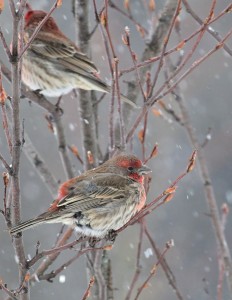
House Finch

My Account

New to Astromart?

Register an account...

Need Help?

Posts Made By: Gerald Kuchera

August 5, 2007 04:59 AM Forum: Beginning Astronomy?

Mosquito protection

Posted By Gerald Kuchera

I live surrounded by a pond, large wetlands and woods. Been there 30 year. Worked on a West Nile control program for my employer (a local municipality) and here's what I've found:

1)The larvae are easier to kill. They are in the water in your kid's toys, your home's gutters, birdbath, house plant water tray, the street drain, low areas in your lawn, etc. Find those sources and drain 'em. The ones you can't, apply mosquito dunks. They use a bacteria specific to mosquitoes. Works for a month.

2)The adults are all over, and can be a challenge. But they must land to rest and this is where I use a Cutter Bug Free Backyard Spray. Hook it to a hose and spray approximately 100 ft circle around your observation site. I apply it during the day. Kills 'em while they rest. Works quite well. I often don't need protection
(I use 30% or greater DEET, water based so no solvent can destroy optical coatings) Haven't tried the dryer softener sheets.

3) A researcher at Michigan State University has shown that a slight breeze of about 4.5MPH or greater reduces mosquitoes ability to sense your carbon dioxide emissions and heat signature. Try pulling out a fan and blow it around you. If you find the wind chilling, two fans on either side of you can be aimed around you, producing a diluting effect without having the breeze directed at you.

4) There is a Permethrin spray you can buy to apply to clothes. Sawyer's makes one.

http://www.permethrin-repellent.com/products.htm

5) Wait till winter to observe if you live in the north.
Works and is free! Good luck. wink

Gerald

September 24, 2007 04:49 AM Forum: Equipment Talk

My favorite Astro flashlight

Posted By Gerald Kuchera

It ain't been invented yet!

That said, I now use a Petzl TacTikka Plus 4-LED Headlamp for most of my general astronomy purposes. No need to put in mouth. I leave my mouth free to hang on to my jaw as it drops when I look at all the cool stuff out there. grin I don't use fingernail polish to darken the red lens but rather bordon's red vinyl tape. It diffuses without allowing bright spots. The headlamp uses 3 AAA batteries, has a large switch for gloved hands, 3 brightness settings. Flip down the red filter for tear down. Nearly perfect flashlight IMHO.

Don't use the rigel systems red LED flashlight, or the Maglight red LED mini with mouthpiece anymore. The headlamp rules 'em.

Do have a Maverick LED clip mount grill light on order to use while sketching at the telescope.

Regards,

Gerald

December 16, 2007 05:16 AM Forum: Eyepieces

Celestron X-cel or Televue Ploessl?

Posted By Gerald Kuchera

Having only one Televue product, but a couple X-cells I can only say, nope-- no chance in H_ll.

X-cel may have better ER, but that's it. Can't comment on the Omni though.

I wonder if you would be better served by trying the Baader Hyperions...I think they're on sale for $99 each.

Regards,

Gerald

February 25, 2008 02:19 AM Forum: Equipment Talk

GM-8 vs GPDX

Posted By Gerald Kuchera

I can't comment on the GM-8 or GPDX, as I have a Vixen Sphinx, but perhaps you could check the yahoo forums specific to each mount for more information.

Gerald

February 27, 2008 04:16 PM Forum: Global Warming - REAL or NOT

12-month long drop in world temp wipes a century rise

Posted By Gerald Kuchera

If there's still snow on the ground come June, I'm gonna wish I had bought that Florida swampland years ago!

Gerald

May 8, 2008 04:05 PM Forum: Beginning Astronomy?

Go To setup time

Posted By Gerald Kuchera

Greg,

Among my favorite "quick set up" scopes is a 6" f8 Newt on a Vixen Sphinx mount. I leave the mount assembled in my living room. I take the scope off ahead of time and put it in the garage to cool down some (about an hour). I take the weights off then carry the entire mount and tripod outside. The weights and scope come next. Controller, wires, battery next. Takes about ten minutes.

I rotate the Dec head contrary to the manual so that the alignment marks on the Dec and RA line up for me, then take a an eyeball gander through the dovetail plate slot at Polaris and it's ready for visual use. Ain't hard at all.

Also use a Stellavue 85mm APO on 'er. Love it!


October 1, 2008 01:41 AM Forum: Beginning Astronomy?

Astro logbook format?

Posted By Gerald Kuchera

Rob,

Some folks use high technology when observing and logging their observations. There's Astroplanner for example. Some planetarium software has it too. I have AP and someday I will use it... I guess I'm old fashioned. I like the feel of (acid free) paper, a fine mechanical pencil and the smell of ink on the page.

So I use a simple 3-ring binder, with pre-printed logging reports with space for my drawings.

Regards,

Gerald

November 25, 2008 09:55 PM Forum: ASTRONOMY

Eyepieces for PST?

Posted By Gerald Kuchera

The short answer is no you don't need CEMAX eyepieces. Your telescopes eyepieces should work ok.

Many of us PST users often use a zoom EP so we only need to bring one along with us outside, but most EPs will come to focus with the PST. I haven't seen many reviews of the CEMAX set. They look like typical Plossls to me.
Here's a link to review of them on a astronomy forum-- http://216.92.113.163/item.php?item_id=533

And here on the second to last paragraph of this review of the PST:

http://www.eastvalleyastronomy.org/reviews/Coronado.htm

Gerald

December 3, 2008 03:43 PM Forum: Global Warming - REAL or NOT

Fuel Problem Solved-Solar Panel Paint

Posted By Gerald Kuchera

Actually, I think one of the most important statements is this from the NatGeo article:

"...existing materials are only able to harness the sun's visible light. While half of the sun's power lies in the visible spectrum, the other half lies in the infrared spectrum.
The new material is the first plastic composite that is able to harness the infrared portion.
"Everything that's warm gives off some heat. Even people and animals give off heat," Sargent said. "So there actually is some power remaining in the infrared [spectrum], even when it appears to us to be dark outside."

If you're driving with low batteries at night in the winter, it ain't gonna work as well as daytime, but the range of frequency response is a huge potential advance.

Gerald

December 3, 2008 03:56 PM Forum: Deep Sky Observing

Some recent deep-sky sketches

Posted By Gerald Kuchera

Jeff,

Great work! I prefer the immediacy and intimacy of observing at the eyepiece rather than at the computer and post-processing of imaging. It would be nice to see a Sketching Forum here on Astromart.