Hi Steve,
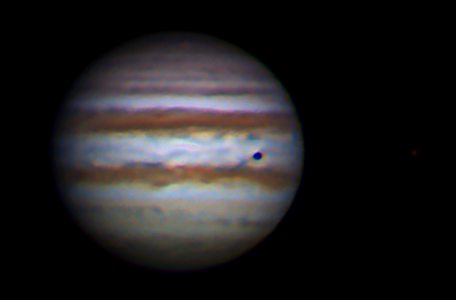
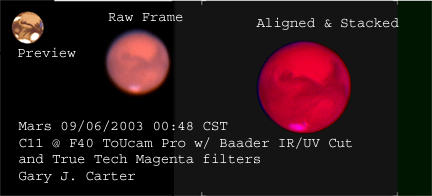
I'm not sure what level of text you might be seeking, but a very excellent resource for learning the basics of astronomical image processing is Richard Berry & James Burnell's Handbook of Astronomical Image Processing. The book has a very thorough background on CCD imaging technique including the mathematics behind it, along with the software AIP4WIN. Jim's website, http://www.jburnell.com also contains a number of tutorials he presents at seminars. A number of freeware programs such as K3CCD tools, http://www.pk3.org/Astro/ and Registax, http://aberrator.astronomy.net/registax will help get you on your way to capturing and processing great images. I've only just begun and I'm having a great time! As for techniques using the ToUcam specifically, Sky & Tel recently ran a couple of introductory articles on webcam imaging and if you search the web for ToUcam & astronomy you will find many websites with pictures and such, some with a few hints at the techniques employed. If you see something you like, ask how. Most folks I've asked reply.
Attached Image:
-Gary
There is only one constant in our infinite universe; it is change.
D&G 8” f/15, AP178 f/9, C11, C8, ED80, TV-85, TV101&102, SW120ED, 6"Cave f/8, Solarmax 40, ES127MC,
DM-6, Losmandy Titan 50 GEQ, G11, AP800, ES Twilight-1, UA Unistar Deluxe, WO EZ-Touch,
Denk BVs, 7x50 Fujinons, 10x50 Nikons, 15x70 Astrophysics, 16x70 Fujinons, 22x100 Oberwerks,
Sim Picheloup CPT, Canon 40D, 60Da, Vixen Polarie, SXV-H9, DMK 41AU02, DBK 21AU618,
Shelyak Lhires Lite Spectroscope, Rainbow Optics Spectroscope, Field Tested Systems RSPEC,
Chairman, Southwest Region of the Astronomical League (SWRAL)
President Emeritus, Historian, AL Awards Coordinator, Texas Astronomical Society of Dallas (TAS)
Member/Volunteer, 3RR Comanche Springs Astronomy Campus (CSAC)
ALCOR, Advisor to the Board, Texas Star Party (TSP)
NASA-JPL Solar System Ambassador Volunteer (SSA)