It's hard for me to believe, but this past weekend was the first time I have ever taken a scope to a dark site. In this case, it was an observing trip with my astronomy club to the Mojave National Preserve about ninety miles west of Las Vegas. The skies were dark--about magnitude 6.5--but the seeing conditions were relatively poor. Apparently, winds are common this time of year in the Mojave, and this past weekend was no exception with 50 mph gusts on Saturday night.
Despite the mediocre seeing conditions, I did manage to capture an image on Friday night. NGC 3718 and its surroundings.
AT10RCF with A-P field flattener (from my 130mm refractor); A-P Mach1 GTO mount; FLI ML-8300 camera with AstroDon Gen II filters; MMOAG off axis guider with Lodestar guide camera.
120:40:40:40 LRGB with the luminance data binned 1x1 (probably a bad choice given the seeing) and the RGB data binned 2x2. While the resolution was definitely on the mediocre side, it's amazing how deep you can go even with relatively short integration time when you are imaging under transparent skies. I managed to catalog items down a bit past 20th magnitude including bunches of faint galaxies and even a few quasars.
The image was captured in Maxim DL v4 and post processed in Photoshop CS3. Darks and bias subtracted flats were used for calibration. The camera was running at -30C.
Other fun "firsts" for this trip... I saw the Zodiacal light for the first time (or at least the first time since I knew what it was). I also managed to observe Omega Centauri and Centaurs A visually for the first time, though they were awfully low on the Southern horizon.
I would love any constructive criticism.
- Jared Willson
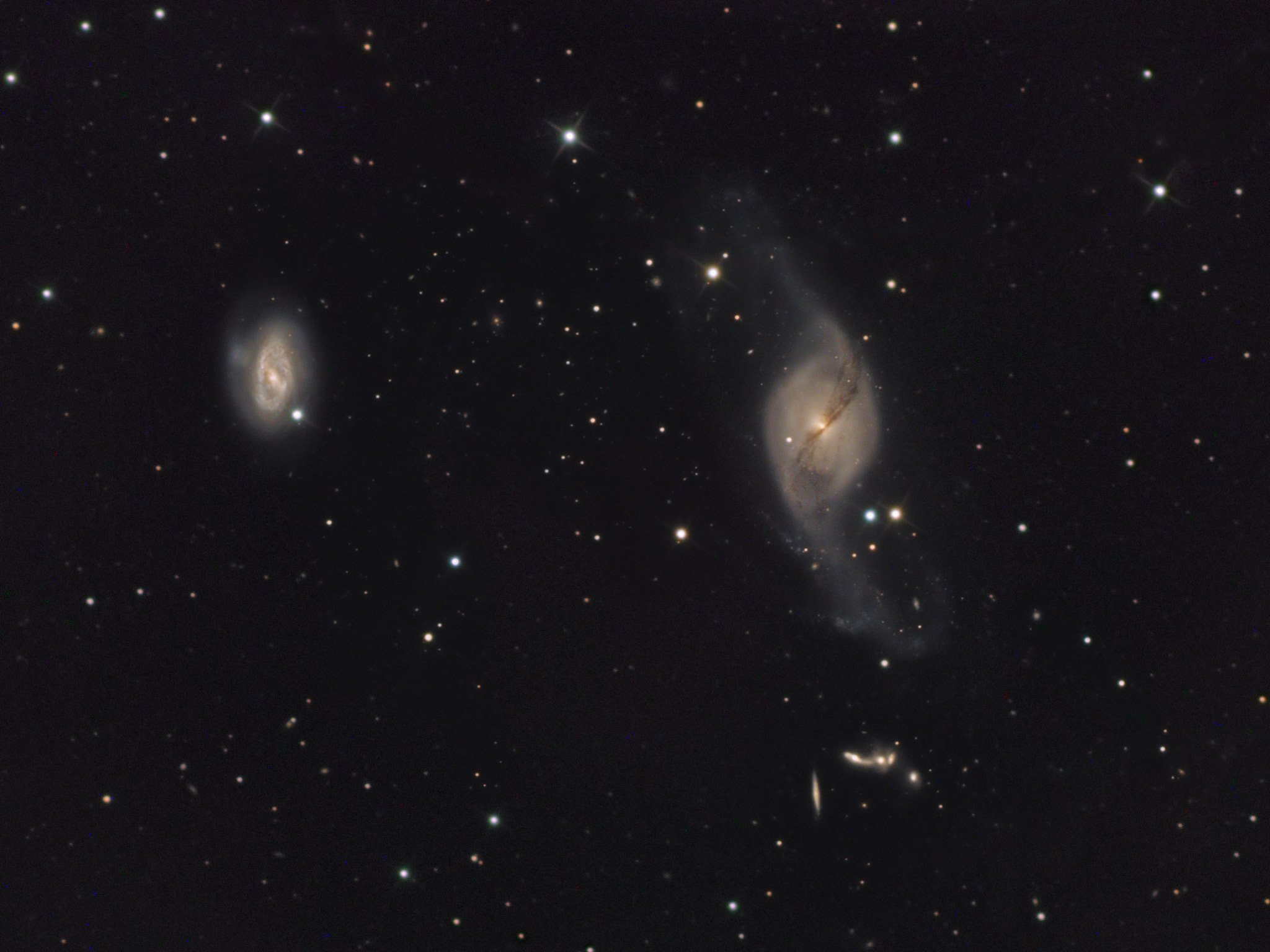
Despite the mediocre seeing conditions, I did manage to capture an image on Friday night. NGC 3718 and its surroundings.
AT10RCF with A-P field flattener (from my 130mm refractor); A-P Mach1 GTO mount; FLI ML-8300 camera with AstroDon Gen II filters; MMOAG off axis guider with Lodestar guide camera.
120:40:40:40 LRGB with the luminance data binned 1x1 (probably a bad choice given the seeing) and the RGB data binned 2x2. While the resolution was definitely on the mediocre side, it's amazing how deep you can go even with relatively short integration time when you are imaging under transparent skies. I managed to catalog items down a bit past 20th magnitude including bunches of faint galaxies and even a few quasars.
The image was captured in Maxim DL v4 and post processed in Photoshop CS3. Darks and bias subtracted flats were used for calibration. The camera was running at -30C.
Other fun "firsts" for this trip... I saw the Zodiacal light for the first time (or at least the first time since I knew what it was). I also managed to observe Omega Centauri and Centaurs A visually for the first time, though they were awfully low on the Southern horizon.
I would love any constructive criticism.
- Jared Willson
Attached Image:


