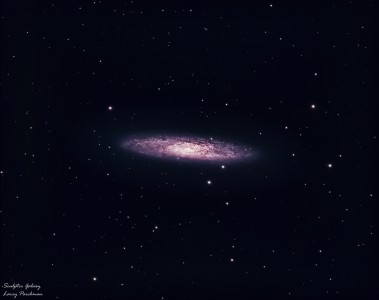
The divine will concerning luminaries was accomplished on Day Four, it being stated: "God proceeded to make the two great luminaries, the greater luminary for dominating the day and the lesser luminary for dominating the night,and also the stars. Thus God put them in the expanse of the heavens to shine upon the earth, and to dominate by day and by night and to make a division between the light and the darkness." (Genesis 1:16-18) The greater luminary is the sun, and the lesser luminary is the moon.
Previously, on the first "day" , the expression "Let light come to be" was used. The Hebrew word there used for "light" is 'ohr, meaning light in a general sense. But on the fourth "day", the Hebrew word changes to ma'ohr, which refers to a luminary or source of light. (Genesis 1:14). So, on the first "day" diffused light evidently penetrated the swaddling bands, but the sources of that light could not have been seen by an earthly observer. Now, on the fourth "day", things evidently changed.
It is also noteworthy that at Genesis 1:16 the Hebrew verb ba ra', meaning to "create", is not used . Instead, the Hebrew verb 'asah', meaning "make" is employed. Since the sun, moon, stars are included in "the heavens" mentioned in Genesis 1:1, they were created long before Day Four. On the fourth day God proceeded to "make" these celestial bodies occupy a new relationship toward earth's surface and the expanse above it. When it is said, "God put them in the expanse of the heavens to shine upon the earth", this would indicate that they now became discernible from the surface of the earth, as though they were in the expanse. Also, the luminaries were to "serve as signs and for seasons and for days and years," thus later providing guidance for man in various ways. (Genesis 1:14) The seasons that now "came to be" on this fourth day would no doubt have been much milder than they became later on. (Genesis 1:15; 8:20-22).
An atmosphere initially rich in carbon dioxide may have caused an earth-wide hot climate. But the lush growth of vegetation during the third and fourth creative periods would absorb some of this heat-retaining blanket of carbon dioxide. The vegetation, in turn, would release oxygen- a requirement for animal life.
To be continued.....
Brien
