Image of the day

Captured by
Erwin Forbragd

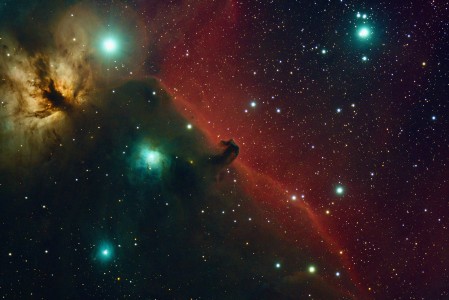
Horsehead Nebula

My Account

New to Astromart?

Register an account...

Need Help?

Birding/Astronomy Dual Use Telescope

Started by Tim Scull, 02/27/2003 05:51PM
Posted 02/27/2003 05:51PM Opening Post
My primary use for a scope would be for birding but I also enjoy astronomy. I don't have a spotting scope yet and my astronomical telescope is an entry level 4.5" Newtonian. I'm looking for a high quality birding scope that could also replace the 4.5". I'm considering a used high quality refractor that uses astronomical eyepieces. The leading candidates are the Takahashi Sky-90 or FC-76/FS-78 or the Televue TV85. My concern is the robustness of such a scope in maintaining collimation (or any other ruggedness issue). (I understand the early Sky-90 units had problems maintaining collimation.)

Are such scopes sacrificing much in ruggedness in comparison to a Pentax or Swarovski spotting scope?

Tim

Posted 02/27/2003 08:49PM #1
Tim,

Not sure what you would pay for a Tak sky-90 but you can purchase the top-rated Pentax PF-100ED spotting scope body for about $1,250. It's Rubber Armored, WaterProof and takes standard 1.25 eps. I thinks the TV85 cost more and it's neither RA or WP.

I am ok with staight thru viewing for astronomy as long as the tripod is tall enough.

Erik D

Posted 02/27/2003 11:01PM #2
If you want a scope that can handle frequent trips into the field, you are probably better off getting a spotting scope designed for birding. If, like me, you enjoy setting a scope up on the shore of a lake or back deck and are not carrying it around, then the Taks and TVs are worth considering.
Posted 02/28/2003 01:37PM #3
When I got a TV Ranger, I thought that I'd finally gotten just exactly the merger of light weight portability that I wanted for both terrestrial and very quick astronomical peaks. It is a good scope, and is ED in a non-ED price range. However, after using it in the field only a few times, I decided to get another dedicated, waterproof spotting scope. Here's why:

1) difficulty in finding an erecting prism of the quality that is up to the quality of the scope
2) difficulty in finding a zoom eyepiece that is up to the quality of the scope -- I've got the Orion/Vixen 8-24mm ep that is supposedly the same as the TV zoom. Comparing it to Nikon and Leica zooms really shows just how washed out the view in the Vixen really is.
3) My own unwillingness to settle for fixed focal length eps as a solution for terrestrial use. I tried a variety of TV plossls, Meade plossls, Intes erfles and UO Konigs. None really offered the perfect merger of wide field, good eye relief, reasonable magnification and image quality. The TV 20mm plossl that typically comes with the Ranger is a bit low on magnification, but going to higher power generally means giving up the nice size of the eyelens and some eyerelief, OR spending mega bucks on some of the more complex and heavier TV eyepieces.
4) My hesitations to use this completely unsealed scope in high humidity conditions, such as birding at the coast.
5) The Ranger's limited use for astronomy. At some point, I plan to do a review of the Ranger as compared to a set of Fujinon FMT-SX 16x70s. The Ranger is a neat little scope, but it is only 70mm, and to me, that's bino territory.
6) To date, I've spent almost as much on e.p.s and prisms and diagonals trying to make the Ranger really shine as a terrestrial spotter as I did in purchasing it used.

When I've had the time to do direct comparisons, I plan to do a detailed comparitive review of the 70mm ED TV Ranger compared to a 60mm non-ED Nikon Fieldscope III and a Leica APO Televid 77mm. I haven't yet decided which of these I'm keeping. They each have their own strengths and weaknesses.
My theory about astronomy is to go significantly larger, while my theory about the kind of birding/nature observing that I do is to go to the minimum of scope that will show the maximum of detail at dawn and dusk.

Mike Swaim