Image of the day

Captured by
Gary Taylor

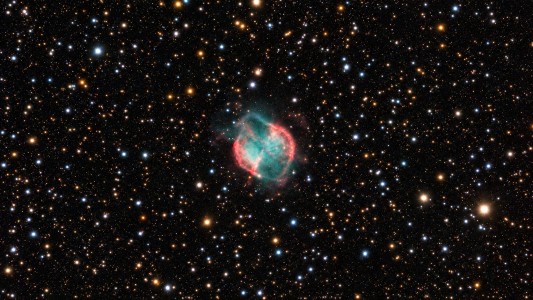
M27 - Dumbell Nebula

My Account

New to Astromart?

Register an account...

Need Help?

I prefer 8 planets over 12+

Started by comocean, 08/16/2006 05:27PM
Posted 08/16/2006 05:27PM Opening Post
While I know it is still a proposal I can't believe the IAU would seriously entertain creating a "pluton" class of plants which would make the asteriod Ceres and many others like it a planet. However if passed it might make things more entertaining on Jeporady.

Allen

"Sometimes it proves the highest understanding not to understand." Gracian
Posted 08/18/2006 08:16AM #1
I also agree. Let the count be 8, not 80 or whatever the future holds in store

Dave Mitsky

Chance favors the prepared mind.

De gustibus non est disputandum.
Posted 08/18/2006 06:11PM #2
I agree: 8 major planets. In particular, the inclusion of Pluto’s satellite Charon in the list of 12 major planets seems ludicrous. Many other planetary satellites, including the Moon, are far larger. The argument seems to be that the Pluto-Charon barycenter lies above Pluto's surface. For the Moon and the other large satellites the barycenter lies within the main planet. Future students memorizing the list of planets will have a hard time understanding the difference that caused the Moon to be left out.

I would think that the shape of a planetary satellite's orbit relative to the Sun would be a greater consideration than barycenter. As with most non-retrograde satellites, Charon describes an epitrochoid relative to the Sun. In particular this is the type of epitrochoid that is alternately convex and concave with points of inflection (wavelike), e.g. Jupiter’s Ganymede and Callisto. Other satellites describe epitrochoids that cross over themselves (loop-the-loop), e.g. Jupiter’s Io and Europa.

The Moon is unique in that its orbit is perpetually concave toward the Sun. We think of the Earth as orbiting the Sun while being perturbed by the Moon. Normally we consider the Moon as orbiting the Earth while being perturbed by the Sun. But more so than other satellites, the Moon could also be thought of as orbiting the Sun while being perturbed by the Earth.

I would refer to the Moon as a planet before I would do so for Charon. Geophysically, I have always thought of the Moon as the first extraterrestrial planet visited by astronauts. Historically, there were seven planets (wandering stars): Sun, Moon, Mercury, Venus, Mars, Jupiter and Saturn. Although in most contexts the term referred only to the latter five, as the Sun and Moon were considered to be of elevated importance to ancient naked-eye observers.

In truth, I am not calling for the Moon and other large planetary satellites to be included in the list of major planets. I’m just asking that Charon be crossed off the list. It makes those seven committee members who agreed to it look silly. They almost have me wondering if they intended to draw up a list so ridiculous that it might make others stop insisting on the inclusion of Pluto.

For astronomical graphics, including
monthly wallpaper calendar, visit:
CurtRenz.com/astronomical

Curt Renz
Posted 08/19/2006 05:04PM #3
It seems to me the problem isn't how many objects orbiting our sun are planets, but why the IAU needs to decide what the word "planet" (or its equivalent in other languages) means. That's up to the philologists who write dictionaries. I believe the IAU should classify all the objects known to orbit our sun or other stars by their physical or other scientific characteristics, as was done for galaxies in the last century. I would suggest that they coin a new name for these objects, like "stellites" as an abbreviation for "stellar satellites" (sort of like "quasars" for "quasi-stellar objects"). For starters I would think such a system of classification should differentiate the gaseous stellites from the rocky ones.

NexStar 8i SCT, Orion 80ED APO refractor, Orion 120 mm EQ refractor, 3.5-inch Questar
Posted 08/19/2006 07:07PM | Edited 08/19/2006 07:16PM #4
I totally agree with 8. I had more to say about Charon within another post in this thread.

Regarding Ceres, I believe that nineteenth century astronomers wisely demoted it from initial planetary status after they discovered some of its brethren. Their small sizes, and highly eccentric and inclined orbits indicated the need for defining a new class. Those earlier astronomers felt a classification called asteroids would be more helpful in guiding the research of those seeking to understand the dynamics and origin of the solar system. For the same reason, I believe it would make more sense to place all KBO’s (including Pluto) in a class of their own.

Here is a link to a petition for those opposing the committee’s suggested definition of planet. It is supposedly for those preferring 9 planets rather than 12, but those favoring 8 can add a comment as I did. http://www.petitiononline.com/9planets/petition.html


For astronomical graphics, including
monthly wallpaper calendar, visit:
CurtRenz.com/astronomical

Curt Renz
Posted 08/20/2006 10:23PM #5
Q1) What does one call a horse designed by a committee?
A1) A camel

Q2) What does one call a set of planets chosen by a committee?
A2) Wanderingstarsasteroidsgasgiantssatelliteskuiperbeltobjects

For astronomical graphics, including
monthly wallpaper calendar, visit:
CurtRenz.com/astronomical

Curt Renz
Posted 08/21/2006 05:49AM | Edited 08/21/2006 05:56AM #6
The Trans-Neptunian Object preliminarily assigned the label 2003 UB313 has now been given the permanent designation Groucho. It was immediately informed that it is being considered for membership in the elite club of major planets. Groucho quickly declined, quipping, “I don’t care to belong to any club that will have me as a member.”

For astronomical graphics, including
monthly wallpaper calendar, visit:
CurtRenz.com/astronomical

Curt Renz
