I'm 40 and haven't had a telescope since I was 11 and I haven't viewed since then. I have been reaquainting myself with astronomy researching different telescope types with goal of purchasing a scope in the $5k range.
I had a viewing opportunity last night from a very gracious owner of a 24" Starmaster w/ startracker, he had 25+ yrs astronomy experience and one of his observing friends attending had over 30 yrs in the hobby.
These experienced gents commented about the favorable viewing conditons. I wanted to see a scope of this caliber because there are so many people that aspire to own these big aperture scopes. We started the evening looking at Mars, when you total the value of the scope, EP's, and accessories its $15k; I approached the EP (400x) with excitement I looked and there was Mars and the two moons and here is where the disappointment begins, the polar cap was visible with color variations through the planet but it was a flat disc and the two moons were dimly lit nondescript starlike specs. We moved onto Uranus and Neptune and one of the moons Titania? was visible along with other moons; their was oohs from the guy with 30+ yrs commented some of these moons he had never seen and this was a night he would never forget. I began to feel guilty here was a man that had committed 30 yrs to a hobby and was see things for the first time and I hadn't looked in a telescope in almost as many years and I was experiencing quite a let down. I asked if we could look at Andromeda, I remember the $$$$31mm Nagler was used very, very fine optics- the core looked like a snowball that hit a picture window frosted slightly in a circular pattern, the owner said if the skys were truly dark the dust trails would be visible. Back to Mars I asked to see it at high magnification it brought up to just over 1200x, it was bigger, but not in my face. We concluded with the moon that was spectacular!!
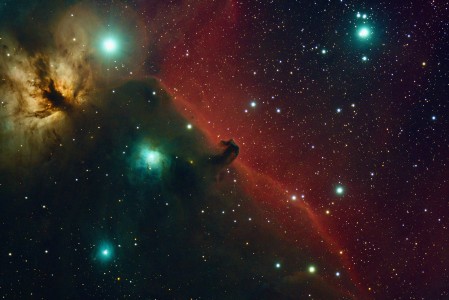
When I take a family photo when the picture is developed I don't expect to just see the whites of their eyes I expect: color, background, three dimensionalty etc. When people look at astrophotos they see these elements, get excited about the hobby, run out buy a telescope only to be disappointed I was just amazed with this level of fine equipment and the results. I hope to go out again with the Starmaster setup again in the future in a really dark favorable location, but unless I experience some wows I think my $5k will be going elsewhere.
I purposely omitted the location because I didn't discuss my comments with the people present last night - I don't want to hurt anyone and if any of the individuals present last night reads this I intend no disrespect nor is my intention to disparage the equipment used or amateur astronomy. I would appreciate any positive comments or insights that any one might have as I have not closed the door on pursuing astronomy as a hobby. Thankyou in advance for comments!

