Image of the day

Captured by
Byron Davies

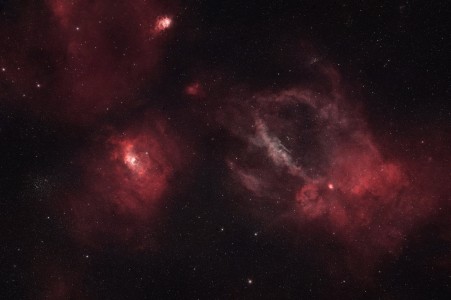
M-52, NGC-7635, SH2-157, SH2-158, SH2-159, SH2-161, NGC-7510

My Account

New to Astromart?

Register an account...

Need Help?

Washed out views of Jupiter

Started by WedgieJaxn, 05/19/2006 03:32AM
Posted 05/19/2006 03:32AM Opening Post
I had an interesting experience tonight looking at Jupiter through my 6" reflector. The sky was pretty clear between clouds but the seeing didn't allow for more than 150x magnification in my location. My views of Jupiter have always looked pretty washed out without much detail in what was visible. Then a band of clouds moved over the planet and suddenly I could see a lot more color and features.

I'm pretty new to astronomy so I was really surprised when this happened. Should I be using filters? I've tried #15 yellow and a moon filter on Jupiter before but it didn't improve contrast at all. I also have #56 green, #21 orange, #23A light red, and #80A blue but I hesitate to use them since I feel like they reduce too much light transmission for my small scope. Any suggestions to improve my views are greatly appreciated!
Ken
Posted 05/19/2006 12:45PM #1
Ken:

I am glad you got some great views of Jupiter, that is what planetary observers die for, those few moments when everything is perfect.

Regarding the use of filters: One key to getting good views is experimentation, don't overthink things and try to decide what will work and what won't. Rather just try everything you can think of and see what does work...

A 6 inch scope has plenty of light transmission for Jupiter...

Jon
Posted 05/19/2006 08:46PM #2
Hi Ken, I have experienced this also. I think it has more to do with the air being laminar than it does with the light transmission. I do not find filters very useful for general planetary observation, but I do like to use them when looking for a specific feature, the dust storm last fall on mars is a good example.

You did not give alot of detail about your viewing conditions so excuse me if you are beyond these suggestions. When I view planets, I like to park my high top van next to the scope to block any stray light that might distract me. I view from my sideyard in an urban area, so I have to deal with street lights and the lights from neighbors. You might also try using a towel over your head. Second I live in the midwest where we do not get great viewing conditions very often. I like to use the clearsky clock to predict viewing conditions, because it has eliminated the times that I have been disappointed that I setup my equipment. I don't get to view as often using the clock, and it has been a very bad spring with only 4 or 5 good days in the last 60 - 70 but they all have been good nights.

When conditions are good I like to increase the power gradually starting at about 10x per inch of aperature and climbing as high as I can without a lot of contrast lost. Then I slowly go back down a step to find the sweet spot for the night. Usually for my equipment and location this is about 25-30x per inch. Two nights in the last 3 years the CSC has predicted excellent conditions and I was able to get 40x per inch (nights to remember).

Good luck Dave
Posted 05/19/2006 09:52PM | Edited 05/19/2006 09:55PM #3
Ken Seino said:
Then a band of clouds moved over the planet and suddenly I could see a lot more color and features.
Ken

I have sometimes seen this effect myself. I think
it is due to the image being too bright for
the eye at moderate to low powers. These powers
are low enough that seeing is not very important
and the should look very sharp -- but on Jupiter
it is too bright -- its saturates the retina and
closes down the iris causing problems coupling the
signal into the eye. As you say, the cloud
acts as a filter.

Next time when the seeing is bad, try lowering
the power and using some ND filter. Experiment.
Maybe the moon filter is too dark; try some others.
I sometimes get sharp images with #56 but don't like
the green color. Need some middle value ND filter.
