

Somewhat new to the hobby. Definately new to collimation in general. I have two dobs (8" and 10") both odysseys and I use a catseye collimator on them. It works really well. I also have a Celestron SPC-8. I have been dabbling in astrophotography and think that it needs to be collimated. To my knowledge it has never been collimated, and I "liberated" it from my dad who wasn't using it and who was the original owner.
Living in the seattle area (under the flightpath of the airport no less) my seeing for lack of a better word sucks. So I built an artificial star using a 62.5micron Fiber Optic network cable.
Now I kind of understand how the Dawes limit works but I am having trouble applying it to using an artificial star.
I get the feeling that about 50 meters would be adequate but I don't think this is quite right either. Can someone tell me how far away I should place the artificial star? How much does it really matter?
Thanks in advance.
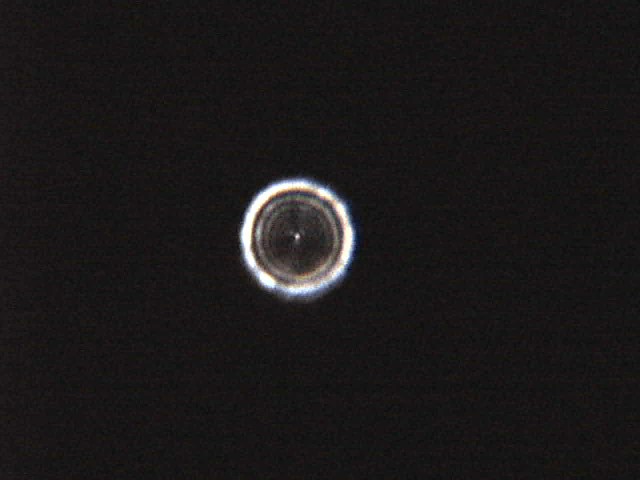
Addendum - heres a pic after I made some very very minor adjustments.
Living in the seattle area (under the flightpath of the airport no less) my seeing for lack of a better word sucks. So I built an artificial star using a 62.5micron Fiber Optic network cable.
Now I kind of understand how the Dawes limit works but I am having trouble applying it to using an artificial star.
I get the feeling that about 50 meters would be adequate but I don't think this is quite right either. Can someone tell me how far away I should place the artificial star? How much does it really matter?
Thanks in advance.
Addendum - heres a pic after I made some very very minor adjustments.
Attached Image:
I will eat your bacon!


