Image of the day

Captured by
GERALD KREITZBURG

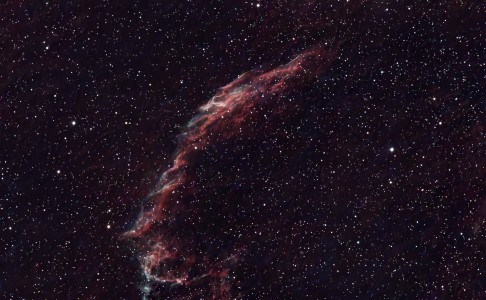
Eastern Veil Nebula

My Account

New to Astromart?

Register an account...

Need Help?

Secondary Mirror Sizes

Started by matt7591, 03/26/2004 07:13PM
Posted 03/26/2004 07:13PM Opening Post
Greets,

Are there any references online that give the science or what is the rationale behind selecting a secondary mirror on a Newt? I've read that a smaller mirror is better for planets and larger better for deep sky. I imagine there's a sliding scale where at some point the secondary creates too large a CO. What would the ideal range be for say a 10"?

Thanks,
Matt

Posted 03/26/2004 07:57PM #1
Gary Seronik has a good article in the August 2000 Sky and Telescope. You can download it for $3. Basically, no more than 20% for planetary use (2 inches for your scope). Larger secondaries give greater illumination along the edge of the view. Larger secondaries don't rely on the quality of the edge of the secondary where there may be turned edges. Smaller secondaries lose illumination on the edges, but improve diffraction effects of the central obstruction which is good for planetary. For general purpose I would say about 20-24% depending on the sizes available. Sky and Telescope has a free download program "sec" to show the illumination vs secondary size for various scope design inputs.
Posted 03/26/2004 08:23PM #2
Get the program Newt 2.0:
http://home.att.net/~dale.keller/atm/newtonians/newtsoft/newtsoft.htm

You enter the mirror diameter, focal ratio, tube diameter, focuser size, focuser height, and secondary size and it will calculate the field illumination for you (with a nice graphic display). This will give you a good feel for the trade-offs between secondary sizes. Essentially, the larger the secondary the better illuminated the edge of the field is (good for wide field use), but the smaller the secondary the less diffraction (good for contrast, especially for planets).

A good general rule for visual use is to aim for 75% illumination at the edge of the field of the lowest power eyepiece you plan to use a lot (75% is where vignetting generally becomes visually noticeable). Of course, you can go smaller if you want to concentrate on planetary use, or much higher if you plan on doing photography (in which case you want 100% illumination over the field you are photographing to avoid vignetting).

Hope this helps,

Jarad