Image of the day

Captured by
Erwin Forbragd

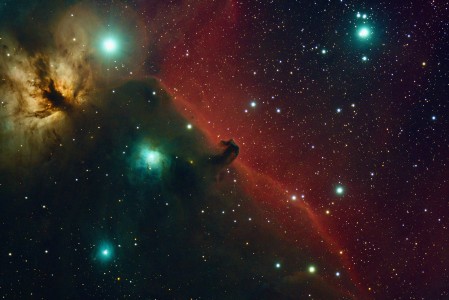
Horsehead Nebula

My Account

New to Astromart?

Register an account...

Need Help?

small achromats and fringe/violet filters

Started by slug381, 11/26/2005 10:38PM
Posted 11/26/2005 10:38PM Opening Post
Apparently such a filter is a must-have accessory for achromat owners.
I have seen a few different reviews online, but am looking for more opinions. Of course it could be argued that they are a general accessory, but achromat owners have a particular use for them.

What fringe/violet filters have you seen yourself, and which one did you prefer? Also I am curious what colors some of these turn the view, the popular Lumicon I have read results in a slight-yellowing but many of the other filters appear different colors in different angles of lighting.
?
Posted 11/26/2005 11:27PM #1
Hi Doug,

I had a very popular VR filter awhile back and I didn't care for it. It shifted the color too much and cut down on light throughput. I found that stopping the aperture of that particular scope from 150mm f8 to 114mm f10.5 was far more effective for me. I then had much less CA and a more natural view not to mention the cost savings. I only used the aperture mask for solar system objects but it defeated the purpose of having a 6" scope so I eventually sold both the filter and the OTA.

Clear Skies,

Steve
Posted 11/27/2005 12:12AM #2
I have the Baader contrast booster and was very disappointed with it. To be fair though I used it in a Stellarvue Nighthawk which is already well corrected. The image I got was just yellow with no added contrast. Maybe it works better in achromats that aren't as well corrected.
Posted 11/27/2005 04:37PM | Edited 11/27/2005 04:56PM #3
I like the Baader Contrast Booster for planetary observing. It noticably improves contrast on Mars and Jupiter and seems to help control the brightness somewhat. I am using a C-102 mostly, but I also frequently put it on my 127 Mak for the contrast and glare cutting effect.
I had used the Sirius MV-1 and the Orion Minus Violet, and they were helpful, but the Baader does a better job with planetary detail, and it appears to be better quality glass, I notice that it works well on the front of my diagonal, but the others cause a slight but perceptable softening of the image if used there (all 1 1/4", BTW).
I have a 2" Baader Fringe Killer, and it is also excellent quality. I usually use it on my travel scope, a 100f6 Orion. Seeing here in New England is not great, and I appreciate the way it seems to help me split close doubles by tightening up the star images that last little bit.
Color shifts tend to be a little to the yellow, varying between filters, but that doesn't bother me. I get a noticable color change when I go from a reflector to a refractor, or change from an Ultrascopic to an Orthoscopic, not to mention changes in color from night to night as sky conditions change. I have seen Saturn, for example, a cold ivory-white on one night and a rich buttery-yellow another with the identical equipment (a Newt and an ortho, about as clean an image as you get) and no filter but the atmosphere.
Charlie
Posted 11/30/2005 01:11AM #4
I have another question: are all these anti-fringe filters a single color all the way across? Most of the images I have seen appear to be, which would be uneccesary.

If the fringing is greatest near the objective's edge then the edge should be yellow, and then to color-balance the whole image, the center (about 70% of the radius) should transition to violet (red+blue). Because of the differences in eyepieces, this window would have to be very-near to the objective to work properly, a normal focuser filter would not work.

I am looking for any place that could make such a filter, so far I can't find anything similar in existence. I have tried making a objective filter with Lee gels and the color appears "fairly normal", neither the yellow or violet dominates--but the reflective and uneven surfaces of the film introduce so much reflections it's difficult to say if it is muchy of an improvement. Also there is no transition between the two colors, and a bit of overlap--which is plainly visible at the eyepiece.
~~~~~
