Image of the day

Captured by
Michael Scherman

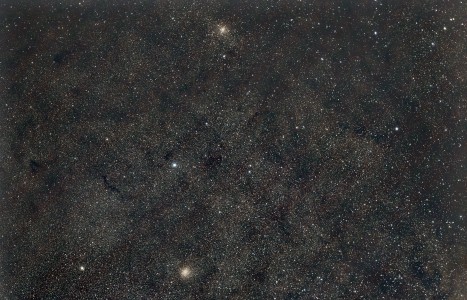
Dual Clusters near Antares

My Account

New to Astromart?

Register an account...

Need Help?

Apo - D?

Started by JJM, 08/31/2011 04:29AM
Posted 08/31/2011 04:29AM | Edited 08/31/2011 04:37AM Opening Post
A buzz on the other big astro forum centers around a new apo refractor design from Aries using some advanced type of diffractive/holographic element. The two element objective uses common glasses (no ED) and achieves f/6.5 with an aperture of 8". No photos of the lens itself, but there is a picture that is claimed to be the prototype apo-D OTA.

Jim McSheehy
Posted 08/31/2011 03:22PM #1
The major cost in refractor or any other telescope system is the labor going into the grinding and polishing of the optical elements. While ED glass is not cheap, it is not the most expensive part of the production process.

One can make a very cheap achromat lens using two common glass elements by CNC grinding and fast machine polishing of the 4 surfaces. This does not get you a precision result. If you want 1/10 wave accuracy of the central green wavelength you really need an accomplished optician to do this step, which results in high cost. Since achromats don't have very good color correction to begin with, one does not need to tweek the radii to an exacting level according to each melt batch, so an achro can be made more cheaply overall.

However, when you are trying to achieve the highest level of spherical and color correction, regardless of the use of ED or diffraction elements, the labor of making it to a high level of performance is the dominant cost driver, not the glass cost.

I can see one advantage in this scheme: you can make bigger lenses above 10 inches with available glass. ED glass is not readily available in those sizes.
However, there is a point of no return in lenses that large. Years ago I brought a 10" Mak-Cass with 23% central obstruction to the Winter Star Party, set up right next to a massive 10" Triplet Apo from Lzos, Russia. Believe me, the Mak-Cass was sharper, more contrasty and had less coloration than the Triplet. The acid test was separating Sirius B from the brilliant light of Sirius, and the Mak-Cass did that far better than its lensed cousin. At the time, Sirus B was a mere 4 arc seconds from the primary. Plus the Mak-Cass weighed a fraction of the refractor and fit easily into the trunk of my compact car.

Rolando
Posted 08/31/2011 06:42PM #2
Interesting. Suppose you are talking about a real world implementation of something akin to what is described here?

http://www.dtic.mil/cgi-bin/GetTRDoc?AD=ADA318420&Location=U2&doc=GetTRDoc.pdf

Posted 09/09/2011 07:08PM #3
Not much buzz on this lately. :S

Darian R.
