
I set up my GT 130 the other night and noticed that stars were flared in an odd shape that I've never seen, elongated roughly like the bug nebula with the flaring on one axis on both sides of the stars.
My first impulse was to panic but remembering other situations where panic was not productive I decided to ignore the problem. First off, I was seeing it in a low power eyepiece, and my own astigmatism is an issue. Second, I had just set up, and I thought well, thermal issues do their own thing, and then they go away. Third, after years with doublets, this is my first triplet apo, and my first oil-spaced optic. So I can't be sure how cranky it can get, although I have had the 130 out many times and never seen this before.
It *has* been exceptionally warm here in upstate NY. I can't rule out that the scope was warmer than ambient, though it was shirt-sleeve weather.
Anyhow I just concentrated on building the model for my computer and then started looking at stuff, and forgot to worry about anything. I figured if the effect persisted I would send it back to AP.
At some point the problem went away. I had a gorgeous view of 30 & 31 Cygni with STFA 50, which makes for a blue/gold double every bit as good as Albireo, and a white star thrown in to the mix. There was no flaring by the time I got to it.
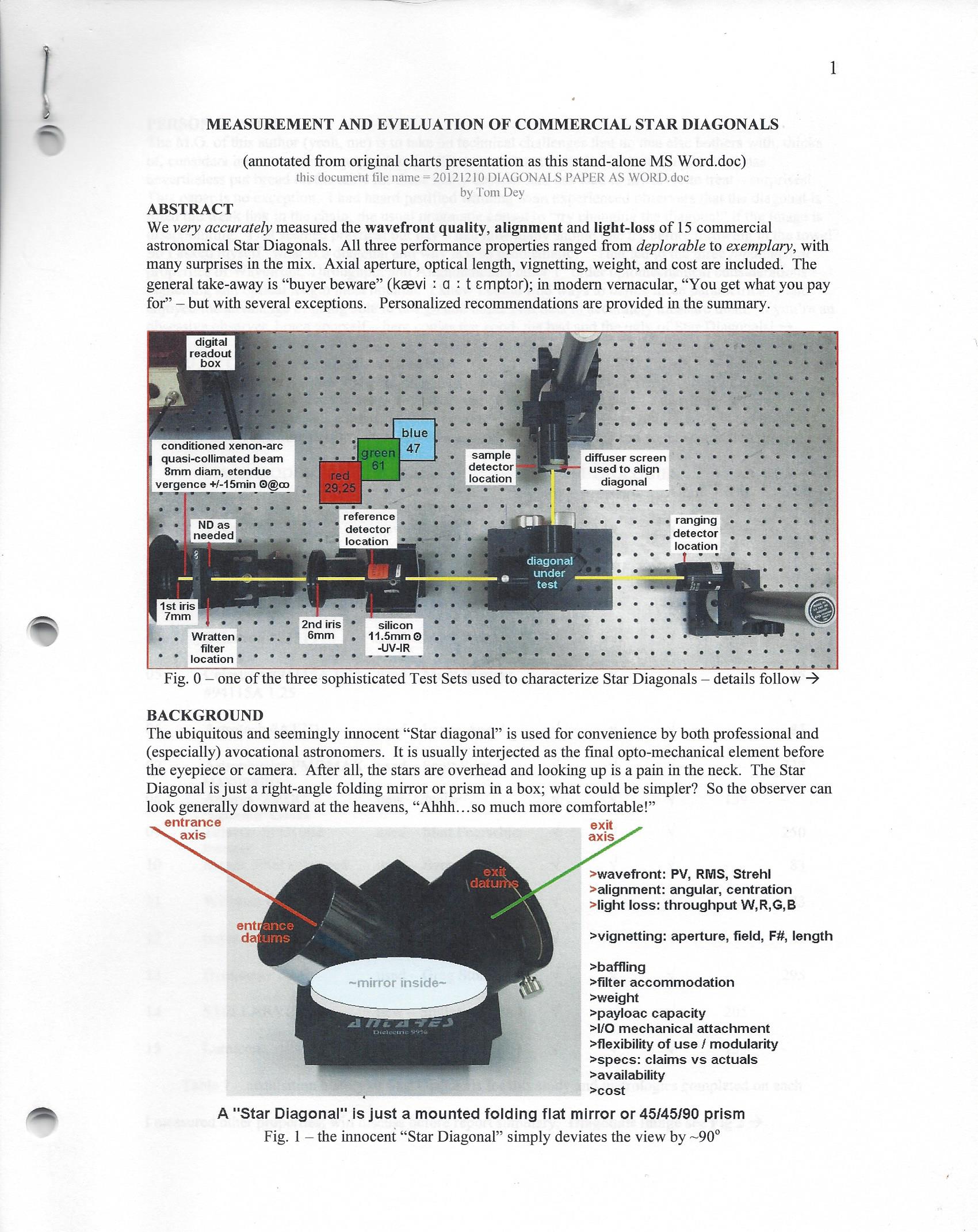
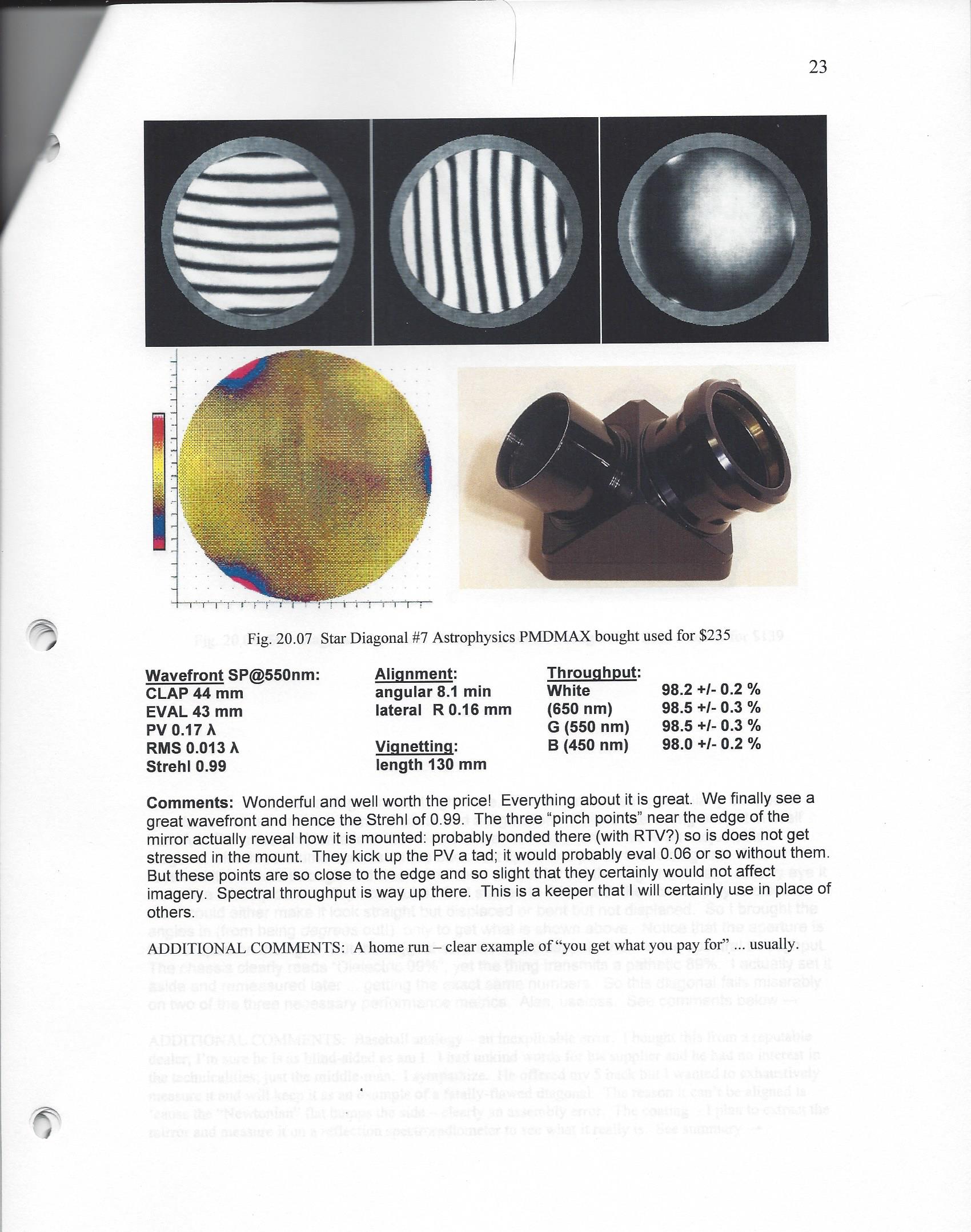
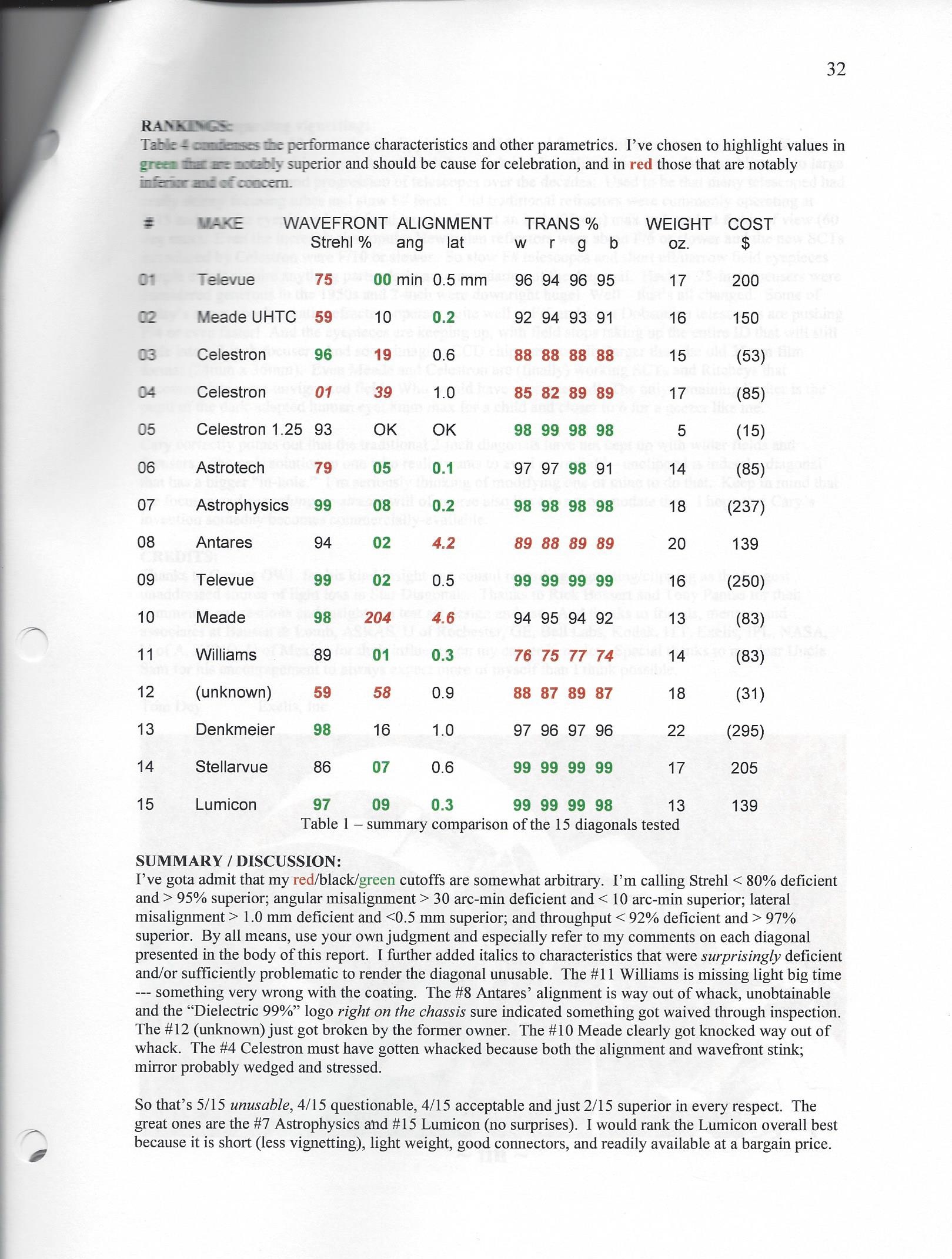
At some point I noticed that there was some play in the AP Maxbright diagonal, apparently when I last cleaned it I had not tightened up the back screws all the way so the back plate was a little loose. In optical terms a 32nd of an inch of play is humongo so I was wondering whether my issue might have been the diagonal and the angle at which I was viewing when I noticed the problem. I noticed the diagonal issue about two hours into a six hour night, got out the allen wrenches and fixed it.
So I'm trying to figure out which was the most *likely* source of the flaring effect, the triplet and its cooling, or varying angles on an improperly secured diagonal. It seems kind of stupid not to have all four screws snugged but I think the issue is that I have the habit of cross tightening screws (putting them in loosely at first and then snugging when all are in) and I may have gotten distracted after they were all in and not finished the job. In the beginning of the evening I go all sky (and lower to the horizon) for building a pointing model whereas in observing I tend to stay higher for optimum transparency and seeing. So I might have noticed a loose diagonal back plate effect when model building (maximum likelihood of diagonal mirror shift) and then not seen it as I started observing higher (the diagonal settling straight back), and then the problem vanished because I tightened the screws. (I'm not keen on trying to duplicate the flaring effect by loosening the Maxbright back plate again and testing the hypothesis)
OR, very hot tube....
Greg N
"Scope will get you through times of no money better than money will get you through times of no scope." --Freewheelin' Franklin