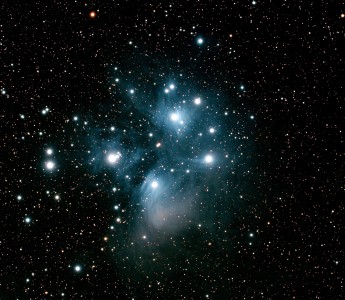
Image of the day

Captured by
Philip Imbrogno

Pleiades M 45 with the Pleiades 68

My Account

New to Astromart?

Register an account...

Need Help?

advice on viewing through a 60mm refractor

Started by Toseeka, 03/06/2008 02:56AM
Posted 03/06/2008 02:56AM Opening Post
I recently purchased a 60mm f/11.7 achromat. While I consider a "small" refractor to be anything between and including 60mm to 90mm, there seems to be a great difference between the abilities of these instruments. I have refractors of 80mm and 90mm and I'm reasonably adept at this point viewing through both of them. I know what to expect when I look through these scopes and they do provide some excellent views.
I did have a 60mm(?) scope quite some years ago. However, I can't very well remember the experience using it. I'd like to know from some of you who might be experienced with 60mm scopes just what should be expected of an instrument of this size. When I first looked through it earlier, I couldn't believe how bad things looked, very dim. I can't tell if the scope is bad or I'm just expecting too much. I know this is just probably my own lack of experience. Presently, I have use of only one 6mm ortho. This gives a power of 117x, close to the limit of the aperture. What powers should be best used with such a scope? Diffraction rings in this scope, at this power, are really large! Is there a place to talk to folks about the smallest of the small? I'd like to know more about the subject before purchasing more eyepieces, etc., for this little scope.
Thanks,
Bruce
Posted 03/06/2008 03:14AM | Edited 03/06/2008 04:12AM #1
Hi,

There is a 124mm and less telescope forum for scopes like that. They can help you out there for sure.

John
Posted 03/08/2008 10:20PM #2
Hi folks,
Thanks for all the great advice/suggestions regarding this little scope, and accessories. I spent some time yesterday trying to look at things more closely. I've attempted some corrections, I think so far, successfully. It's been interesting.
Every tinme I viewed with homemade "Cheshire" through the focuser drawtube, I kept seeing two large white circles overlapping. Also, the focuser seemed too loose, sloppy, so I approached focuser first. I adjusted top and bottom screws and got a nice, pretty smooth, sufficiently tight movement with focuser. Looking through lens, down the tube, the focuser seemed straight. That's good. So, I was successful fixing focuser. However, this still didn't help the "Cheshire" test much at all. This is the point where I wished this scope had a collimation cell. It doesn't. I marked the outside of the cell at the point where the two overlapping circles seem to point. I unscrewed the lens cell and added, at the marked point, a VERY small, rectangular piece of black fabric electrical tape along the inside edge where top of white tube screws into the inside of lens cell. This = basic collimation. It seemed to work quite well! One large white circle with a black dot in center.
Earlier, I mentioned that the star test appeared as an (horizontal) oval. Well, believe it or not, I found that the prism diagonal that came with scope is a/the problem. When I looked through lens end, down the scope with diagonal in place, I saw a flat, horizontal "football" shape. When I removed the diagonal, I saw a perfect round light circle!
I checked looking at some street signs through an open window. The resolution seems quite good. Consider that this was being done @ 117x w/ 6mm ortho w/ a 60mm on a rainy, dark day. In doing this, I used no diagonal, just straight thru viewing. So, I also learned that I need to get a new diagonal or fix this one if possible.
It looks like it's clearing now and it might be a fairly clear night. I'll try a star test with the 6mm ep, without the diagonal. I'm hoping (I expect) to see, at least, a round ring pattern. As for the undercorrection, I need to experiment further. If some of these problems are related, maybe things will appear differently or clear up somewhat, who knows. Now, if I still see a flattened circle, I will be forced to do the unmentionable!
Bruce

Posted 03/09/2008 01:30AM #3
I'm not partial to small apertures but here's my thought. One night I had the c14 out with the 102mm mounted on it. We were looking at M53 and NGC 5053. You can't do them in the same field of view with the c14 but you can with the refractor. We gradually reduced the magnification on 5053 on both instruments, till we were down to 98x (the minimum) in the c14 and 17x in the 102 mm. Then we went over to my buddy Pete's Dob on which he had one of these Stellarvue 50mm finders that use an eyepiece. By going from the C14, to the 102mm, to the 50mm, you got quite a lesson on magnification and field of view.

But the amazing thing was, you could see NGC 5053 (globular, not known as very bright)!! Now, if you had been star hopping using the 50mm I don't think you would have said, "Oh there it is, I see it in my finder." But by moving from larger aperture to smaller you could unmistakably follow the glob's progress from a glob to a barely visible dot in a huge field of view.

So my thought is, that you can get more out of a small aperture when it is paired with a larger aperture, and that your 60mm may surprise you the most when it is used in conjunction with a larger instrument.

regards
Greg N

"Scope will get you through times of no money better than money will get you through times of no scope." --Freewheelin' Franklin
Posted 03/09/2008 02:16AM | Edited 03/09/2008 02:21AM #4
The conventional wisdom is to get a hybrid diagonal that converts .965-inch format to 1.25-inch format. Then you can get Orion Explorer IIs, Plossls, or any other eyepiece that you can re-use with other telescopes. However, I kind of like having a bunch of .965-inch eyepieces in a very small case. The Surplus Shed has a 13mm .965-inch "quality" eyepiece that does pretty well. I'm pretty sure it's the eyepiece off of a Tasco 8x21mm binoculars attached to their .965-inch barrel. Nevertheless, it works well.

You can also mate other binocular eyepieces to those barrels and have pretty good luck. You just need cheap or broken donor binoculars. (Which are easy to come buy if you're really clumsy and take apart things you should really leave together! grin )

You can also make your life much easier by getting a red dot sight to replace or supplement your finder. A Daisy BB gun sight should run you about $9.

[SIZE="Small"]------------
I have several telescopes, but none are semi-APO, APO, or in anyway valuable.
[/SIZE]
