Image of the day

Captured by
Gary Taylor

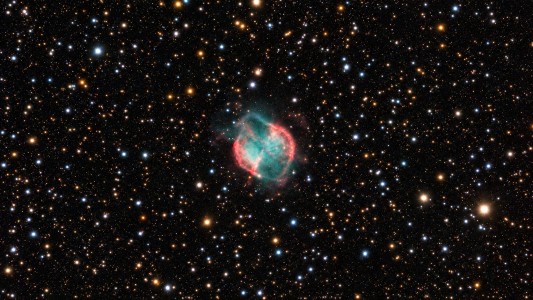
M27 - Dumbell Nebula

My Account

New to Astromart?

Register an account...

Need Help?

need help with calculations

Started by opticsguy, 05/28/2008 10:53PM
Posted 05/28/2008 10:53PM Opening Post
In my efforts to determine tube length and location of focuser for the new telscope, I set up temporary "bench" to measure eyepiece locations at infinity. Estimated focal length = 133 inches. I could see an image in a 55 plossle, a 41 panoptic and a 32 Erfle. Shorter focal lengths were impossible to see outdoors. So how do I determine where shorter fl eyepieces will land? How does a barlow affect eyepiece position?
Measurements to end of barrel; 56 plossel, 135 3/8", 41 Panoptic, 134 3/8 , 32 panoptic 134 3/4. Of course these measurements are reference only. I have several more eyepices, 20 Nagler down to 4.8. Thanks for any help.

Posted 05/28/2008 11:58PM #1
You know the focal length of the telescope is not changing. That is a fixed thing completely dependent on the shape of the primary.

The real field stop of the eyepiece will always need to be at exactly the same point for any given primary. But where that "real field stop" is depends on the design of the eyepiece. It can even be past the first piece of glass in some designs. In other words, it does not matter where the "end of the barrel" is, but rather the real field stop--which point can be hard to determine.

Luckily, you do not need to figure it out exactly if you just want to figure out where you place the focuser.

All you need to do is establish a standard, and that standard is your shortest focusing eyepiece when the focuser is racked almost all the way in.

You can determine where to place the focuser by basing the decision on the shortest focusing eyepeice. Go to another scope. Any functioning scope that can hold all your eyepieces and bring them to focus will work for a start. Try each of your eyepieces, and find the one that focuses closest, and the one that focuses farthest. The difference in focuser travel between the closest and the farthest is what you want in focuser travel on your new focuser. (Note that closest and farthest are not related directly to the focal length of the eyepiece but is a mechanical consideration dependent on the physical (not optical) design of the eyepiece.)

Then put your shortest eyepiece in your optical bench and see where it focuses. You want your focuser mounted such that the closest focusing, when almost fully racked in focuses at infinity.

It can get more complicated----for instance, simply collimating a newtonian can change the distance from the focuser to the mirror. And a Barlow or a Para-Corr can change your in-focus and outfocus demands. So, it is best to have some extra travel on either end.


Alex