Image of the day

Captured by
Michael Scherman

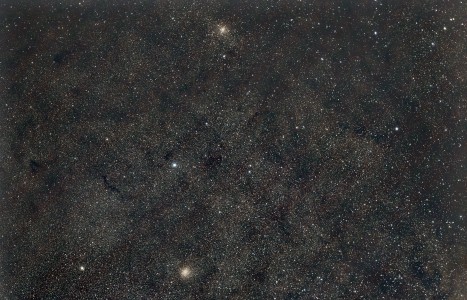
Dual Clusters near Antares

My Account

New to Astromart?

Register an account...

Need Help?

Masuyama-Type EP Background

Started by Sailcat, 08/01/2004 01:27AM
Posted 08/01/2004 01:27AM Opening Post
I, and others, have been searching for background on this eyepiece type. Its origins, who manufactures them, its characteristics, the differences among brands...anything! There are several examples of this popular eyepiece: for example, Tak LE, Ultima, Ultrascopic, Antares Elite, Eudioscopic, and others, including Masuyama, of course. For all its popularity, however, this design doesn't even have a name! In fact, information is so scarce, it doesn't even have parentage...that is, there is no firm claim to the company or individual which designed it. Do any of you experts out there have any info to share? 'Fess up!

Best wishes,

Walter

Walter Locke
"The Fearless Spectator"

There are 10^11 stars in the galaxy. That used to be a huge number. But it's only a hundred billion. It's less than the national deficit! We used to call them astronomical numbers. Now we should call them economical numbers.
Richard Feynman
US educator & physicist (1918 - 1988)



Posted 08/04/2004 07:31PM | Edited 08/04/2004 07:32PM #1
I'm no expert Walter, but I do know that the Masuyama is a pretty basic "modified plossl" design. It consists of a standard four element plossl with a fifth element added to flatten the field and increase edge sharpness. The 5mm and 3.8mm models add two additional elements as a barlow to achieve higher powers.
Posted 08/09/2004 01:56PM #2
This was sent to me by someone in Japan who dabbles in astronomy. His syntax is slightly off, but the message is clear.

Walter

>Walter,
>
>I wonder if you already know the following things, but I send this
>mail.
>
>Masuyama1.jpg is from ATM ad in Temmon Guide August 1986 issue.
>------------------------------------------------------------------------------
>--------
>Masuyama-type ATM Eyepieces, Wide25mm and Wide32mm, Now on Sale
>
>The Masuyama eyepieces released through ATM are completely newly-designed
>and made from high refractive index element(s). So, their radius of
>curvature
>is long, they have long eye-relieves and give sharp imaging all over
>the field
>of view. The size is 36.4mm threads or 1 1/4".
>
>What is the Masuyama?
>Now-dead Kazuharu Masuyama worked in Nippon Kohgaku (Nikon) and
>designed a lot of Binoculars there. Then, he set up Oh-i Kohki in 1951.
>Oh-i Kohki has been designed telescope eyepieces too for the past 20
>years.
>Oh-i Kohki is a groundbreaker as an upmarket eyepiece designer and
>manufacturer.The design of the eyepieces is uncomplicated, but therefore
>it is difficult to design new one. ATM provides the Masuyama eyepieces
>made by
>Mr. Masuyama as new generation eyepieces.
>
>(Oh-i Kohki President Ichiro Masuyama, Designer Shinji Masuyama)
>
>Who do you think designed the Masuyama eyepieces ?
>I don't know, because this ad don't say Kazuharu Masuyama
>designed the Masuyama eyepieces but just says "telescope eyepieces"
>and the Masuyama eyepieces made by "Mr." Masuyama. (not "Kazuharu"
>Masuyama.)
>
>I wonder if this ad intentionally don't say who designed the Masuyama.
>(For example, The Masuyama eyepieces was designed by Shinji Masuyama
>who was the optical designer in Oh-i Kohki at that time. But he is not
>famous. And Kazuharu Masuyama who was the former designer in Oh-i Kohki
>was a famous optical designer. So ATM used his name for sales. )
>
>Anyway, what I understand from this ad is the Masuyama eyepieces were
>manufacutured by Oh-i Kohki and designed by Mr. Masuyama.
>
>By the way, masuyama2.jpg and masuyama3.jpg are from an article in Temmon
>Guide November 1987 issue.
>
>Best wishes,

Walter Locke
"The Fearless Spectator"

There are 10^11 stars in the galaxy. That used to be a huge number. But it's only a hundred billion. It's less than the national deficit! We used to call them astronomical numbers. Now we should call them economical numbers.
Richard Feynman
US educator & physicist (1918 - 1988)