Image of the day

Captured by
Byron Davies

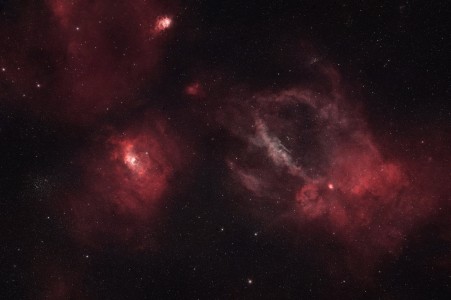
M-52, NGC-7635, SH2-157, SH2-158, SH2-159, SH2-161, NGC-7510

My Account

New to Astromart?

Register an account...

Need Help?

Lower vs Higher power EPs

Started by stringer, 08/23/2008 06:09PM
Posted 08/23/2008 06:09PM Opening Post
I'm a relative novice and recently purchased an Orion 10" Dob. It shipped with a 10mm and 25mm plossl. In an effort to modestly boost my EP line with two higher quality EPs ( Pentax and Televues are too hefty for my wallet), I first purchased a quality barlow (Antares UB2S 2x), and a 7mm TO/TMB for planetary viewing.

I now want an EP for DSOs. And herein lies my ignorance. I've read in various forums that having a low power EP should be in everyone's arsenal. I have deduced that that means an EP from 24-30mm and higher, more or less. Now, if a wider AFOV is desired for DSO viewing, all else being equal, wouldn't it be "better" to have a moderate power EP rather than a higher power EP? For instance, I've been looking closely at the Baader Hyperion line, which boast a 68 degree AFOV across the line (I think the 21mm is somewhat less for whatever reason). But why wouldn't I want to purchase, say, the 17mm rather than the 24mm? I'd get the higher magnification but the same generous AFOV.

I'm not as interested in opinions about Baader or any other EP maker as I am concering the pros and cons of eyepeices for deep space viewing. Any thoughts from the experienced would be appreciated. walt
Posted 08/23/2008 06:36PM #1
My most used dso eyepieces are a Nagler 17 and pentax 10.5, giving me giving me about 100x and 160X on my 14", at a 3.6 mm and a 2.2 mm exit pupil. On my 8" they give me about 70x and 115x, with 2.8 and 1.8 mm exit pupils.Those magnifications and exit pupils work well for my purposes. I generally prefer to use the eyepiece that gives me the highest magnification if the field of view is the same....better contrast, darker sky background, more detail. Helpful?
Posted 08/23/2008 08:09PM #2
Walt,
There are sort of two issues in your question--Larry addressed one of them. That is, a good ep for dso detail is one that gives an exit pupil somewhere between, say, 2 and 3 mm--although like Larry I really like my 17 nagler, which gives a 3.4 mm pupil in my f/5 reflector. At your f/4.7 ratio, if you're looking at hyperions/stratus, the 13mm length might be the first one you want, and a 17mm down the road.

But the other issue is having an eyepiece that gives you the maximum possible real field consistent with a usable exit pupil, which, depending on your age, might be anywhere from 5 to 7 mm. This is important for finding things, as well as just enjoying wide views of the galaxy--you have no idea how constricted your field of view is until you look through something wider (ok, that's a tautology, but what the heck). For example, on my f/5 I use a 27pan (someday to be a 26 nagler), because I can't go too much above 5mm for an exit pupil. That gives me almost 1 degree actual field. So this is where having the widest AFOV is important, because it increases your true FOV without increasing the exit pupil. (But that's expensive.) At f/4.7, a 30mm ep yields a pretty big pupil--something like a 26mm might be better, for example, the orion 26mm Q70 might be a good bargain, with a 5.5mm pupil, and over 1.5 degrees of field. But I have no idea how well corrected they are at that focal ratio.
--george

George Golitzin
Posted 08/23/2008 09:13PM #3
Walt,

Hello. I also have a 10" Orion scope. There are many ways to cut things, but speaking "generically" here's what I have found are my preferences over the years with this scope:

For brighter nebula, like M42, I enjoy an eyepiece which will give me about 2.5-3.0 mm exit pupils.

For brighter, but very small nebula, like M57, as well as brighter globulars, a 1.25-1.50mm exit pupil I enjoy the most.

For planets, basically 0.7-1.7mm is where I keep it.

For general star field observing I prefer about a 4.5mm exit pupil as this seems to make the star points the prettiest in the scope.

For widest TFOV viewing, kind of dependes on you observing loacation as what will work best. If the skies are moderately light polluted, say limiting magnitude of 3.5, then I don't like going much beyond a 5mm exit pupil, unless I'm trying to frame something large, like Pleiades, then whatever gives me the max of 6-7mm exit pupil I will use. Of course, if at a dark site, then 6-7mm exit pupils will provide pretty views much easier.

So all the above speaks to the brightness of the image, and contrast mostly. When you throw in what kinds of TFOV you want to capture with the above, then that will lead you to the AFOV eyepiece which will work best. Generally speaking, I prefer an eyepiece which will give me a little more than a full degree TFOV for my scanning...plus it frames things like the Perseus Double and the Sword of Orion , and Pleiades somewhat very nicely.

Next I seem to prefer the .7 deg TFOV range for framing many many objects. Don't know why, just seems to look good for many things. After this, .5 deg and smaller for the planetary and high power realm, with .15-.30 deg TFOV being where I'm usually at for things like Globulars in the 0.5-1.25mm exit pupil realm.

So that basically what my eye likes with this scope...divorced of any eyepiece branding preferences smile

-Bill
Posted 08/23/2008 10:19PM #4
I'm a relative novice too with a 10" Orion dob. I paid up for the Televues. I have the 35mm and 24mm Pans and the 13mm and 9mm Naglers. My most used eyepieces on DSOs by far are the 13mm and 9mm. They yield about 93x and 133x without the barlow. With the 2x barlow I get 184 and 266 which are also useful magnifications.

The 24mm Pan gets used a lot as a finder eyepiece. It's also good on larger objects like the pleiades or the double cluster.

I regard the 35mm Pan as more of a special purpose eyepiece. It washes out in my light pollution and is quite unspectacular. However, the plan is to use if from a dark site on objects such as galaxies and diffuse nebula where it should really excel.

In summary I suggest two work-horse eyepieces that will give you useful magnifications with your barlow. One in the 12-14mm range and one in the 10-7 range. I've heard the Hyperions are good for the price, but I haven't tried them.
Posted 08/23/2008 10:19PM | Edited 08/23/2008 10:22PM #5
walt durling said:

I'm a relative novice and recently purchased an Orion 10" Dob. It shipped with a 10mm and 25mm plossl. In an effort to modestly boost my EP line with two higher quality EPs ( Pentax and Televues are too hefty for my wallet), I first purchased a quality barlow (Antares UB2S 2x), and a 7mm TO/TMB for planetary viewing.

I now want an EP for DSOs. And herein lies my ignorance. I've read in various forums that having a low power EP should be in everyone's arsenal. I have deduced that that means an EP from 24-30mm and higher, more or less. Now, if a wider AFOV is desired for DSO viewing, all else being equal, wouldn't it be "better" to have a moderate power EP rather than a higher power EP? For instance, I've been looking closely at the Baader Hyperion line, which boast a 68 degree AFOV across the line (I think the 21mm is somewhat less for whatever reason). But why wouldn't I want to purchase, say, the 17mm rather than the 24mm? I'd get the higher magnification but the same generous AFOV.

I'm not as interested in opinions about Baader or any other EP maker as I am concering the pros and cons of eyepeices for deep space viewing. Any thoughts from the experienced would be appreciated. walt


Intelliscope or regular?

A powered finder scope, like a 9x50 will make it worlds easier to find stuff, if you do not have electronic assistance. See our sponsor Anancortes.

Detailed charting, at the very least Sky Atlas 2000, plots enough field stars too make it possible to BE on target with the powered finder.

Next consider, eyeglasses on or off during viewing? This narrows the field on ep options somewhat. If you don't need 20mm eyerelief on your ep's, then you really don't have to pay for it.

Consider a used 15mm plossl. Very modest priced and reasonably well corrected ep for your focal ratio. It's not wide field, but the vast majority of deep sky targets are small.

Shy away from the really budget 3, 4 and 5 element WIDE FIELD ep's. In these, at your focal ratio, most of the outer field of view will be a mess due to astigmatism, or they will be poorly coated (glares and ghosts).... or both.


Posted 08/24/2008 12:50PM | Edited 08/24/2008 04:34PM #6
I found its nice to have a complete set of good plossls so you can experiment on your own to find out what focal lengths you prefer. I chose a pre-owned set of Televue Smoothie's (the old kind without the rubber eyecups) that I put together one at a time from the ads on Amart. This was time consuming but I like these. The focal lengths in this set are 40, 32, 26, 21, 17, 13, 10.5, and 7.4 mm. I also added a Televue 2.5 x Powermate (a regular barlow will vignette this set but the Powermates work fine). This set gives me a wide range of focal lenths and on nights when I just feel like a quick look or don't want to deal with the heavy stuff this is the one I go for. Good widefield eyepieces (you will want good ones since you are operating at f/4.7) are costly and can always be added later when you decide what you really want.
Posted 08/24/2008 04:06PM | Edited 08/24/2008 06:45PM #7
University Optics has some nice widefield eyepieces. Start with those. You don't need to jump into Pans right off the bat. Get there slowly. And then get Pentax.

regards
Greg N

"Scope will get you through times of no money better than money will get you through times of no scope." --Freewheelin' Franklin
Posted 08/24/2008 06:06PM #8
Walt.

The simple answer is yes, and no. grin

You'll probably end up with both a moderate and a very low power eyepiece. Something in the 16 - 18mm ranger for moderate is perfect. In 40 years of observing with many different scopes and eyepieces, I've always owned and used an eyepiece in this focal range. I currently have the 17mm Stratus and use it a lot. BUT, you'll also want a very low power 2" eyepiece for those objects that demand the widest field possible in your scope such as M31, the Double cluster, M81 and 82 in the same field, etc. For that you'll need something in the 32 - 40mm range in a widefield design. You budget will determine the eyepiece design. The more you spend, the better corrected the whole field of view will be. That said, to get yourself started there are numerous 2 inchers in the 65 - 70 degree apparent field design in the $100 range. This will give you a good starting base while you learn what you like and don't like and will give you time to start saving you pennies in a jar for that future 41mm PanOptic or 31mm Nagler. 8O

Clear, sunny skies.
Tom Masterson
Coronado-Lunt-Daystar Solar Filters forum Moderator
