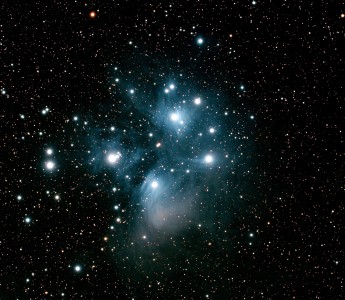
Image of the day

Captured by
Philip Imbrogno

Pleiades M 45 with the Pleiades 68

My Account

New to Astromart?

Register an account...

Need Help?

Strehl or Wavefront error...which to consider?

Started by pacorod, 09/23/2004 05:13AM
Posted 09/23/2004 05:13AM Opening Post
I'll soon be the owner of a mak-newt scope, and i'll be receiving a cert. of optical quality. The certificate specifies a wavefront error of 1/7.8 wave p-v @555 nm, while the strehl ratio of the system is 97.5%. According to the following: http://www.rfroyce.com/standards.htm
a 97.5% strehl ratio corresponds to a wavefront error considerably lower than 1/7.8 wave (more around 1/11 wave). So, is it possible that the stated wavefront in the certificate is inacurate, or misleading as to the real quality of the optics? Also, which standard should I place more weight on as a measure of optical quality for my scope, wavefront or strehl? Thanks.
Posted 09/23/2004 06:48AM | Edited 09/23/2004 07:01AM #1
IMHO Strehl ratio is a better indicator of optical quality.
It is measuring what you really want to know about --
which is the percentage of light going into the
Airy disk.

Peak to valley is a useful indicator, but what it does
not tell you, is the fraction of the optic at that
maximum error. If a large area of the optic were
at the maximum error -- say if it is due to spherical
error -- then there will be a large impact on image
quality. But if there is only a tiny area involved
-- say a central zone or bump (or even spec of dirt)
-- there might be almost no impact on the images.

It is not possible to relate bewteen P-V and Strehl
without making some assumption about the distribution
of errors on the surface. For the example given by
Royce they are assuming a spherical error, which
will involve a large area. The fact that your Strehl
implies 1/11 wave (spherical assumed) and the measured
P-V is 1/7.8 just means that you've got a small area
at the maximum error (this is good). It likely means
the errant region is a narrow zone or edge effect.
Posted 09/24/2004 01:04PM #2
It depends on how the numbers are determined. If they're determined by interferometry, then they're probably more accurate than if they're derived from Foucault measurements. In the former case, I would trust the Strehl ratio more. In the latter, I'd trust the P-V more.

Truth be told, if the mirror is smooth, has no sharp breaks, and a good edge, then even a 1/7.8 (let's say 1/8) wave P-V wavefront is very, very good. You may see a difference with a better mirror when doing the star test (virtually no mirrors "pass" the star test 100%), but at focus it's highly unlikely that you'll see any difference at all.

My $.02

Doug
