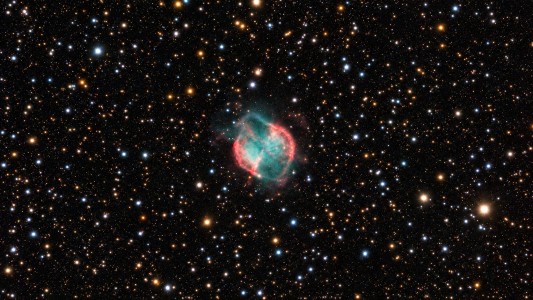
I am new to these forums and need a little assistance. I am entertaining building a truss dob, but i am struggling deciding what size. I am interested primarily in deep sky objects and as such, have been leaning for 15 to 20 inch primary mirror size. I will probably buy a polished parabolic primary mirror from a quality vendor and build the rest. Now the key question. What can I expect from a 15 compared to 20 in primary mirror. I have an 8" dob that has relatively poor optics and deep sky objects are fuzzy at best. Any opinions or thoughts. thanks in advance for the ideas
newbie needs help! does size matter?
Started by oilmanmojo, 01/21/2004 02:45AM
Posted 01/21/2004 02:45AM
Opening Post
Posted 01/21/2004 02:51AM
#1
Tom:
Get ye to a star party!!! You can check out the differences in person. I tend to look toward the lower sizes, personaaly, as I like the portability. A 15" is portable, but a 20" is another beastie. Also, you can get by with a stepstool for a 15" and a 20" requires a ladder. There IS a difference visually, but there are too many other factors to consider before going a seeing the for yourself. Again I say...
Get Ye To A Star Party!!!
Pat
Posted 01/21/2004 03:57AM
#2
I have a 16" Starmaster which I find to be a good balance between portability and aperture. It is great for DSOs and planets alike. That said, if I were primarily interested in tracking down the very faint, relatively obscure fuzzies (esp. dimmer galaxies), I would simply buy the biggest scope I could possibly afford and manage, especially if you have really dark skies and a garage or other area where you can just wheel it out. Size really matters if this is your purpose.
For everything else, balance aperture with portability. Most of us don't have the luxury of dark skies and have to resort to taking our scope some distance to observe the fuzzies. For this, some degree of portability is necessarily a major consideration.
There are worse things for a beginner than buying small and upgrading over time to larger and larger apertures. That is starting off huge and never using the scope because of the setup hassle. I personally think something in the 8-12 range (dob or sct) is a great start for a beginner--but that is just me.
Best wishes,
Randy
Randy Roy
Posted 01/21/2004 01:37PM
#3

>>I have an 8" dob that has relatively poor optics and deep sky objects are fuzzy at best. Any opinions or thoughts. thanks in advance for the ideas
Which DOB do you have? The Orion scopes and similar scopes made by GS and Synta have pretty good optics these days.
What objects are fuzzy? Open and globular clusters should be sharp under most circumstances, nebulas and galaxies are naturally fuzzy.
Seeing, collimation and cool down are the keys to getting good images in a Newtionian. And the larger the scope, the more care and luck is required. How careful have you been with the collimation of your DOB? How long do you wait for it to cool? Not much you can do about the seeing, but the bigger the scope, the more sensitive it will be. This is does not mean you won't see more in the big scope, rather it means that the nights when everything is nice and sharp will be fewer.
Those that suggest checking out a star party are right on the money. And 18 inch scope is a big scope transporting it and setting it up is work. Take a look and see what you are getting yourself in for.
A few years ago someone did an informal survey of owners of large DOBs, the result was that the vast majority had smaller scopes that they used most of the time and the big scope came out less than once a month.
Personally I have settled on a 12.5 incher as my biggest scope, there is plenty to see and it is still pretty easy to handle.
jon
