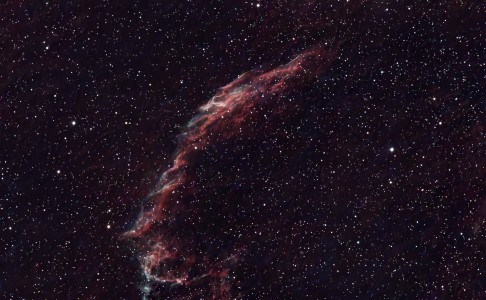
Image of the day

Captured by
GERALD KREITZBURG

Eastern Veil Nebula

My Account

New to Astromart?

Register an account...

Need Help?

maximum fov of MN56?

Started by gnowell, 08/24/2007 02:55PM
Posted 08/24/2007 02:55PM | Edited 08/24/2007 02:57PM Opening Post
I got the specs off the Intes site on the MN 56 and am wondering about its maximum fov. This is a 5 inch Mak Newt and it has a two inch crayford. Now maybe that's there for eyepieces like the Nagler 17 but I'm wondering whether in fact you get a fully illuminated field of view with a 40mm 70 degree eyepiece as you would with a refractor of the same size. The secondary at 30mm would not, in a regular Newt design, be large enough to illuminate fully a two inch eyepiece.

thanks
Greg N

ps. You know, I know there's lots of different folks in the biz, but I get a little squirrely inside thinking about buying from a telescope company that spells "aperture" as "aperature." Call me old fashioned....


Tube diameter: 162 mm
Tube length: 720 mm
Clear aperature: 127 mm (5 inches)
Focal length: 762 mm
Focal ratio: f/6
Diameter of secondary mirror: 30 mm
Central obstruction (diameter basis): 23.6%
Tube construction: seamless aluminium with 7 internal tube baffles
Focuser size: 2" Low Profile Crayford Focuser with draw tube and 1.25"/2" eyepiece adaptor
Mirror coatings: 96% reflection on mirrors
optical quality: ~ 1/8 wave p.t.v. or better
Corrector substrate: Russian BK7 glass
7X35mm finder
A carry case is included

"Scope will get you through times of no money better than money will get you through times of no scope." --Freewheelin' Franklin

Posted 08/24/2007 03:15PM #1
I've happily used my MN56 with a Siebert Observatory 36mm and (briefly) with a 35 mm TV Panoptic. The edges can't possibly be fully illuminated, but it's not something that one notices on the double cluster, the Andromeda galaxy, the Virgo cluster of galaxies, or the big Nebulae in Cygnus. I believe that it's a peripheral vision phenonenon.

Now for imaging it would be very different.

Greg Nowell said:

I got the specs off the Intes site on the MN 56 and am wondering about its maximum fov. This is a 5 inch Mak Newt and it has a two inch crayford. Now maybe that's there for eyepieces like the Nagler 17 but I'm wondering whether in fact you get a fully illuminated field of view with a 40mm 70 degree eyepiece as you would with a refractor of the same size. The secondary at 30mm would not, in a regular Newt design, be large enough to illuminate fully a two inch eyepiece.

thanks
Greg N

ps. You know, I know there's lots of different folks in the biz, but I get a little squirrely inside thinking about buying from a telescope company that spells "aperture" as "aperature." Call me old fashioned....


Tube diameter: 162 mm
Tube length: 720 mm
Clear aperature: 127 mm (5 inches)
Focal length: 762 mm
Focal ratio: f/6
Diameter of secondary mirror: 30 mm
Central obstruction (diameter basis): 23.6%
Tube construction: seamless aluminium with 7 internal tube baffles
Focuser size: 2" Low Profile Crayford Focuser with draw tube and 1.25"/2" eyepiece adaptor
Mirror coatings: 96% reflection on mirrors
optical quality: ~ 1/8 wave p.t.v. or better
Corrector substrate: Russian BK7 glass
7X35mm finder
A carry case is included
Posted 08/24/2007 03:15PM #2
I've happily used my MN56 with a Siebert Observatory 36mm and (briefly) with a 35 mm TV Panoptic. The edges can't possibly be fully illuminated, but it's not something that one notices on the double cluster, the Andromeda galaxy, the Virgo cluster of galaxies, or the big Nebulae in Cygnus. I believe that it's a peripheral vision phenonenon.

Now for imaging it would be very different.

Greg Nowell said:

I got the specs off the Intes site on the MN 56 and am wondering about its maximum fov. This is a 5 inch Mak Newt and it has a two inch crayford. Now maybe that's there for eyepieces like the Nagler 17 but I'm wondering whether in fact you get a fully illuminated field of view with a 40mm 70 degree eyepiece as you would with a refractor of the same size. The secondary at 30mm would not, in a regular Newt design, be large enough to illuminate fully a two inch eyepiece.

thanks
Greg N

ps. You know, I know there's lots of different folks in the biz, but I get a little squirrely inside thinking about buying from a telescope company that spells "aperture" as "aperature." Call me old fashioned....


Tube diameter: 162 mm
Tube length: 720 mm
Clear aperature: 127 mm (5 inches)
Focal length: 762 mm
Focal ratio: f/6
Diameter of secondary mirror: 30 mm
Central obstruction (diameter basis): 23.6%
Tube construction: seamless aluminium with 7 internal tube baffles
Focuser size: 2" Low Profile Crayford Focuser with draw tube and 1.25"/2" eyepiece adaptor
Mirror coatings: 96% reflection on mirrors
optical quality: ~ 1/8 wave p.t.v. or better
Corrector substrate: Russian BK7 glass
7X35mm finder
A carry case is included
Posted 08/24/2007 05:04PM #3
Greg Nowell said:
The secondary at 30mm would not, in a regular Newt design, be large enough to illuminate fully a two inch eyepiece.

My calc shows a fully illuminated field of just over 12mm.